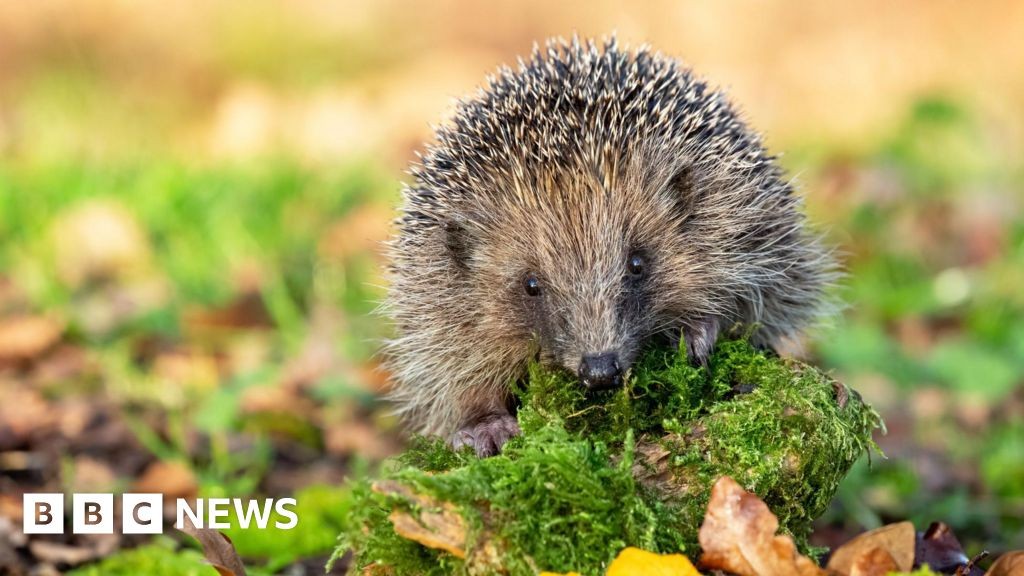
Hedgehogs, once a ubiquitous sight in European gardens, are facing a silent crisis. With populations plummeting by millions since the 1950s, the common western European hedgehog is now classified as Near Threatened by the International Union for the Conservation of Nature (IUCN).
To combat this decline, conservationists in Northern Ireland are deploying an innovative combination of low-tech charm and high-tech precision. Ulster Wildlife has launched a pioneering tracking project that fits male hedgehogs with tiny GPS devices—dubbed “backpacks”—and utilizes a specially trained detection dog to monitor their movements. The goal is to understand how these resilient creatures navigate modern urban landscapes and to identify what it takes to keep them from vanishing entirely.
The “Backpack” Initiative
The core of this project involves attaching small, lightweight GPS trackers to the spines of hedgehogs. Designed to resemble miniature backpacks, these devices are temporary and carefully fitted to ensure they do not hinder the animal’s natural defenses; the hedgehogs can still roll into a protective ball.
Researchers specifically select male hedgehogs for tagging to avoid disturbing females during nesting or breeding periods. This targeted approach allows scientists to map detailed nightly routes without disrupting the reproductive cycle of the population.
The data collected is crucial because, while it is known that hedgehogs are retreating into towns and cities, little is understood about their behavior in these environments. The trackers reveal:
– How many gardens a single hedgehog visits in one night.
– Which roads they must cross, highlighting potential roadkill risks.
– Where they forage for food and where they choose to rest.
“We are hoping all of this data will inform conservation action for hedgehogs going forward,” said Katy Bell, Senior Conservation Officer at Ulster Wildlife. “It’s really exciting.”
Enter Russell: The Hedgehog Sniffer Dog
Technology alone has limitations. GPS tags can malfunction, lose signal, or fall off. This is where Russell, a two-year-old cocker spaniel trained by Conservation Detection Dogs NI, steps in.
Patrice Kerrigan, Russell’s handler, explains that the dog serves two critical functions in the project:
- Expanding the Data Pool: Currently, researchers mostly capture hedgehogs that visit artificial feeders. This creates a biased sample, as it only tracks animals comfortable with human-provided food. Russell is trained to locate wild hedgehogs that do not visit these feeders, providing a more accurate picture of the general population’s movements.
- Recovering Lost Tags: When a GPS tag stops transmitting or detaches, Russell uses his keen sense of smell to track down the lost device and the hedgehog itself, ensuring no data is permanently lost.
Russell joins Kerrigan’s other dogs, who are already deployed to detect bat and bird carcasses around wind farms, marking a significant expansion in the scope of conservation detection work.
Why Urban Gardens Are Now Vital Refuges
The urgency of this project stems from a dramatic ecological shift. Hedgehogs are increasingly disappearing from rural farmland, driven out by intensive agriculture, habitat loss, and a scarcity of natural food sources. Consequently, they are migrating to urban areas, where residential gardens have become their last best hope for survival.
Katy Bell notes that the decline is primarily due to a lack of suitable habitat and food. However, urban environments present new challenges, including traffic, pesticides, and fragmented green spaces. Understanding how hedgehogs move through these concrete jungles is essential for creating safe corridors.
How You Can Help: Creating “Hedgehog Highways”
The insights from this tracking project are already translating into actionable advice for homeowners. Maureen Carvill, a gardening officer with Ulster Wildlife, emphasizes that a single garden is rarely enough to sustain a hedgehog. These animals can travel up to 3 kilometers (1.9 miles) in a night and require home ranges spanning up to 20 hectares.
To support them, Carvill advocates for the creation of “hedgehog highways” —small gaps in fences or walls that allow hedgehogs to move freely between neighboring gardens. This connectivity is vital for finding mates, food, and shelter.
Practical steps for gardeners include:
– Creating access points: Cut small holes in fences to link gardens together.
– Building bug hotels: Use log piles and leaf litter to attract insects, which form the base of the hedgehog’s food chain.
– Choosing wildlife-friendly plants: Look for plants with the RHS (Royal Horticultural Society) wildlife-friendly logo. These plants support pollinators like bees, butterflies, and moths, which in turn provide food for hedgehogs.
The Bigger Picture
The decline of the hedgehog is not just a loss of a “gardener’s friend” that eats slugs; it is an indicator of broader environmental health. As natural habitats shrink, the resilience of urban wildlife becomes a barometer for how well our cities can coexist with nature.
By combining precise tracking technology with community-led habitat improvements, conservationists hope to reverse the trend. The message is clear: hedgehogs need connectivity, food, and safety. With every garden modified to welcome them, we take a step toward ensuring these prickly survivors remain a familiar part of our landscape for generations to come.