Flow batteries are the holy grail of grid storage. They let us stash wind and solar power for a rainy day. But until recently, they were too expensive to matter.
They relied on vanadium. It is rare. It is volatile. It is expensive.
Now, scientists at Queen’s University Belfast have changed the equation. They built a flow battery using iron.
Iron is everywhere. It is cheap. It changes the game.
The £74 Solution That Could Save the Grid
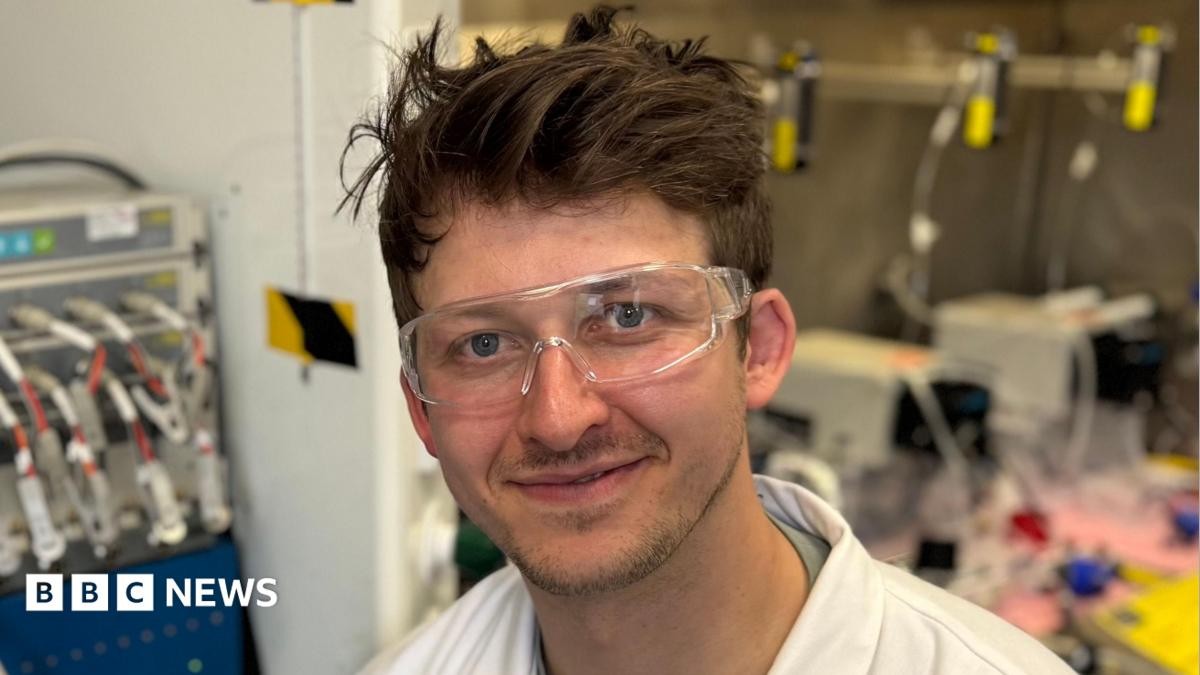
Dr Hugh O’Connor was stuck. He was doing his PhD. He needed a flow battery cell.
The commercial option cost £2,000 to £3,000. That is insane for a student project.
So, he started 3D printing.
He tinkered. He failed. He tweaked.
Eventually, his homemade cell worked. It did the job. It cost next to nothing.
But when he tried to share his results, he hit a wall. The data didn’t match other labs. Why?
Because everyone was using different equipment. Different parts. Different assembly methods.
Comparing apples to oranges is easy. Comparing apples to apples is hard.
The scientific community has a reproducibility crisis. It slows down innovation.
“If we’re all going to get to 2500 and be at net zero… a lot more of our electricity needs to be to be stored in technologies like flow batteries.”
O’Connor had a cheap, working cell. He could have sold it. He could have made a quick buck.
His supervisor said no.
Instead, they released the design for free.
It is now a standard. The QUB flow battery kit costs roughly £74.
It includes about ten components. The 3D printed pieces. The membrane. The gaskets. The electrodes. The current collectors.
They even included an “Ikea-style” instruction manual.
The world followed the instructions.
Why Iron Beats Vanadium for Energy Storage
Flow batteries store energy in liquids. Lithium-ion batteries use solid electrodes.
This is not just a minor difference. It is a fundamental shift in how we handle power density and safety.
Most flow batteries use vanadium electrolytes. Vanadium is in the earth’s crust more than lithium.
But you cannot just dig it up easily. Production is concentrated. A few countries control the supply. This creates geopolitical risks. It spikes prices. It limits scalability.
Iron is different.
Iron is abundant. It is sustainable. It is safe.
Using an iron-based electrolyte removes the bottleneck. It opens the floodgates for widespread adoption.
China has built large-scale vanadium flow batteries. Scotland ran trials. But global progress is slow. The data is inconsistent.
With the QUB design, labs worldwide use the exact same hardware.
This allows for robust, comparable research. Dr Josh Bailey, an Illuminate Fellow at QUB, sees it clearly.
Standardizing Science to Accelerate Net Zero
Replicability is the engine of science. Without it, progress stalls.
By distributing this standard, QUB is helping scientists around the world talk to each other. They are using identical equipment.
The results are reliable. The findings are scalable.
“We really honestly believe that flow batteries can be accelerating by these reproducibility studies,” Bailey says.
“If we’re all using the same standards… the technology can be deployed more quickly.”
It is not just about theory anymore.
Renewables are winning. Last year, renewables generated more electricity than coal globally. The UK hit a record high for renewable generation.
But we still need to store it.
The wind does not always blow. The sun does not always shine.
Without affordable storage, we waste energy. We shut off turbines when demand is low. We strain the grid.
Flow batteries solve this. They can sit on the ground. They can last for decades. They do not degrade like lithium-ion.
But only if they are cheap. And only if they are standard.
Scaling Up from Single Cell to Industry
The breakthrough is not just in the chemistry. It is in the system.
O’Connor and Bailey are moving beyond the single cell. They are testing larger stacks.
It is one thing to run chemistry in a fume hood. It is another thing to scale it to industrial levels.
“You have to see what it is like once you stack them,” Bailey notes.
“The single cell, the stack, the system… that gets us on the innovation track.”
We are looking at a future where energy storage is as common as plumbing. Where we store surplus power and pull it out when needed.
Where iron batteries, printed in labs and assembled in kitchens, become the backbone of a net-zero grid.
It started with a £2,000 problem.
It ended with a £74 solution.
And now, it is being built everywhere.
The rest is just engineering. And patience.