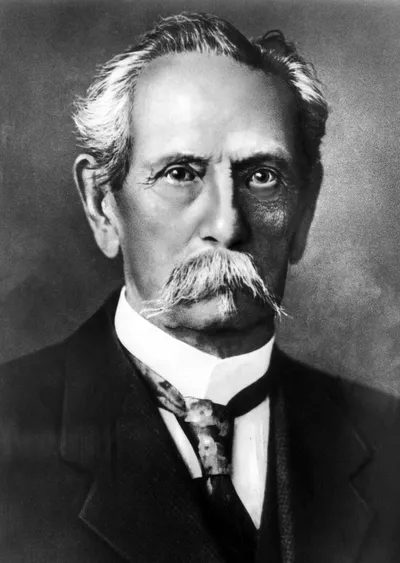
Karl Benz didn’t just build a car. He built the machine that would eventually reshape human geography. Born in Karlsruhe, Germany, on November 25, 1844, Benz was a mechanical engineer with a singular obsession: self-propelled travel that didn’t rely on horses.
He died in Ladenburg, near Mannheim, on April 4, 1929. But before his death, he had already changed everything.
In 1885, Benz completed what historians now agree was the world’s first practical automobile. It wasn’t a prototype. It wasn’t a curiosity. It was a functional vehicle powered by an internal-combustion engine. This distinction matters. Previous attempts at motorized travel had failed because they were either too unreliable or too dangerous. Benz’s design solved those problems.
The Benz Patent-Motorwagen wasn’t fast by today’s standards. It couldn’t haul heavy loads. But it worked. It proved that a machine could move people without animal assistance. This was the moment the automotive age began.
Why does this specific invention matter? Because it created the template for every car on the road today. Benz’s approach to engine placement, chassis design, and steering mechanisms became the industry standard. He didn’t just build a car. He invented the concept of personal motorized transport.
The impact was immediate. Roads began to change. Cities expanded outward. Travel became a daily option rather than a rare event. Benz’s 1885 breakthrough wasn’t just an engineering feat. It was a social revolution in metal and steam.
People still ask how he did it. The answer lies in his refusal to accept the limitations of his time. He looked at a horseless carriage and saw a future. Most people just saw a broken wagon.
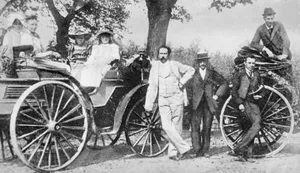
The story of the automobile doesn’t start with a patent. It starts with a three-wheeled contraption that barely looked like a car at all. Karl Benz’s Motorwagen hit the road in early 1885. It sat there, awkward and revolutionary, for months before anyone bothered to file the paperwork. The official patent for the Benz Motorwagen patent didn’t arrive until January 29, 1886. That delay matters. It suggests that invention is often faster than bureaucracy.
Before the wheels even turned, Benz had a different ambition. He founded Benz & Co. in Mannheim back in 1883. The goal wasn’t cars. It was stationary internal-combustion engines. Industrial power. The kind that keeps factories running. The shift to personal transport was a pivot, not a plan.
The company didn’t rush into four wheels. It took until 1893 for Benz & Co. to complete its first four-wheeled automobile. That’s eight years after the first engine ran. The design evolved. The engineering matured. By 1899, they were building racing cars. Speed became part of the identity.
Then came the merger. In 1926, Benz & Co. joined forces with Daimler-Motoren-Gesellschaft. The result was Daimler-Benz. The Mercedes-Benz brand emerged from this union. It quickly became synonymous with luxury. High-end engineering. Prestige. The two companies had separate histories, but their combination created a dominant force in the automotive world.
Karl Benz wasn’t around to see the merger. He had left the firm about 1906. He went to Ladenburg. There, he organized C. Benz Söhne with his sons, Eugen and Richard. The name reflected his preferred spelling: Carl. Not Charles. Carl Benz.
The Motorwagen sits in Munich now. Preserved. Quiet. A testament to a man who stopped building engines and started building dreams. The patent date is just a line in a ledger. The reality is messier. Faster. More human.
Why did it take so long to patent? Curiosity often lags behind creation. People wonder how the first patent for a gasoline car was filed. It wasn’t about protection at first. It was about recognition. Later, about profit.
The merger with Daimler is often cited as the start of Mercedes-Benz history. But the roots go deeper. Into stationary engines. Into racing tracks. Into the minds of fathers and sons in Ladenburg.
Does the date matter? Yes. But not the way legal briefs think. It marks a shift. From machine to machine with a soul. The four-wheeled car of 1893 wasn’t just a vehicle. It was a statement. Racing cars in 1899 were a proving ground.
What remains? The brand. The luxury. The engineering. And the three-wheeled ghost in Munich. It ran before it was patented. It lived before it was famous. That’s the real story. The rest is just paperwork.