


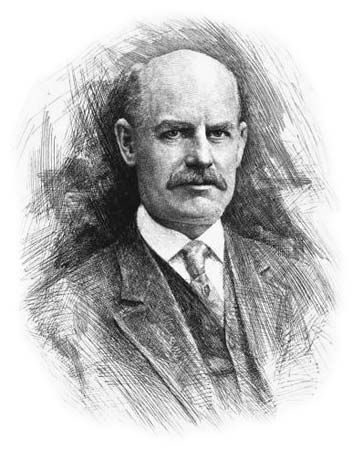
Edward Goodrich Acheson didn’t set out to change the industrial world. He was just trying to make diamonds.
Born in Washington, Pennsylvania, in 1856, Acheson eventually found himself working for Thomas Edison at the Menlo Park laboratories. He helped build the incandescent lamp. He even traveled to Europe in 1881 to install Edison’s first electric lights in Italy, Belgium, and France. It was impressive work. But by 1884, Acheson had left Edison’s employ. He wanted to run his own show.
He began experimenting with electric furnaces. His goal was simple: create artificial diamonds. He mixed clay and coke in an iron bowl. He heated the mixture using a carbon arc light. He wasn’t looking for jewelry. He was looking for a way to replicate the hardness of natural gems through chemistry.
The Accidental Discovery of Silicon Carbide
The experiment didn’t produce diamonds. It produced something else entirely.
Shiny, hexagonal crystals formed on the carbon electrode. Acheson examined them closely. He saw they were hard. He saw they were shiny. He made a critical mistake. He assumed the crystals were a compound of carbon and alumina from the clay.
He was wrong. The material was actually silicon carbide. But the misidentification led to a brand name that would outlast his career. He called it Carborundum, a nod to corundum, which is fused alumina. The name stuck. The material didn’t.
In 1893, he patented the process. The abrasive was highly effective. It cut through steel like butter. It didn’t wear down like natural abrasives. It changed machining forever.
From Mistake to Graphite Innovation
The story doesn’t end with the abrasive. It gets stranger.
Acheson studied the effects of high heat on his new invention. He pushed the temperature higher. He watched what happened when silicon vaporized. The silicon left. It boiled away at about 4,150°C. What remained was not diamond. It wasn’t even silicon carbide.
It was graphitic carbon.
He had accidentally perfected a method for making synthetic graphite. This wasn’t just a side note. It was a major industrial breakthrough. Graphite is essential for lubricants, batteries, and crucibles. It conducts electricity. It withstands extreme heat.
In 1896, he received a patent for this process. He had turned a failed diamond experiment into two distinct industrial pillars.
The Business of Invention
Acheson didn’t just file papers. He built companies.
He organized firms to commercialize his inventions. The most famous was The Carborundum Company in Niagara Falls, New York. He held 69 patents in total. Most people don’t realize how many of those shaped the 20th century.
We still use Carborundum today. It’s in sandpaper. It’s in grinding wheels. It’s in the tools that build cars, planes, and buildings. The graphite he discovered by accident is in everything from pencil leads to nuclear reactors.
Acheson started by trying to fake a gem. He ended up giving us the materials that make modern machinery possible. He

