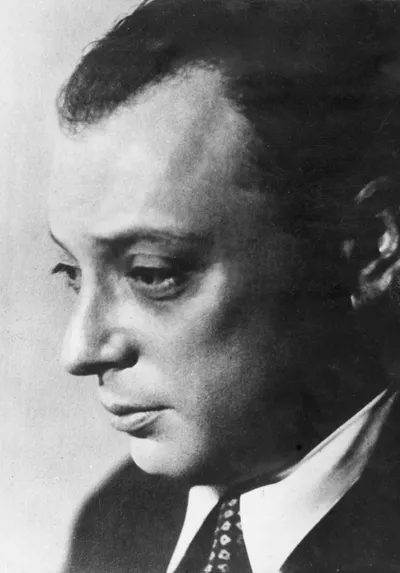
Wolfgang Paulii was not only a physicist. He was a tough critic who prevented quantum mechanics from drifting into nonsense. He was born in Vienna in 1900 and died in Zurich in 1958. In between, he received the Nobel Prize in Physics in 1945. His discovery was not a new particle or a new telescope. That was the rule. Simple. Two electrons cannot be in the same quantum state at the same time.
This Paulii exclusion principle has changed everything. It explained why matter has structure. Why atoms don’t collapse. Why can’t you walk through walls?
Paulii was sharp. Even dangerous. He wrote masterful reviews of physics that became classics. But his real power came from his interactions. His letters are legendary. His criticism was feared. His colleagues called him “the conscience of physics”. If the theory was sloppy, Paulii would destroy it with one sentence.
Making a critic
Vienna at the beginning of the 20th century was an intellectual explosion. Paulii grew up in this world. His godfather was Ernst Mach, a physicist-philosopher. Mach taught him to distrust metaphysics. Paulii called it “anti-metaphysical baptism.” He wanted facts. No fantasies.
He was a child prodigy. He taught himself relativity while still in school. At the age of 18, he published his first work on this subject. He enrolled at the University of Munich. He studied under Arnold Sommerfeld. Sommerfeld taught Bohr-Sommerfeld quantum theory. It was progressive stuff.
Paulii stood out. Not just for his brain. Because of his attitude. He was strict. He was funny. He was often rude.
In 1921, he wrote a review of relativity for the Encyclopedia of Mathematical Sciences. It was brilliant. Albert Einstein praised it. It made Pauli famous before he was 21 years old.
In the same year, he graduated as a doctor. He worked as Max Born’s assistant in Göttingen. Then to Wilhelm Lenz in Hamburg. In 1922 he took a year off to visit Niels Bohr in Copenhagen. It was a decisive stop. The Bohr Institute was the center of the new physics. Paulii absorbed everything. He returned to Hamburg in 1924 to complete his habilitation. This was the postdoctoral degree required to hold professorships in Europe.
The birth of quantum mechanics
In 1924, Paulii returned to Hamburg. He was a lecturer. He was also at the center of the quantum revolution.
The theory of atomic spectra was chaotic. It didn’t make any sense. Paulii fixed it. He introduced a new quantum number. It wasn’t about position or momentum. It was abstract. He refused to imagine it. He called it “an two-valuedness that cannot be described classically”.
We now call this Spin.
Pauli’s logic was watertight. If an electron were to occupy this new space, no other electron could do so. This was the Paulii exclusion principle. It became the basis of Fermi-Dirac statistics. It explained quantum chemistry. It explained solids.
Paulii just couldn’t find things. He helped others find theirs. He made a critical contribution. He questioned the assumptions. He forced clarity.
He also played a central role in the interpretation of Copenhagen. This view held that causation was dead. Physical concepts had to be limited by observation. Pauli’s analysis of the philosophical foundations contributed to this.
He later rejected positivism. But his early work anchored the new mechanics.
Swiss years and private struggles
In 1928, Paulii received a professorship at ETH Zurich. He remained there for the rest of his life. Together with Gregor Wentzel, he built a “school” of theoretical physics. It worked. It attracted the best minds.
But his private life was turbulent. His mother committed suicide in 1927. His marriage to the dancer Käthe Deppner ended in 1930. These events pushed him towards psychoanalysis.
Carl Jung, a Swiss psychologist, recommended it. Paulii started therapy. It wasn’t just treatment. It became a philosophical interest. He studied Jung’s ideas. He studied how psychology and physics meet. This led him away from strict positivism.
He stopped personal therapy with Jung in 1934. That same year he married Franciska Bertram. But correspondence with Jung continued. They wrote about physics and psychology. The letters are still being studied today.
Neutrino and spin statistics theorem
In 1930, Paulii faced a crisis. Beta decay of the nucleus seemed to violate the law of conservation of energy. The energy disappeared. Paulii refused to accept it.
He conjectured a solution. He proposed neutral particles. Particles that interacted very weakly. They took away the missing energy. These were later called neutrinos.
Experimental proof did not come until 1956. Paulii had to wait 26 years before it was confirmed. He was right.
His work on symmetries in quantum field theory led to another important result. In 1940, he formulated the spin-statistics theorem. It linked a particle’s spin to its statistical properties.
This theorem is fundamental. It separates fermions from bosons. It explains the structure of the periodic table. It is the basis of all chemistry.
Pauli’s influence was not only in his equations. It was in his standards. He demanded precision. He hated hand waving. He forced the field to grow.
His correspondence with Jung remains a unique document. Two brilliant minds explore the limits of knowledge. One in physics. One in psychology. Both seek order in chaos.
Paulii died in Zurich. But his rules still apply. Electrons obey his exclusion principle. Atoms remain stable. Matter exists as we know it.
Because of him, the universe is more peaceful. More in order. More precise.
Long journey home
Paul’s departure from Europe was more than just a career move. This is an airplane. The Nazi threat was great, and since his grandparents were Jewish, the danger was existential. In 1940 he was Visiting Professor at the Institute for Advanced Study in Princeton, New Jersey. The war is intensifying. He stayed away from the front lines to study meson theory, but not far from the dangers he was fleeing.
In 1946, he became an American citizen. But he didn’t stop there. In the same year he crossed the Atlantic again. First, he finally won the Nobel Prize in 1945, which he had denied during the war. You will then return to ETH Zurich. He was restored to his former position. He hasn’t finished physics yet.
After returning to Switzerland, he devoted himself to the study of renormalization in quantum electrodynamics. He works with his students. He solved the CPT symmetries (charge, parity, time) in quantum field theory. Mathematics is intensive. The stakes are even higher. He received Swiss citizenship in 1949. two houses. Owned.
心灵遇见物质
泡利的晚年经历了一次转变。 物理仍然存在。 但哲学的声音越来越大。 他旅行了。 他写信。 他与爱因斯坦和玻尔的通信使长达数十年的对话得以延续。 这些不仅仅是聊天。 他们是一场智力竞赛。
然后是卡尔·荣格。
泡利与荣格的关系非常密切。 他们交换了数百封信件。 他们一起出版。 泡利正在寻找方程无法完全捕捉到的东西。 他想了解“物理”(自然)和“心理”(心灵)之间的关系。 对他来说,他们并不是分开的。 它们是同一现实的互补方面。
“物理学家不只是研究世界。他正在研究反映世界的自己的思想。”
这不是神秘主义。 这是弥合客观数据和主观经验之间差距的一次严格尝试。 泡利认为,要了解原子,就必须了解观察者。 与荣格的通信仍然是科学史上最迷人的档案之一。 它展示了一个拒绝不去审视一半现实的人。 他把战争抛在脑后。 他发现了一场新的战争。 这是内部的。