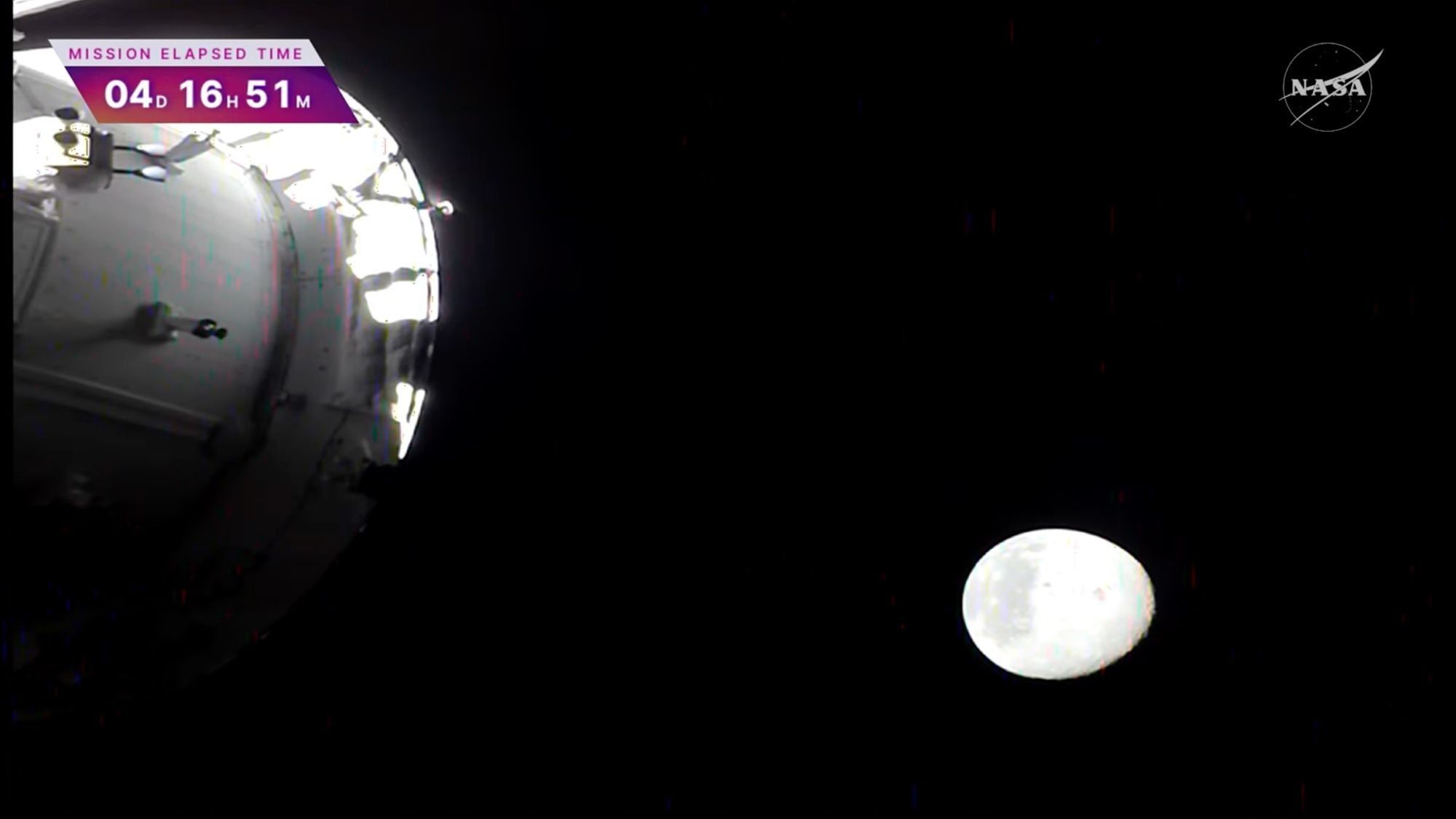
NASA’s Artemis 2 mission has officially entered the history books, marking the furthest distance humans have ever traveled from Earth. As the Orion capsule began its loop around the far side of the moon, the crew surpassed a record that had stood for over half a century.
Breaking a 54-Year Milestone
The record previously belonged to the Apollo 13 crew, who reached a distance of 248,655 miles (400,171 km) on April 15, 1970. That milestone was achieved under much darker circumstances, as an oxygen tank explosion forced the crew to abort their lunar landing and fight for survival.
In contrast, Artemis 2 is achieving this feat through precision and planned exploration. The crew broke the old record at 1:57 p.m. EDT on April 6, as they swung around the lunar far side. NASA officials expect the mission to reach a maximum distance of approximately 252,760 miles (406,778 km) tonight.
A Passing of the Torch
In a poignant moment for space exploration, Mission Control beamed a pre-recorded message from the late Jim Lovell, the commander of Apollo 13, to the Artemis crew.
“I’m proud to pass that torch on to you as you swing around the moon and lay the groundwork for missions to Mars for the benefit of all,” Lovell said in his message.
The connection between the two eras highlights a fundamental shift in space travel: while the Apollo missions were characterized by a race to reach and land on the Moon, the Artemis program is focused on sustainable deep-space presence and preparing for the eventual human journey to Mars.
Breaking Barriers in Deep Space
The Artemis 2 crew represents a significant departure from the demographics of the Apollo era, marking several “firsts” for humanity as they venture beyond Low Earth Orbit (LEO):
- Victor Glover: The first person of color to travel beyond LEO.
- Christina Koch: The first woman to travel beyond LEO.
- Jeremy Hansen: The first non-American (representing the Canadian Space Agency) to travel beyond LEO.
Canadian astronaut Jeremy Hansen noted that this milestone serves as a challenge to future generations, stating that the goal is to ensure this distance record “is not long-lived.”
What This Means for the Future
Artemis 2 is a critical “shakeout cruise.” Its primary purpose is to prove that the Orion capsule and its life-support systems can safely sustain humans in the harsh environment of deep space.
This mission serves as the foundation for a much more ambitious roadmap:
1. Artemis 3: Will focus on testing docking technologies and techniques in Low Earth Orbit.
2. Artemis 4 (Late 2028): Planned to be the first crewed lunar landing of the program.
3. Early 2030s: The goal is to establish a permanent base near the Moon’s south pole, providing a staging point for deeper space exploration.
The Orion capsule is scheduled to return to Earth this Friday, April 10, with a planned splashdown off the coast of San Diego.
Conclusion: By breaking a 54-year-old record, Artemis 2 has transitioned humanity from the era of “visiting” the Moon to the era of “staying” in deep space, setting the stage for permanent lunar bases and eventual Mars exploration.