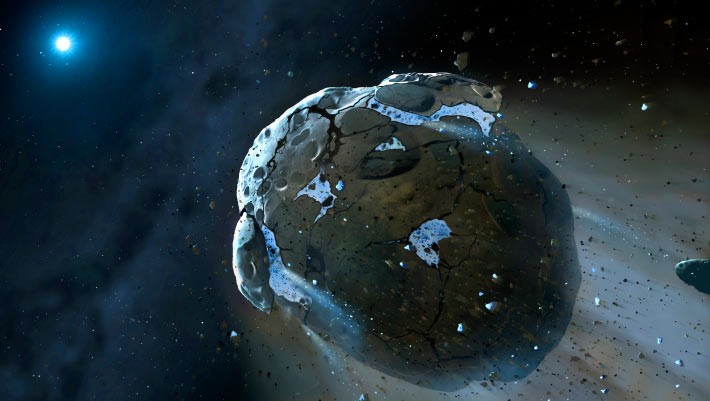
Extremophile bacteria, specifically the species Deinococcus radiodurans, have demonstrated an extraordinary ability to withstand the extreme pressures generated during asteroid impacts. This suggests that life could potentially travel between planets within our solar system, a concept known as lithopanspermia. New research from Johns Hopkins University confirms that these microbes can survive conditions previously thought insurmountable for biological organisms.
How the Study Worked
Scientists, led by K.T. Ramesh and Lily Zhao, simulated the conditions of an asteroid impact by subjecting Deinococcus radiodurans to pressures up to 3 GPa—30,000 times atmospheric pressure. They compressed the bacteria between steel plates and then struck the setup with a third plate to mimic the forces of an ejection event.
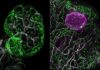
Analysis of gene expression revealed that even under extreme stress (2.4 GPa caused membrane ruptures in some cells), approximately 60% of the microbes survived. The bacteria’s cell envelope structure and rapid repair mechanisms were key to their resilience. The study, published in PNAS Nexus, shows that the bacteria actively prioritized cellular damage repair after the impact.
Implications for Life Beyond Earth
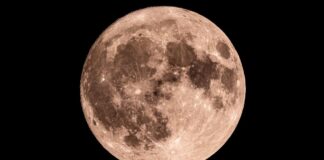
The findings are significant because they support the idea that life may not be confined to a single planet. The surfaces of many celestial bodies, including the Moon and Mars, are covered in impact craters, indicating frequent asteroid strikes. Martian meteorites have already been found on Earth, proving that material can be ejected between planets. This research suggests that living organisms could be among that ejected material.
“We do not yet know if there is life on Mars, but if there is, it is likely to have similar abilities,” Professor Ramesh stated. The implication is that life could have originated on one planet and spread to others through asteroid impacts.
The research team acknowledges the possibility that life on Earth itself may have arrived via this mechanism. Dr. Zhao jokingly suggested, “Maybe we’re Martians!”
The discovery fundamentally shifts our understanding of how life might spread throughout the solar system. This work confirms that interplanetary transfer of life is not just theoretical but a demonstrated biological possibility.