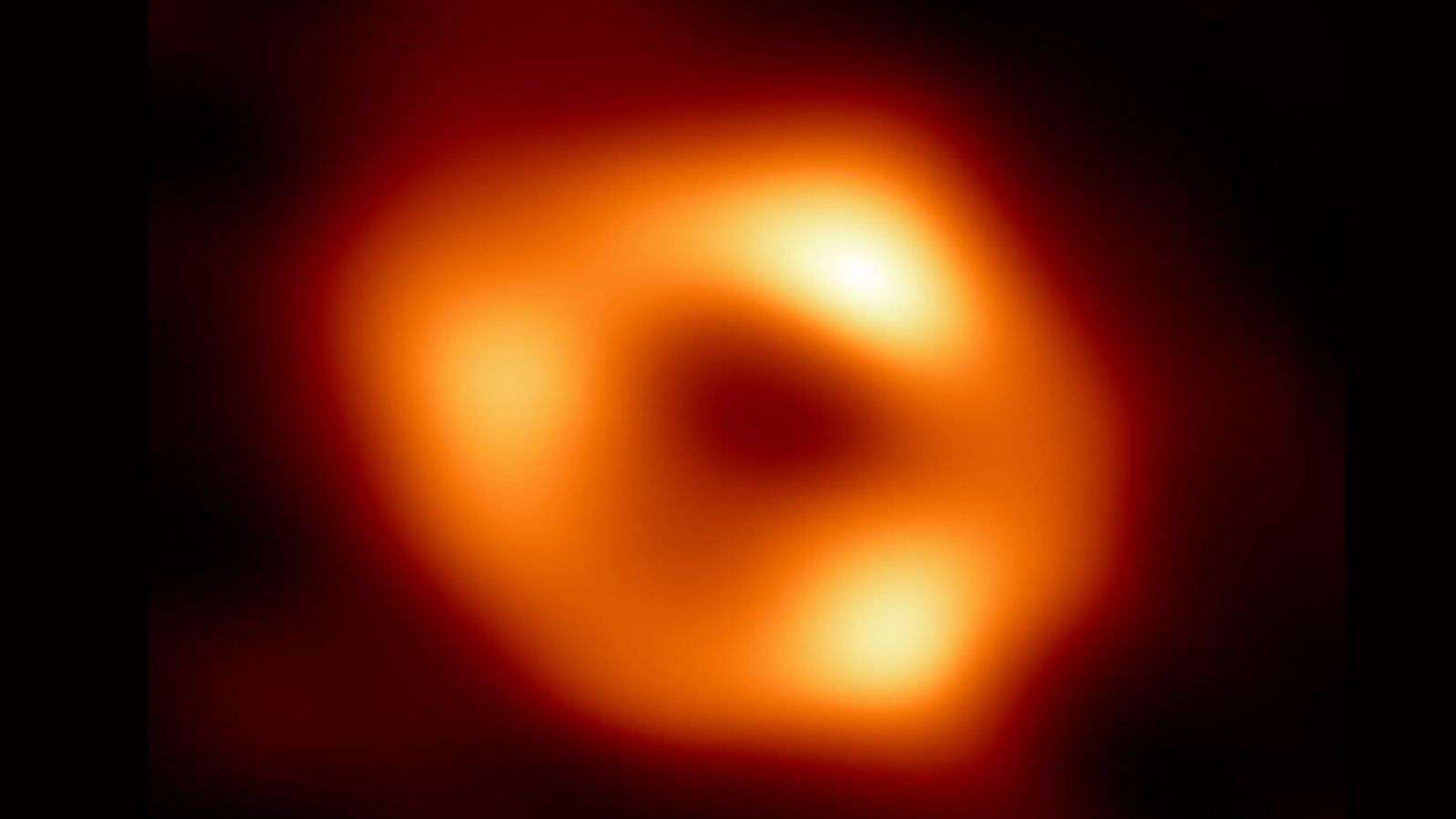
Recent observations from the XRISM spacecraft, a joint mission by NASA, JAXA, and ESA, have overturned the long-held assumption that the supermassive black hole at the center of our galaxy, Sagittarius A (Sgr A ), has always been relatively quiet. The data reveals a history of powerful X-ray flares erupting from Sgr A* within the last 1,000 years, challenging existing models of black hole evolution.
Unexpected Activity from a “Slumbering Giant”
For years, Sgr A, with a mass equivalent to 4 million suns, was considered a dormant giant. Black holes themselves are invisible; matter spiraling into them heats up due to extreme gravity, creating detectable emissions. However, Sgr A hadn’t shown significant activity until now.
The breakthrough came from studying a nearby molecular cloud. This cloud acted like a cosmic mirror, reflecting X-rays that Sgr A emitted in the past. The XRISM spacecraft, launched in 2023, possesses unprecedented sensitivity, allowing astronomers to precisely measure the energy and shape of these reflected X-rays. This level of detail definitively ruled out alternative explanations for the cloud’s glow *, such as cosmic rays.
Why This Matters: Rethinking Black Hole Evolution
The discovery is significant because it forces scientists to re-evaluate how supermassive black holes interact with their galaxies. These galactic centers are not always the stable, predictable forces they appear to be. Past eruptions could have profoundly affected the Milky Way, influencing star formation and the distribution of matter.
“Nothing in my professional training as an X-ray astronomer had prepared me for something like this,” said Stephen DiKerby, team leader at Michigan State University. This sentiment highlights how radically the new data shifts our understanding.
The Future of X-Ray Astronomy
The success of XRISM demonstrates the power of next-generation X-ray telescopes. The mission’s ability to uncover previously hidden cosmic events suggests that many more surprises await as we refine our observational techniques. The team’s findings validate the XRISM mission as an unparalleled tool for studying the universe in unprecedented detail.
The research has been accepted for publication in The Astrophysical Journal Letters, solidifying its place in the scientific record. This discovery isn’t just about one black hole; it’s about rewriting our understanding of how galaxies evolve and the role their central engines play in shaping cosmic structures.