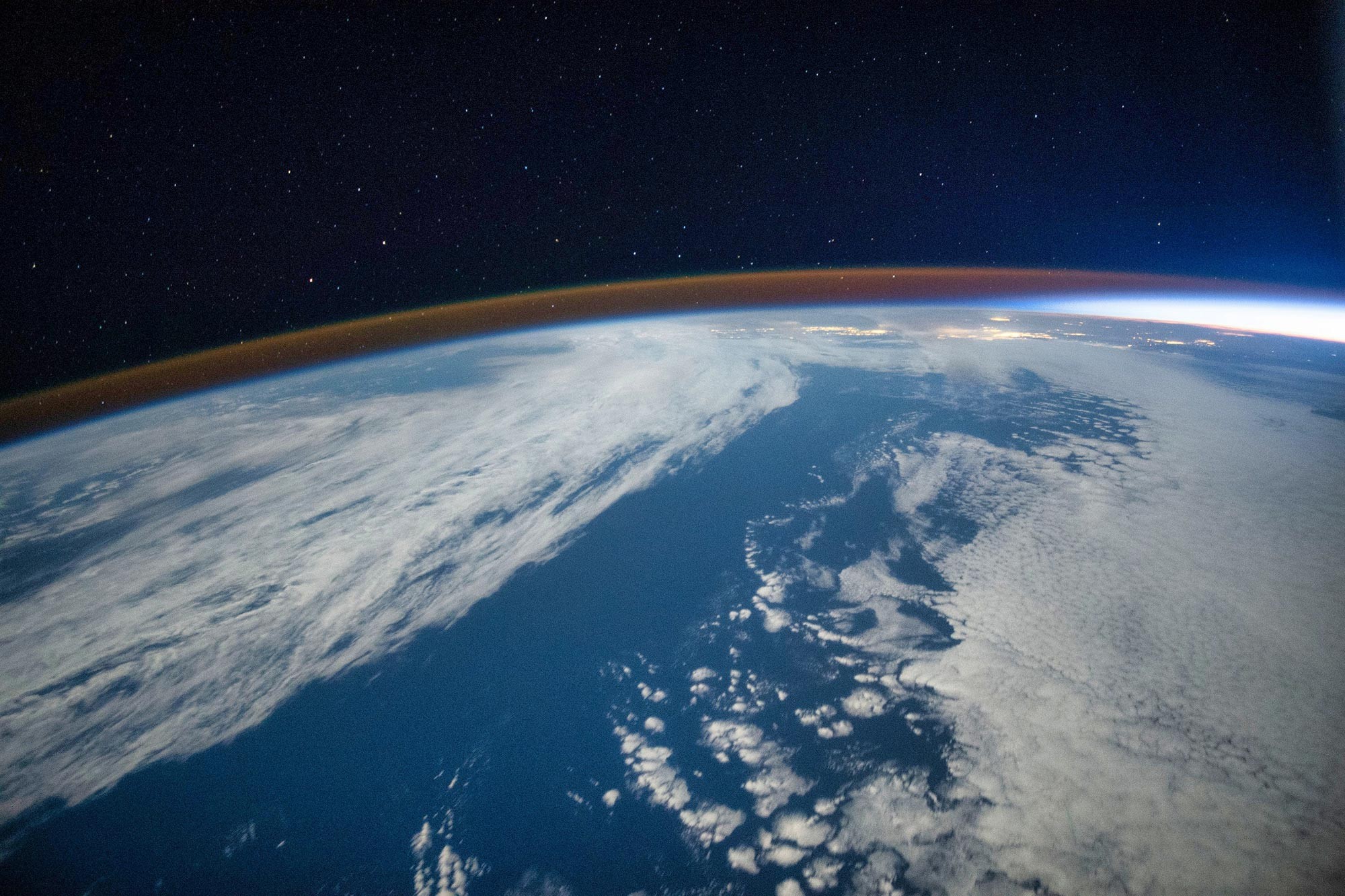
Look up. Not really. Look higher.
Far above the clouds, above the weather, above where planes fly, the atmosphere is getting colder. Steady, relentless, and fast. Meanwhile down here? It’s getting hot. Not just warm. Hot.
It sounds contradictory. Why would one part of Earth cool while another cooks? Scientists knew the trend. Decades of data showed it. The physics behind it, though, were murky.
Now, Columbia University researchers think they cracked it.
The mechanism is simple, brutal, and efficient
Carbon dioxide traps heat. That’s the headline we know. It acts like a blanket, holding infrared radiation near the surface, keeping the troposphere (where we live) toasty.
But blankets work differently in space.
Up in the stratosphere (roughly 11 to 50 km up), CO2 doesn’t trap. It leaks. It sucks up heat from below. It radiates it away into the void.
More CO2? More radiation out. The layer cools.
“It explains a phenomenon that’s a fingerprint of climate change… and has not been understood.” — Robert Pincus
The numbers are stark. Since the 1980s? Down two degrees Celsius. That’s huge. Natural variation couldn’t touch it. Human emissions amplified this cooling tenfold.
A “Goldilocks” of heat loss
Why hadn’t we quantified it exactly before? The old theories were smart, qualitative guesses. Syukuro Manabe predicted this back in the 60s (Nobel Prize stuff, well earned). But how exactly the molecules were doing it? Still fuzzy.
Sean Cohen and his team built a math model. They tweaked it. They broke it. They fixed it. They compared their equations to real-world sensors and supercomputer sims.
One factor jumped out.
Infrared light.
Not all infrared is the same. Different wavelengths travel differently. Cohen’s team found a specific band—a “Goldilocks zone” where CO2 becomes absurdly good at throwing heat back into space. As CO₂ concentrations rise, this zone gets bigger. Better heat disposal. Colder sky.
Ozone and water vapor help too? Barely. Their role in stratospheric chill is minor compared to CO₂.
Cooling up heats up
Here’s the twist. Or the trap.
As the stratosphere dumps heat, the whole Earth actually keeps more heat overall. How?
Cold air holds less energy. The cooled stratosphere becomes a weaker radiator. It sends less energy back to the cosmos than before. That missing energy stays in the system. It piles up closer to the surface.
Every time CO2 doubles? About 8 degrees of cooling at the very top of the stratosphere (the stratopause). But below that? The trap tightens.
So the mechanism that freezes the high sky is also part of why the surface burns. A feedback loop. Elegant and terrifying.
Is this about proving warming exists?
No.
Nobody argues about the temperature trends anymore. This paper isn’t about that. It’s about precision. It’s about understanding the machine.
“This is really telling us what is essential.”
Cohen says the model could even apply elsewhere. Jupiter. Exoplanets. Worlds with different gases. If you know the rules of light and heat, you can read any atmosphere.
For now, the rules are clear. CO₂ goes up. Upper air goes down. We get hotter.
The math checks out.
What’s unclear? When the rest of the atmosphere decides to follow the same rules.