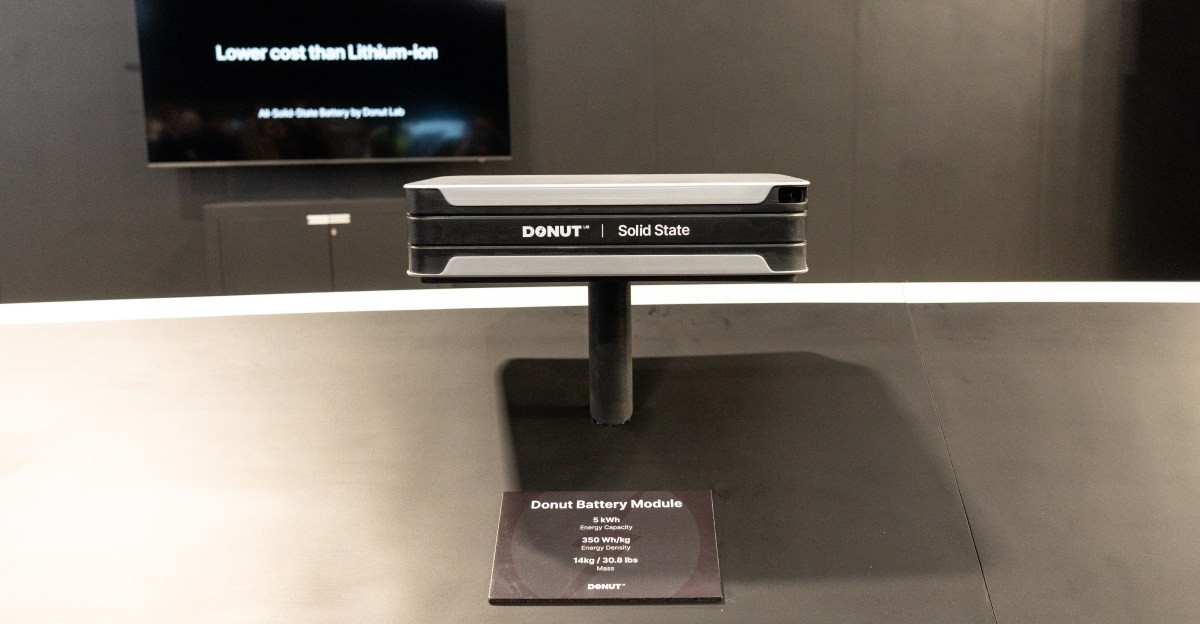
The tech world’s annual hype cycle kicked into gear at CES 2026, with Donut Lab, an EV technology startup, claiming it has cracked solid-state battery production—right now. This isn’t another two-years-out promise; the company says its batteries are already rolling off the production line in Finland, and the first application will be in Verge Motorcycles’ TS Pro model.
The History of Hype
The idea of a solid-state battery isn’t new. In 2018, Henrik Fisker made similar claims about mass production by 2020, which never materialized. The industry has been chasing this technology for years, lured by the potential for cheaper, lighter, faster-charging, and more durable batteries. The problem is that delivering on these promises has proven elusive.
What Makes Donut Lab Different?
According to Donut Lab CEO Marko Lehtimaki, the key difference is the timeline. While others have operated on a 24-month hype window, Lehtimaki insists production is already underway. The company claims an energy density of 400 Wh/kg—30% higher than current lithium-ion packs—and a manufacturing cost that’s lower, not higher.
How Solid-State Batteries Work (and Why They Matter)
Traditional lithium-ion batteries use a liquid electrolyte, which degrades over time. Solid-state batteries replace this liquid with a solid material, theoretically increasing durability, charge speed, and energy density. This means longer ranges for EVs, faster charging times (potentially five minutes or less), and a battery that could outlast the vehicle itself.
The Technical Hurdles
Solid-state batteries aren’t without their challenges. The biggest issue is dendrite formation—microscopic growths that can short-circuit the battery and cause catastrophic failure. Many major companies have struggled with this problem. Donut Lab claims to have solved it, but details remain scarce. Lehtimaki attributes the breakthrough to a small, agile team that iterated faster than larger competitors.
Early Applications and Thermal Stability
The first application will be in the Verge TS Pro motorcycle, with a 10-minute charge time. Donut Lab promises up to 100,000 charge cycles, radically exceeding the roughly 1,500 cycles expected from traditional lithium-ion packs. The batteries are also claimed to be thermally stable, operating at full capacity even in sub-zero temperatures without requiring active cooling.
Production and Scaling
Donut Lab’s initial production capacity is around one gigawatt-hour in Finland, with the potential to scale up in the U.S. if demand warrants. The battery chemistry is reportedly free of conflict minerals, simplifying supply chains.
The Skeptic’s Perspective
The industry has heard bold claims before. The fact that Donut Lab isn’t dangling a distant production date is encouraging, but skepticism remains warranted. The company has yet to disclose details about its specific chemistry or how it overcame the dendrite issue. Patents are pending, but concrete proof is still needed.
The real test will be whether Donut Lab can deliver on its promises without falling into the pattern of overhyped, unfulfilled expectations that have plagued the solid-state battery space for years.
Despite the uncertainty, Donut Lab’s claims are worth watching closely. If proven true, this could be a significant leap forward for EV technology.