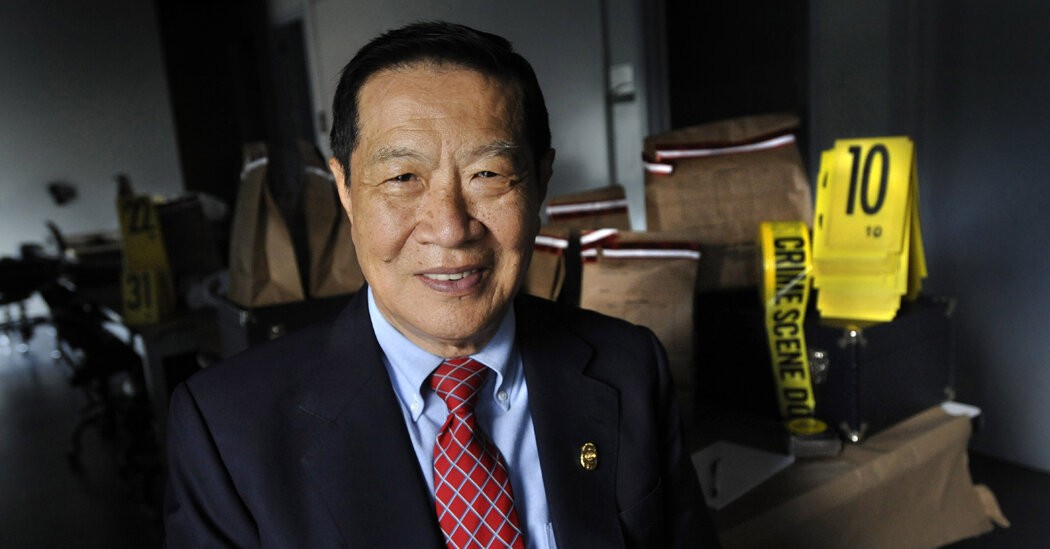
Henry C. Lee, one of the world’s most influential forensic scientists, passed away on Friday at the age of 87. Best known for his pivotal testimony in the O.J. Simpson murder trial, Dr. Lee spent over five decades shaping modern forensic investigation techniques. His death, following a short illness, was confirmed by his family and the University of New Haven, where he maintained a professorship for more than 50 years.
A Career in High-Profile Cases
Dr. Lee consulted for over 600 law enforcement agencies globally and testified in over 1,000 criminal and civil cases. The New York Times once described him as “perhaps the world’s most highly regarded forensic criminologist,” a reputation built on meticulous crime scene analysis and courtroom expertise.
His involvement spanned some of the most notorious trials of the late 20th and early 21st centuries. These included the JonBenet Ramsey case in 1996, a tragedy that gripped the nation, and the 2007 murder trial of music producer Phil Spector. Yet, it was his work on the O.J. Simpson case that secured his place in history.
The O.J. Simpson Trial and Forensic Debate
In the 1995 Simpson trial, Dr. Lee testified for the defense, focusing on potential flaws in the Los Angeles Police Department’s evidence handling. He suggested that blood evidence could have been mishandled or even tampered with, raising doubts about the integrity of the prosecution’s case.
“There was something wrong” with the way the evidence was collected, he stated, a comment that fueled defense arguments about potential planting of evidence at the crime scene.
Ultimately, Simpson was acquitted of the murders of Nicole Brown Simpson and Ronald L. Goldman, a verdict that ignited national debates on race, justice, and forensic reliability.
Lasting Impact and Controversy
Though lauded for his contributions to criminal justice, Dr. Lee’s legacy was later shadowed by questions about his methods and testimony in some cases. Despite this, his impact on forensic science remains undeniable. He helped elevate the field from a niche discipline to a central component of modern criminal investigations.
Dr. Lee’s death marks the end of an era in forensic science, but his work will continue to shape how crimes are investigated for years to come.