Astronomers have confirmed a surge in moon discoveries around Jupiter and Saturn, pushing the total number of known moons orbiting planets and dwarf planets in our solar system to 442. These findings underscore the dynamic nature of planetary systems and the growing ability of scientists to detect even the faintest celestial bodies.
Expanding Moon Populations
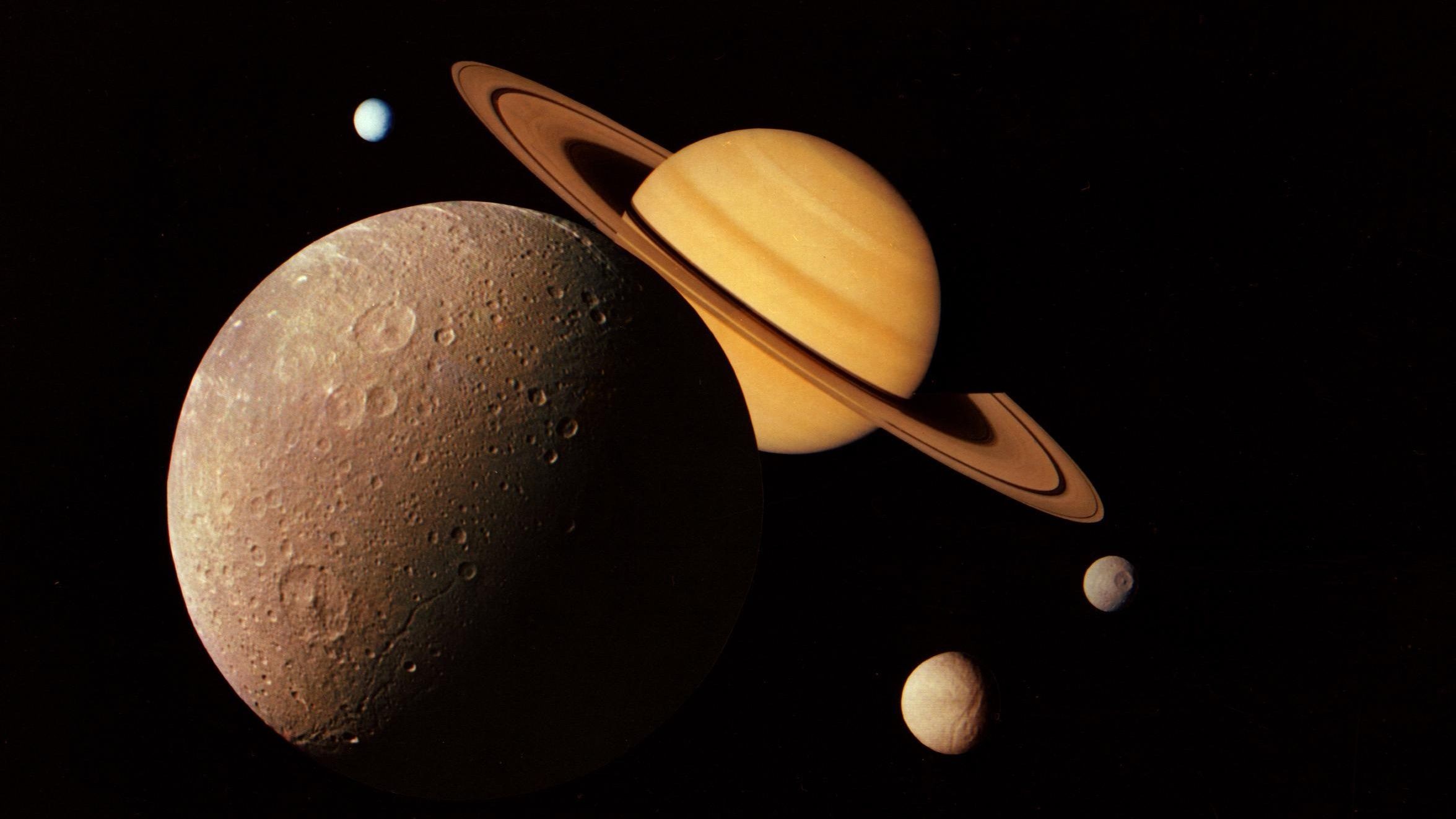
Jupiter now boasts 101 moons, while Saturn leads with an astonishing 285. The newly discovered moons – four around Jupiter and eleven around Saturn – were announced by the Minor Planet Center, the official record keeper for astronomical objects. This brings Saturn’s moon count significantly higher than Jupiter’s, though future missions may change this balance.
The sheer number of moons in the outer solar system isn’t just a matter of counting; it speaks to the chaotic early history of these planets. These moons are likely captured asteroids or remnants of larger collisions, and their irregular orbits reflect this violent past.
Tiny, Distant, and Hard to Find
The new moons are small, averaging just 3 kilometers (1.9 miles) in diameter. They orbit their planets at vast distances, making them exceptionally faint – magnitudes 25 to 27, far beyond the reach of amateur telescopes. Their discovery required the power of large ground-based observatories like the Magellan–Baade and Subaru telescopes.
Astronomers Scott Sheppard and David Tholen (Jupiter’s new moons) and Edward Ashton (Saturn’s latest discoveries) are particularly prolific in this field. Both researchers have co-discovered over 200 moons each, highlighting the increasing efficiency of modern sky surveys.
What This Means for Our Understanding
The discovery of so many small, distant moons raises questions about the formation and evolution of planetary systems. Were these moons formed with the planets, or captured later? The answer could offer clues to the early dynamics of the solar system.
Upcoming missions like Europa Clipper and the Jupiter Icy Moons Explorer (JUICE) are expected to arrive in the Jovian system in the early 2030s. These missions may reveal even more moons orbiting Jupiter, potentially redressing the current imbalance between Jupiter and Saturn.
Current Tally: A Quick Reference
As of this update, the solar system moon count stands as follows:
- Earth: 1
- Mars: 2
- Jupiter: 101
- Saturn: 285
- Uranus: 28
- Neptune: 16
- Venus & Mercury: None
For dwarf planets:
- Pluto: 5
- Eris: 1
- Makemake: 1
- Haumea: 2
- Ceres: None
The continued discovery of moons demonstrates that our solar system is far more complex and dynamic than previously thought. As technology improves, expect these numbers to keep rising, reshaping our understanding of planetary formation and orbital mechanics.