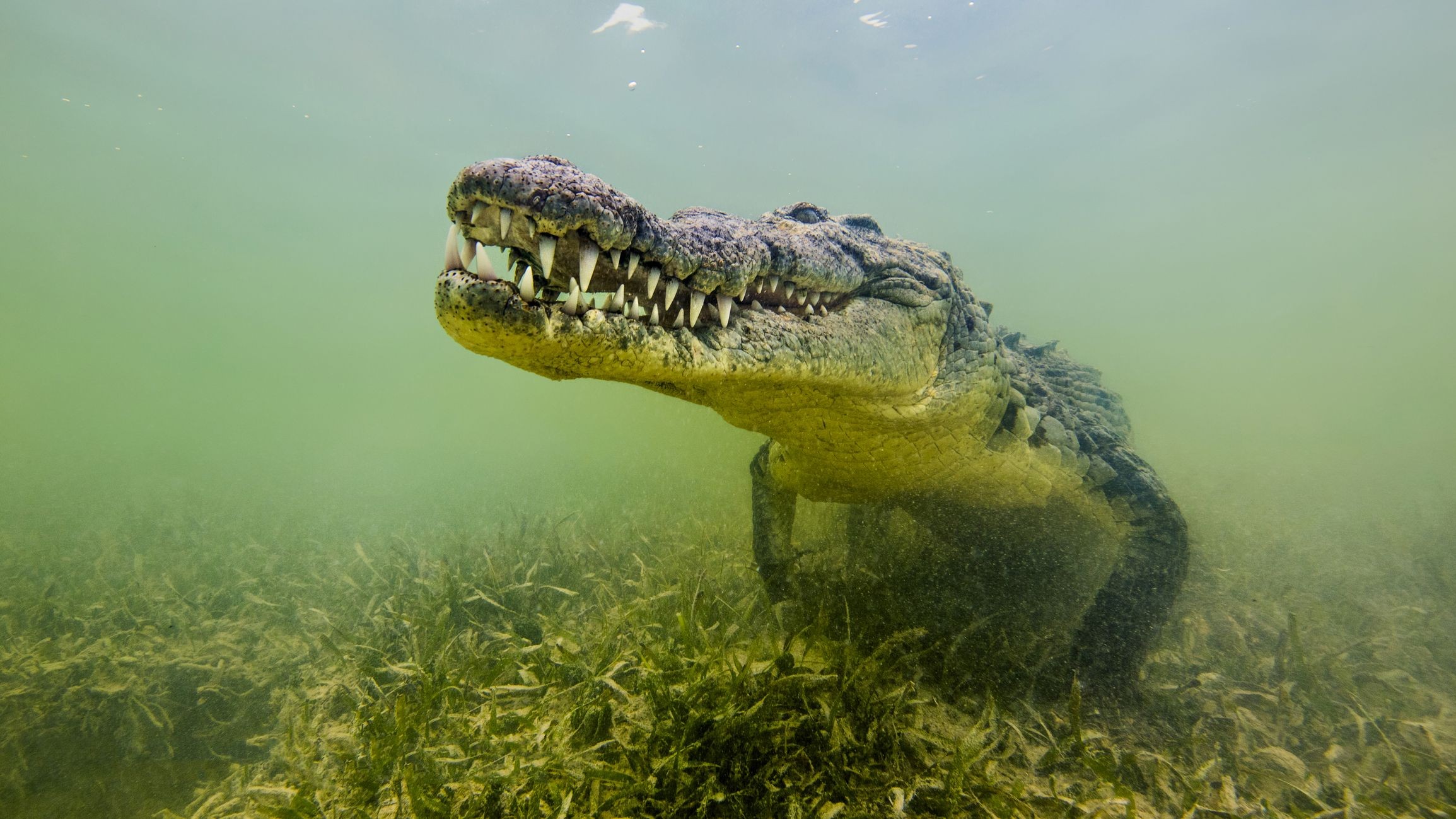
New genetic research confirms that saltwater crocodiles (Crocodylus porosus ) inhabited the remote Seychelles islands in the Indian Ocean long before human arrival – a startling discovery that reshapes our understanding of this apex predator’s historical range. The now-extinct Seychelles crocodile population wasn’t a localized species or a misidentified Nile crocodile, as previously assumed, but a far-flung extension of the same saltwater crocodile lineage found today in Southeast Asia, Australia, and the Western Pacific.
A 3,000-Mile Oceanic Journey
The study, published in Royal Society Open Science on January 28th, reveals that these crocodiles likely drifted over 3,000 kilometers (1,864 miles) across the Indian Ocean to colonize the islands. This suggests an extraordinary level of adaptability and mobility for the species, which is already known for its ability to survive in saltwater environments.
The existence of a thriving crocodile population in the Seychelles is supported by historical expedition records from over 250 years ago. However, human settlement in the late 18th century led to their swift and complete eradication. Today, only preserved museum specimens in Seychelles, London, and Paris remain as evidence of their former presence.
Genetic Confirmation
Early attempts to classify the Seychelles crocodiles were initially misattributed to African Nile crocodiles. Later physical trait analysis in 1994 correctly identified them as saltwater crocodiles, but the new study provides definitive genetic confirmation. Researchers analyzed mitochondrial DNA from old museum skulls and teeth, comparing it with modern specimens. The results clearly matched the genetic signatures of saltwater crocodiles from distant regions.
“The genetic patterns suggest that saltwater crocodile populations remained connected over long periods and across great distances, pointing to the high mobility of this species,” says study co-author Stefanie Agne, an evolutionary biologist at the University of Potsdam.
Adaptations for Long-Distance Travel
Saltwater crocodiles possess specialized salt glands on their tongues, allowing them to thrive in marine environments and survive long ocean voyages. This adaptation likely facilitated their widespread distribution across the Indo-Pacific region and may have prevented significant genetic divergence between distant populations.
Future Research and Unanswered Questions
While mitochondrial DNA analysis provides strong evidence, the study acknowledges limitations. Future research using nuclear DNA could reveal finer-scale regional differences among saltwater crocodile groups, as mitochondrial DNA is inherited solely through the maternal line. This will help paint a more detailed picture of the species’ genetic diversity and evolutionary history.
The discovery underscores how dramatically human activity can alter even the most resilient species’ ranges. The Seychelles crocodiles’ extinction serves as a stark reminder of the consequences of unchecked colonization and the irreversible loss of biodiversity.