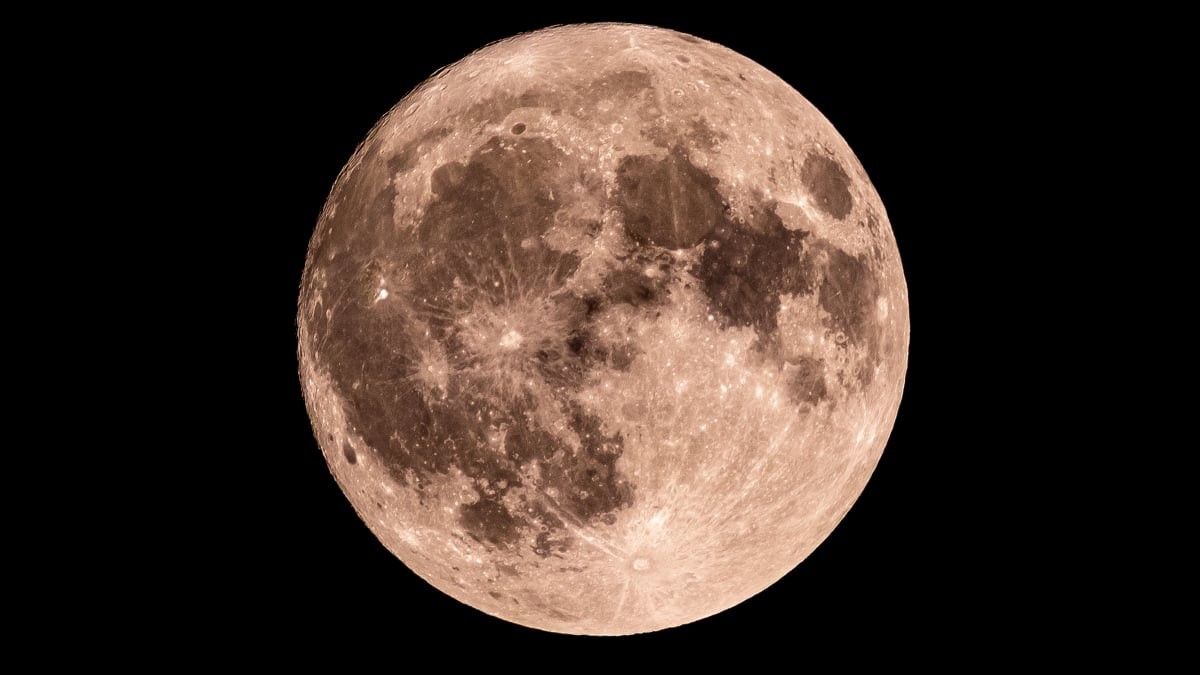
Tonight offers a prime opportunity for stargazers. As we reach day 13 of the current lunar cycle, the Moon is on the verge of reaching its peak illumination, providing a highly detailed view of its surface for anyone with a clear view of the night sky.
Tonight’s Lunar Phase: The Waxing Gibbous
On Thursday, April 30, 2026, the Moon is in its Waxing Gibbous phase. According to NASA, approximately 98% of the lunar surface will be illuminated tonight.
The term “waxing” indicates that the visible portion of the Moon is growing larger, while “gibbous” describes its rounded, bulging shape. This phase is the final step before the Moon reaches its full illumination.
Viewing Guide: From Naked Eye to Telescope
Because the Moon is nearly full, its features are highly visible, though the level of detail depends heavily on the equipment you use:
- With the naked eye: You can easily distinguish major landmarks such as the Mare Serenitatis (Sea of Serenity), the Tycho Crater, and the Copernicus Crater.
- With binoculars: The view expands significantly, allowing you to spot the Alps Mountains, as well as the Archimedes and Alphonsus craters.
- With a telescope: High-magnification tools reveal even finer details, including the Apollo 16 landing site, Rima Hyginus, and the rugged Fra Mauro Highlands.
Looking Ahead: The May Full Moons
The transition to a complete Full Moon is imminent. The next Full Moon is predicted to occur on May 1, 2026. Notably, this is the first of two Full Moons expected in the month of May, a phenomenon often referred to as a “Blue Moon” when it occurs twice in a single calendar month.
Understanding the Lunar Cycle
The changing appearance of the Moon is not due to the Moon itself changing shape, but rather the changing angle of sunlight hitting it as it orbits Earth. This cycle takes approximately 29.5 days to complete.
As the Moon moves through its eight distinct phases, the light shifts in a predictable pattern:
- New Moon: The Moon is positioned between Earth and the Sun; the visible side is dark.
- Waxing Crescent: A small sliver of light appears on the right side (in the Northern Hemisphere).
- First Quarter: The Moon appears half-illuminated on the right side.
- Waxing Gibbous: More than half is lit, but it is not yet a full circle.
- Full Moon: The entire face of the Moon is illuminated.
- Waning Gibbous: The illuminated portion begins to shrink from the right side.
- Third Quarter: The Moon appears half-illuminated on the left side.
- Waning Crescent: A thin sliver of light remains on the left before the cycle resets.
Summary: Tonight’s 98% illuminated Waxing Gibbous Moon serves as a spectacular prelude to the Full Moon arriving on May 1, offering excellent visibility for both casual observers and amateur astronomers.