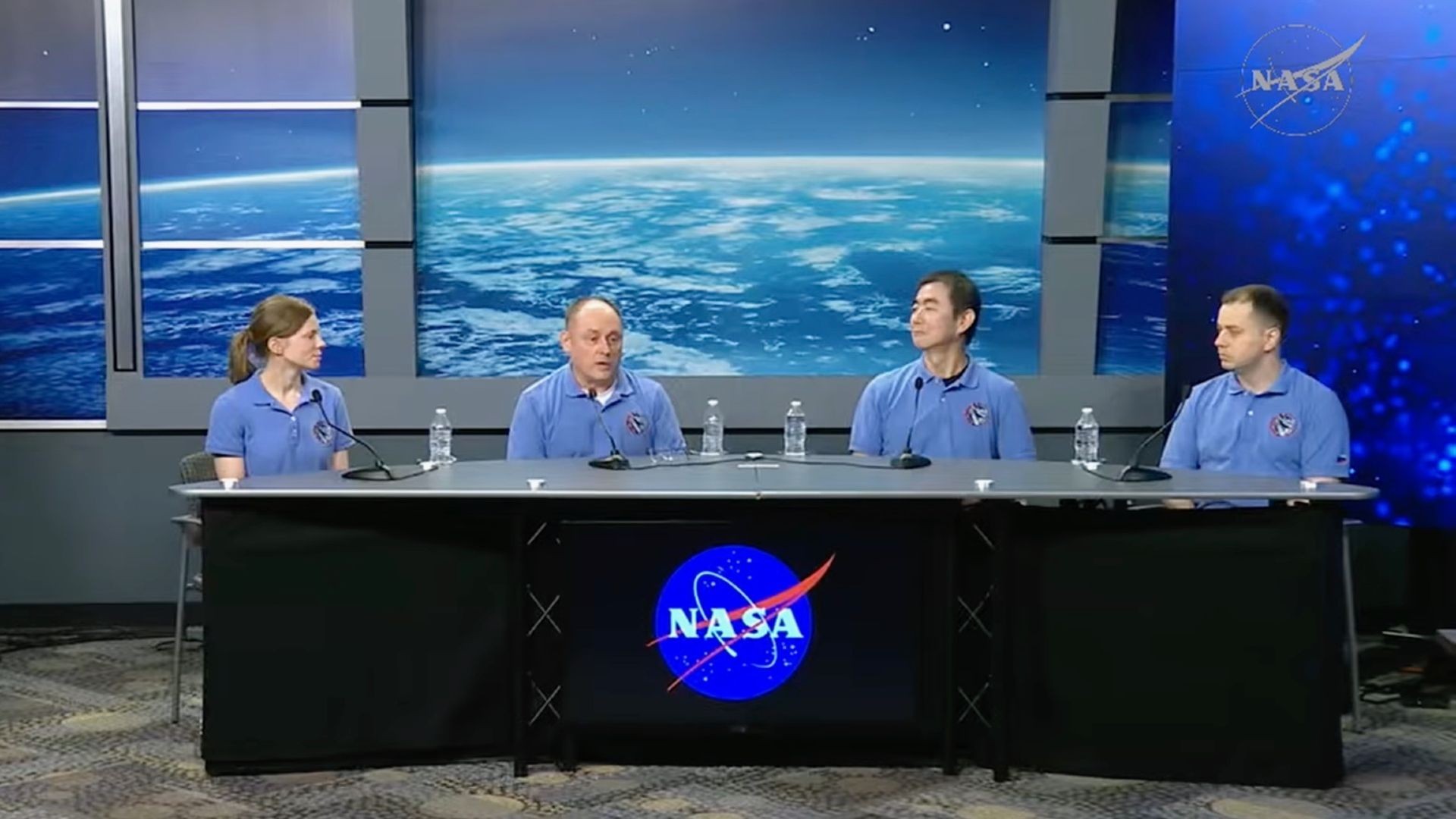
The astronauts of NASA’s Crew-11 mission, who returned to Earth a month ahead of schedule due to an undisclosed medical issue, affirmed today that their unexpected early departure served as a critical test of emergency preparedness for future space exploration. The Crew-11 team—comprising NASA astronauts Zena Cardman and Mike Fincke, JAXA’s Kimiya Yui, and cosmonaut Oleg Platonov—launched to the International Space Station (ISS) in August, intending to remain in orbit for 6.5 months.
Unprecedented Emergency Highlights Preparedness
This mission marked the first time an ISS crew was recalled due to an astronaut’s health condition. The astronauts stressed that the successful, swift return demonstrated the effectiveness of training protocols and emergency resources in place for long-duration spaceflight.
“This is actually a very, very good experience for the future of human spaceflight,” said Yui during a post-mission press conference. He further asserted that the incident proved the ability of astronauts and mission control to “handle any kind of difficult situation.”
Diagnostic Tools Key to Future Missions
While NASA is withholding details about the medical emergency to protect the astronaut’s privacy, Fincke highlighted the vital role of onboard diagnostic equipment, specifically the station’s ultrasound machine. He recommended that portable ultrasound technology be standardized for all future space missions, citing its effectiveness during the crisis.
This is especially critical for deep-space missions, where immediate return to Earth isn’t feasible. NASA’s Artemis program, aiming to establish lunar bases within the next few years, will rely heavily on such advanced medical capabilities.
Confidence in Future Exploration
Crew-11’s experience reinforces confidence in humanity’s ability to undertake increasingly ambitious space exploration feats. Fincke emphasized that the seamless handling of both routine operations and unforeseen emergencies underscores the readiness of NASA and its international partners for the challenges ahead.
The ISS has been occupied continuously since 2000, and this event is the first time an astronaut had to be medically evacuated. This shows that the training, the resources, and the preparedness of the station itself are effective.
Ultimately, Crew-11’s early return wasn’t a setback, but a demonstration of resilience, bolstering optimism for upcoming missions like Artemis and beyond.