


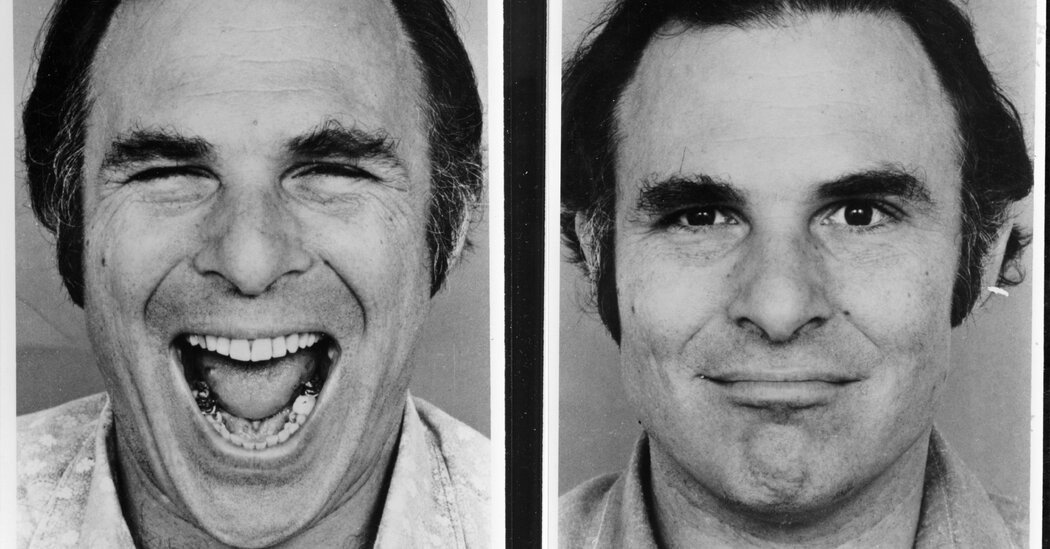
Paul Ekman, the psychologist whose decades of research revealed the universal language of human emotion as reflected in facial expressions, passed away on November 17th at age 91. His work fundamentally changed how we understand nonverbal communication, with implications for fields ranging from law enforcement to filmmaking.
The Science of Facial Expressions
Ekman’s research, conducted over decades, sought to bring rigor to the intuitive human ability to read emotions. He didn’t just observe; he meticulously cataloged thousands of facial movements, linking them to specific emotional states. His most notable finding was that certain facial expressions are universally recognized across cultures, suggesting they are hardwired into our biology rather than learned through social conditioning.
One striking example is his analysis of smiles. Ekman identified 18 distinct types, demonstrating that a genuine smile engages muscles around the eyes (the orbicularis oculi ) creating visible crow’s feet, while forced smiles lack this telltale sign. This distinction has been applied in contexts where emotional authenticity matters – from interrogations to customer service training.
From FBI to Hollywood
Ekman’s influence extended far beyond academia. The FBI and the Transportation Security Administration (TSA) consulted his research to improve lie detection and threat assessment. His techniques were used to train agents to spot micro-expressions – brief, involuntary facial cues that reveal concealed emotions.
But his impact didn’t stop there. Hollywood animators and filmmakers also utilized his findings to create more believable characters. By understanding the subtle muscle movements associated with genuine emotion, they could imbue animated faces with greater realism.
Legacy and Recognition
The American Psychological Association recognized Ekman’s contribution in 2015, ranking him among the most eminent psychologists of the modern era. His work reshaped the field, arguing that facial expressions are not merely products of culture but evolutionary adaptations that aid survival.
Ekman’s research leaves behind a legacy of deeper understanding of human communication. His findings demonstrate that emotions are not just felt internally; they are broadcast through our faces in ways that transcend language and cultural barriers.
His work remains influential, shaping how we interpret behavior and how we attempt to detect deception. The science of emotional expression will continue to evolve, but Ekman’s foundational research ensures his lasting impact.