Nausea. It happens to nearly half of us.
For 12 percent? A chronic, unglamorous companion. Kids get it worse. We mostly just endure it with pills that come with a receipt on their side effects.
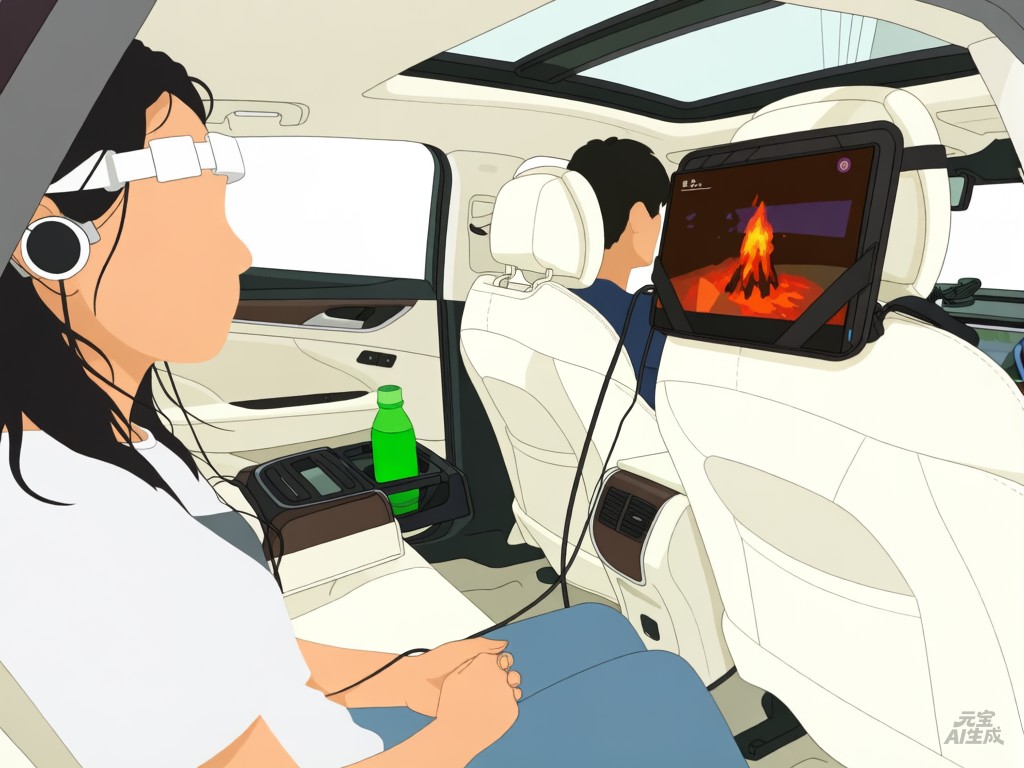
Scientists in Guangzhou aren’t accepting this as inevitable. They’ve built a headband. A wearable bit of plastic and wire that marries AI to the ancient art of sitting still. The goal is simple: trick the brain into forgetting it’s in a moving box.
Yuanqing Li at South China University of Tech leads the charge. His team didn’t just run simulations in a quiet lab. They dragged this setup onto real roads. Over a hundred motion-sensitive participants wore the bands during trips lasting twenty minutes to two hours.
The results were blunt.
“Our BCI-based attention-shifting method… particularly benefited those with severe cases,” says Li.
It actually works. And it doesn’t involve popping antihistamines.
The conflict in the ear
Here’s the glitch in human design. Your inner ear says you are accelerating. Your eyes say the phone screen in front of you is perfectly stationary. Two signals. One truth? No.
Your brain panics. It thinks you’re poisoned. Hence the vomiting, the sweat, the dizzy swirl. This is motion sickness. The neurobiology behind it? A black box. That’s why current treatments are mediocre. We guess. We treat symptoms.
Li proposes a different angle: don’t fix the car, fix the focus. If you look at the horizon, it helps a little. Counting seconds helps a tiny bit more. But you have to sustain the attention. That’s the hard part. Humans are wired to get bored. Or distracted by the nausea itself.
Most previous studies stayed in the safe zone of controlled environments. Li’s team didn’t. They went outside. The real world. The bumpy, conflicting-signal real world.
Digital zen
Enter mindfulness. Not as a spiritual hobby but as a cognitive tool. Mindfulness Meditation isn’t about enlightenment here; it’s about regulating how you react to the outside world. Keeping you present. Stopping the mental chatter.
Li calls it attentional control. A skill that directly opposes the sensory chaos causing the sickness.
But how do you force someone to stay mindful while the car swerves? Technology steps in.
A Brain-Computer Interface (BCI). Specifically, a wireless headband that reads electroencephalogram (EEG) signals. Real-time AI interprets your brainwaves. Then, it feeds you back.
The visual and audio on your screen changes based on your focus. A campfire burns brighter when your mind is calm. Sounds sharpen.
Drift? The fire dims. You know immediately. You pull your mind back to your breath. The loop closes. It’s a biological feedback system disguised as a screensaver.
The proof was stark. In a separate group, participants wore a “sham” system. Random visuals. No brain data involved. Just 76 percent got zero relief. The active BCI group saw over 83 percent relief.
Why does this matter?
Previous studies showed a spike in beta power —brainwave patterns specific to car sickness—is the electrical signature of misery. As the participants felt better using the headband, this beta signal normalized. The device isn’t masking pain; it’s rewiring the immediate brain activity associated with it.
The road ahead
Millions suffer. This device might help.
Li sees the next steps clearly. He wants to test if simple, non-meditative distractions work too. He wants to know if using this device daily reduces your long-term susceptibility. Can you train yourself out of the sickness?
Challenges remain. The tech needs to be robust across different car models and age groups. Regulatory approval for medical devices is a bureaucratic marathon, not a sprint.
Cost is another elephant in the room. Or is it? Li argues the hardware is manageable. Portable. Connects to a phone you already own. Mass production drops the price further.
Even accessibility in lower-income markets is theoretically possible. The device doesn’t need a lab coat or a million-dollar machine. Just a headband and a screen.
Li also eyes other forms of sickness. Seasickness? Cybersickness from VR? The core mechanism—calming the sensory conflict through internal focus—could apply everywhere.
Will this change how we travel?
Maybe. Maybe the future of car trips involves a quiet head, a glowing digital flame, and a brain that finally agrees on where it is.
“Theoretically holds potential for these scenarios,” Li remarks.