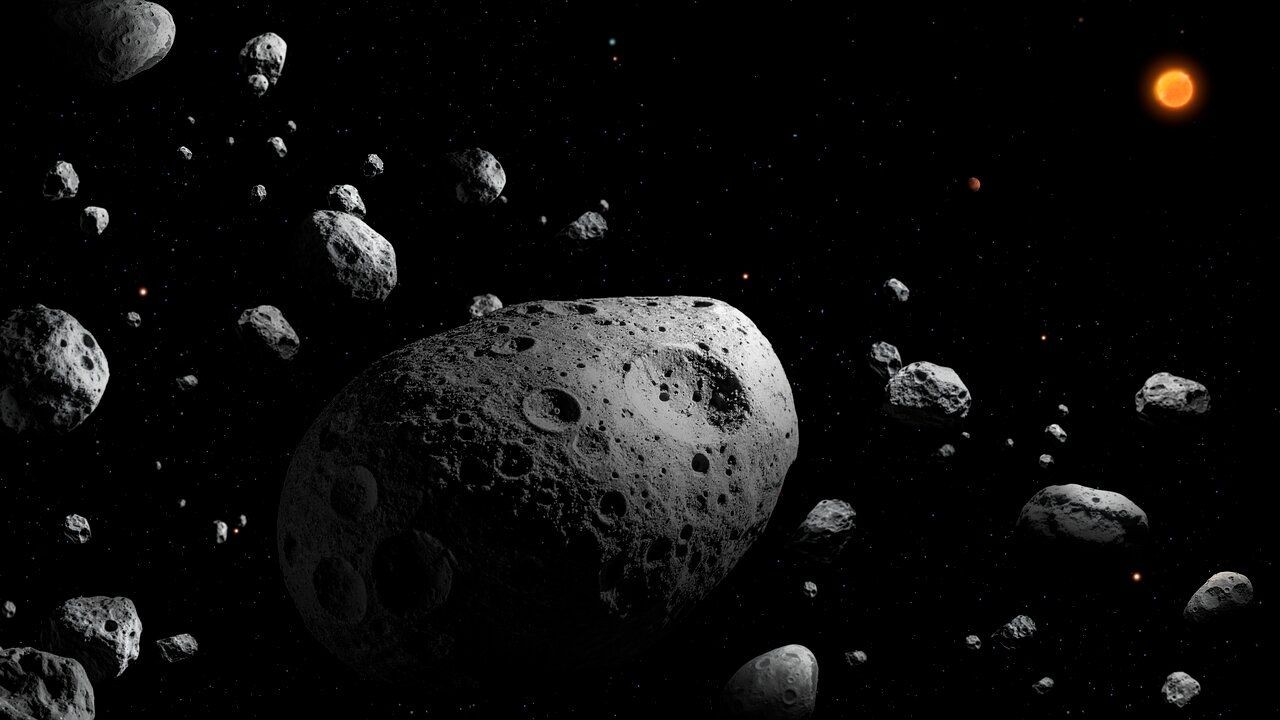
The Vera C. Rubin Observatory has identified an unusually fast-spinning asteroid, 2025 MN45, just seven nights into its preliminary observations. The rock, measuring roughly 2,300 feet (710 meters) wide, completes a full rotation in approximately 113 seconds — making it the quickest-spinning asteroid of its size ever documented. This discovery marks the first peer-reviewed research from the Observatory’s LSST Camera, the largest digital camera globally, which will systematically scan the southern sky over the next decade.
Why This Matters
Asteroids are remnants from the solar system’s early formation. Studying them provides insight into how planets evolved over 4.5 billion years. The rapid spin of 2025 MN45 challenges assumptions about asteroid composition, suggesting that it is unusually dense and structurally sound.
The Discovery and Its Implications
The asteroid’s speed surprised researchers, as most asteroids of this size are expected to be “rubble piles”— loosely bound collections of rock and debris. According to Sarah Greenstreet, an astronomer involved in the study, the asteroid’s integrity suggests it’s built from material with exceptional strength, “similar to solid rock.” This finding contradicts the prevailing theory that most asteroids are fragile.
The discovery was made using preliminary data before the official 10-year LSST survey begins. The Observatory has already revealed thousands of previously unknown asteroids, indicating a vast trove of new celestial objects waiting to be cataloged.
Fast Spinners and Their Origins
Fast rotation is often caused by collisions with other space rocks or remnants from catastrophic impacts. 2025 MN45’s speed suggests that it either survived a violent collision or is a fragment from a larger shattered asteroid. While many fast-spinning asteroids are found near Earth (making them easier to observe), this object resides in the main asteroid belt between Mars and Jupiter, where fast rotation is unexpected.
Beyond 2025 MN45
The Rubin Observatory’s initial data includes 16 other “super-fast” rotators, completing rotations between 13 minutes and 2.2 hours, and two “ultra-fast” asteroids spinning in under two minutes. All of these newly discovered asteroids are at least 100 yards (90 meters) in length, with most originating from the main asteroid belt. The full survey promises thousands more similar discoveries.
The Rubin Observatory’s preliminary findings have already identified nearly 1,900 previously unknown asteroids. As the formal 10-year survey begins, the number of discoveries is expected to increase dramatically, providing unprecedented insights into the early solar system.
This discovery highlights the power of new observational tools to rewrite our understanding of asteroid composition and evolution.