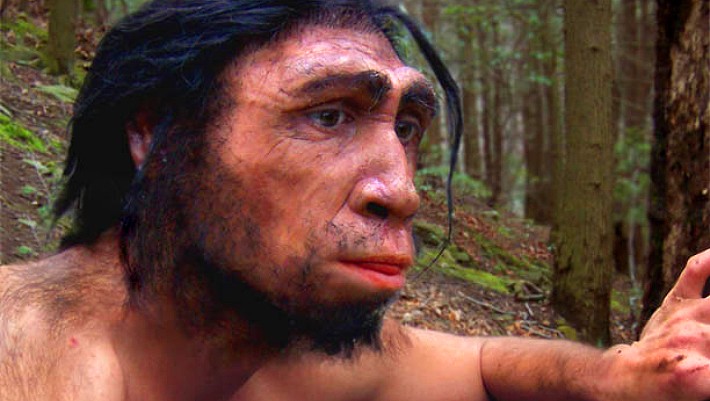
A newly reconstructed skull, designated DAN5, is reshaping our understanding of Homo erectus, one of our earliest human ancestors. The 1.5-million-year-old fossil, unearthed in Ethiopia’s Afar region, shows a surprising mix of primitive and advanced traits, suggesting that the species’ evolution wasn’t a simple linear progression.
The Puzzle of a Primitive Face on an Advanced Braincase
The DAN5 skull, pieced together from four fossil fragments using high-resolution micro-CT scans, possesses a small braincase typical of early Homo erectus. However, the facial structure is more archaic than expected for a hominin of that age. This means the fossil retains features usually seen in earlier hominin species.
Specifically, the reconstructed face exhibits a flat nasal bridge and larger molars, characteristics not typically associated with African Homo erectus from the same period. This finding challenges the prevailing view that Homo erectus evolved uniformly across Africa before migrating outwards.
Africa: Where Evolution Got Messy
The discovery raises a key question: did Homo erectus evolve differently in Africa than in Eurasia? For years, scientists believed the species first evolved outside the continent, with African fossils representing later, more advanced forms. DAN5 suggests otherwise.
“The oldest Homo erectus fossils are from Africa, and this reconstruction shows transitional fossils existed there, too,” explains Dr. Karen Baab, the lead paleoanthropologist. “This supports the idea that the species originated on the African continent.”
However, the fossil was found after early Homo erectus had already begun migrating out of Africa, meaning there are still gaps in our understanding. The existence of a transitional fossil within Africa suggests that evolution was not a single, straightforward path; rather, it was a messy process with regional variations.
Stone Tools and Behavioral Complexity
The DAN5 hominin wasn’t just anatomically interesting; it was also technologically advanced. Researchers found evidence that this individual’s population made both simple Oldowan stone tools and early Acheulian handaxes, representing some of the earliest direct associations between hominin fossils and these tool traditions.
This shows that the population was capable of both primitive and more complex stone toolmaking, further highlighting the diversity of early human behavior.
What This Means for Human Origins
The reconstruction of DAN5 is a reminder that the story of human evolution is far from complete. The fossil emphasizes the anatomical diversity within early Homo species, a diversity that will likely grow as new discoveries are made.
This finding pushes scientists to rethink the neat, linear models of human evolution. Instead, we must consider that our ancestors were more adaptable, experimental, and varied than previously imagined. The DAN5 skull is not just another fossil; it’s a piece of the puzzle that forces us to re-examine the origins of our own species.