


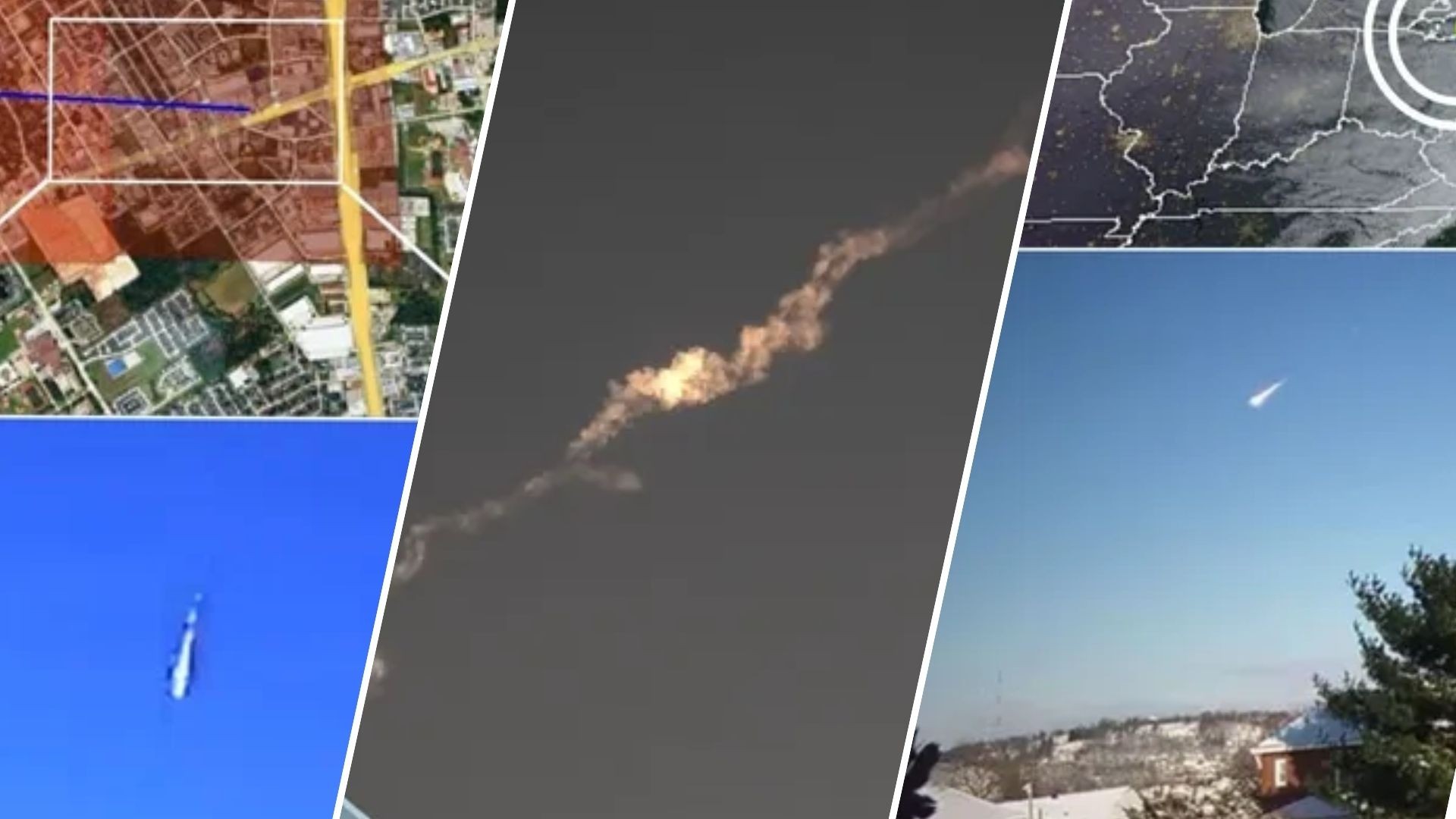
Reports of extraordinarily bright meteors, known as fireballs, have spiked dramatically across the globe in March 2026, with concentrated sightings in the US, Europe, and Canada. The surge isn’t just a matter of more people looking up; the data suggests a genuine increase in larger, more energetic events. From a fragment crashing through a Texas home to widespread sonic booms, the recent activity is raising questions among scientists.
What’s Driving the Increase?
The American Meteor Society (AMS) reported over 2,369 fireball sightings in the US alone during March—a significant jump from the 1,587 reported in January and 1,425 in February. While fluctuations in meteor activity are normal, the current trend stands out. According to planetary scientist Nick Moskovitz of Lowell Observatory, the rise could be a combination of slightly elevated meteor rates and increased public awareness, amplified by media coverage of high-profile events like the Texas house impact.
However, the AMS data reveals a more nuanced picture. While total fireball counts are only modestly higher than in previous years, the number of large, widely-observed fireballs has more than doubled. “We might see 10 meteorite recoveries a year worldwide,” notes Mike Hankey, lead analyst for the AMS. “We had three recoveries in a week or ten days.” This suggests that the increase isn’t merely a statistical anomaly or a reporting effect; something unusual is happening in the distribution of significant events.
The Role of Technology and Reporting
The surge in reports isn’t solely due to more meteors. The proliferation of dash cams, security cameras, and doorbell footage has made it easier to capture and share these events. Affordable technology means more people can contribute to scientific databases like the AMS. Automated systems, such as the Global Meteor Network, now process so much data that manual review is impossible, relying on citizen reports to flag key events.
AI chatbots may also play a role. If a person witnesses a fireball and searches for information, an AI assistant might suggest reporting the sighting to the AMS. While this effect is likely small, it highlights how technology influences our perception of these events.
Deeper into the Data: Trajectories and Sonic Booms
The length of a fireball’s visible path matters. Longer trajectories mean more witnesses. One event in Germany and France was reported by 3,200 people because the meteor streaked across 300 kilometers of sky. Similarly, longer-lasting fireballs (14+ seconds) attract more attention than fleeting ones.
Crucially, the recent surge is accompanied by an unusually high rate of sonic booms—explosive sounds caused when meteors penetrate deep into the atmosphere. This suggests larger or denser objects than usual. Nearly 80% of large fireballs reported in early 2026 produced audible booms, a metric that cannot be artificially inflated by reporting biases.
Seasonal Patterns and Earth’s Orbit
The spike in fireballs is not linked to a major meteor shower. Instead, it aligns with seasonal patterns tied to Earth’s orbit. NASA’s Bill Cooke notes that fireball rates climb 10-30% around the vernal equinox (March 20), a phenomenon not fully understood. Some scientists theorize that Earth passes through more large debris at this time of year.
The “anthelion source” also plays a role. This refers to the region of the sky opposite the sun, which reaches its highest point in the night sky in February. Meteors from this source are slower relative to Earth, increasing their visibility and reducing their velocity upon impact.
The Bottom Line
The evidence suggests a real, though not fully explained, increase in substantial meteoroid activity. The surge is driven by a combination of natural variations, technological advancements in reporting, and possibly seasonal effects. While the uptick is notable, scientists emphasize that these events remain small on a cosmic scale and pose no widespread threat. The sky may seem brighter right now, but Earth is not under siege.


