


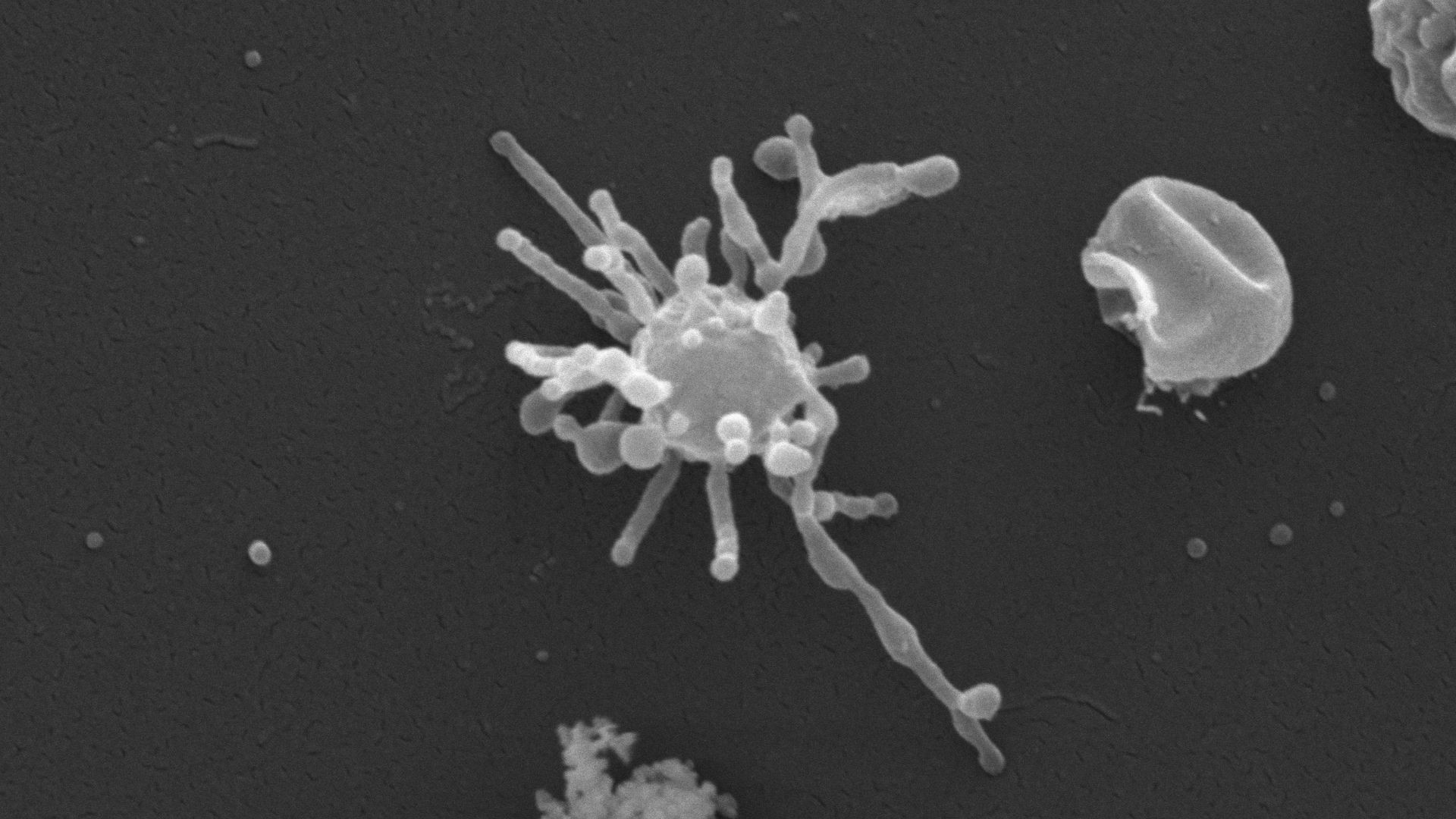
More than two billion years ago, before Earth’s atmosphere was rich in oxygen, certain microbes may have already harnessed its power. A new genetic study suggests that Asgard archaea —the closest microbial relatives of plants and animals—carried the molecular tools to thrive with oxygen, potentially reshaping our understanding of how complex life arose.
The Puzzle of Early Life’s Evolution
For decades, scientists have theorized that complex cells (eukaryotes) formed when an ancient microbe merged with a bacterium. This union eventually led to organisms ranging from trees to humans. However, a key question remained: how did this merger happen in an oxygen-poor environment? The bacterium that became the energy-producing mitochondria within eukaryotic cells needs oxygen to survive. If the host archaeon couldn’t tolerate oxygen, the merger would have been improbable.
This new research, published in Nature on February 18, suggests that the archaeal host, specifically Asgard archaea, may have been more oxygen-tolerant than previously assumed.
Where the Evidence Comes From
Researchers analyzed massive amounts of genetic data collected from ocean sediments and seawater, totaling roughly 15 terabytes. They reconstructed over 13,000 microbial genomes, identifying hundreds linked to Asgard archaea. The team sampled environments from 100 feet deep in the Bohai Sea to 6,561 feet down in the Guaymas Basin—both areas teeming with microbial life.
The key finding? Asgard archaea closely related to eukaryotes were found in oxygen-rich environments like coastal sediments and open water. These microbes possessed metabolic pathways that actively used oxygen.
Oxygen-Handling Machinery Confirmed
Using AI tools like AlphaFold2 to predict protein structures, the researchers found that certain Asgard lineages, particularly Heimdallarchaeia, carry genes for aerobic respiration—the process organisms use to extract energy from food using oxygen. They also found enzymes that neutralize toxic byproducts of oxygen metabolism. This suggests that the archaeal ancestor of complex cells wasn’t necessarily limited to oxygen-free conditions.
“Oxygen appeared in the environment, and Asgards adapted to that,” says study co-author Brett Baker. “They found an energetic advantage to using oxygen, and then they evolved into eukaryotes.”
Why This Matters
This discovery isn’t just about rewriting textbooks. It bridges a long-standing gap in understanding the origins of complex life. If the archaeal host could handle oxygen, the fusion with the oxygen-dependent bacterium becomes more plausible. The implication is that early life wasn’t necessarily constrained by the absence of oxygen; it adapted to its presence, paving the way for the evolution of more sophisticated organisms.
The research also highlights the importance of deep genomic surveys in uncovering hidden evolutionary histories. Asgard archaea, named after the home of the Norse gods, were first identified in 2015. These findings underscore how much remains unknown about the microbial world and its role in shaping life on Earth.


