A remarkable archaeological discovery in Malawi has unearthed the oldest known intentional cremation in Africa, dating back 9,500 years. The finding challenges previous assumptions about funerary practices in early hunter-gatherer societies, revealing a complex ritual that demanded significant communal effort. The remains – those of a woman estimated to be between 18 and 60 years old, and under 5 feet tall – were found in situ, meaning within the original cremation pyre at a burial ground near Mount Hora.
A Unique Burial Site
The burial ground itself dates between 8,000 and 16,000 years ago, but this pyre stands alone: it is the only instance of cremation discovered at the site. Analysis of the 170 bone fragments suggests deliberate treatment of the body before burning. Notably, no teeth or skull fragments were recovered, indicating the head may have been removed prior to cremation – a practice potentially linked to ancestor veneration or social memory. Cuts on other bones further suggest portions of the body were separated before the pyre was lit.
The Labor of Ritual
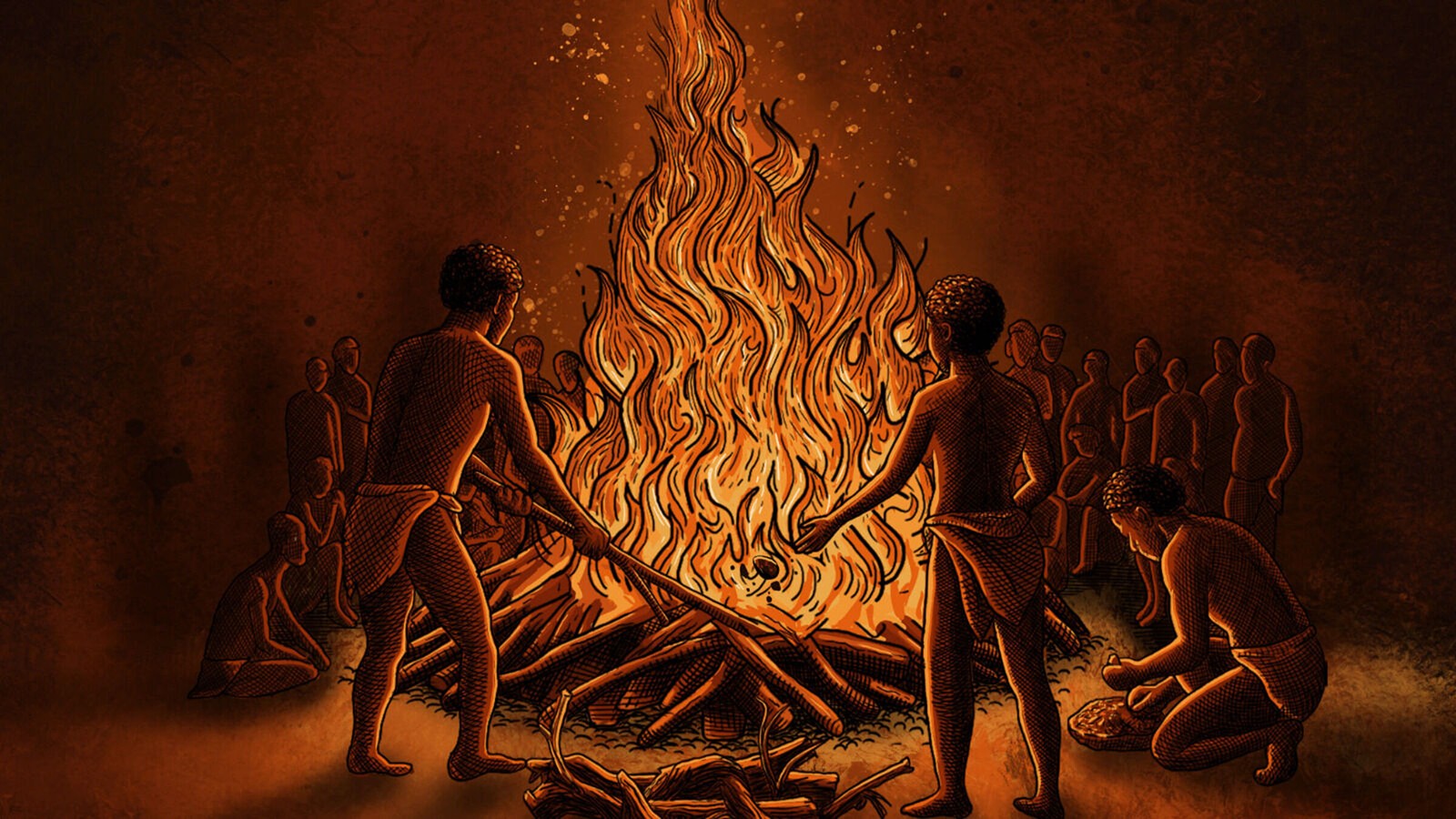
The cremation itself wasn’t a casual act. Researchers estimate it required at least 30 kilograms (66 pounds) of wood and grass to reach temperatures exceeding 500°C (930°F). This scale suggests a coordinated group effort, forcing a reevaluation of how early hunter-gatherers organized labor for ritual purposes. The fact that the woman was cremated within days of death, before significant decomposition, implies the act was planned and executed swiftly.
Rewriting Prehistoric Assumptions
Prior to this discovery, the oldest in situ cremation was a 3-year-old from Alaska, dated 11,500 years ago. Africa’s previously confirmed cremations were far more recent, around 3,500 years old, associated with pastoral Neolithic herders in Kenya. While evidence of cremation exists in Australia dating back 40,000 years at Lake Mungo, those remains were not fully burned.
“Cremation is very rare among ancient and modern hunter-gatherers… because pyres require a huge amount of labor, time, and fuel,” notes anthropologist Jessica Cerezo-Román. This rarity makes the Malawi pyre all the more significant.
The Unanswered Question
Researchers also found evidence of large fires at the site 700 years before and 500 years after the cremation, suggesting the location remained symbolically important. The question remains: why was only this woman cremated? The researchers speculate she held a unique status within the community, warranting the extraordinary effort of a full cremation.
This discovery doesn’t just add another date to the archaeological record. It challenges the notion that early hunter-gatherers lacked the social organization or ritualistic complexity to perform labor-intensive funerary practices. The Malawi pyre forces us to reconsider how we interpret group dynamics, ancestor worship, and the significance of death in prehistoric Africa.