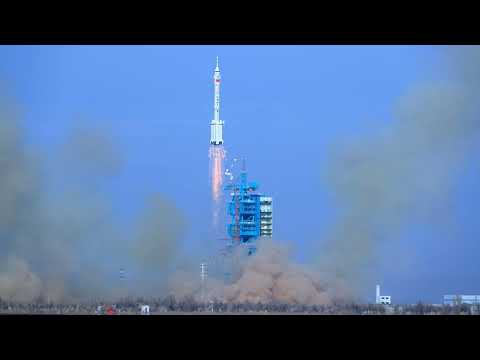
Three Chinese astronauts stranded aboard the Tiangong space station now have a confirmed path back to Earth, following the successful launch of an unmanned rescue spacecraft, Shenzhou-22. The crew – Zhang Lu, Wu Fei, and Zhang Hongzhang – will remain in orbit until their scheduled mission end in spring 2026, but the incident underscores vulnerabilities in China’s space protocols and the broader need for international coordination in orbital emergencies.
The Chain of Events
The crisis began when a suspected piece of space debris damaged the return capsule intended for the previous crew, Shenzhou-20, just hours before their planned departure. This forced the crew to return via an alternate vehicle, leaving the incoming Shenzhou-21 team without a viable ride home. The Shenzhou-22 spacecraft, launched on November 24th from Jiuquan Satellite Launch Center, now provides that lifeline.
Systemic Issues and Delayed Response
The delay in launching Shenzhou-22 – over a week after the initial capsule damage – raises questions about protocol efficiency. Despite having a spare capsule and rocket on standby, the astronauts remained at risk longer than necessary. Had an emergency occurred during this period, such as a fire or another impact, the situation could have become catastrophic.
The incident highlights a flaw: allowing crews to be stranded without immediate return options. While CMSA protocols were followed, the logic of those protocols is now under scrutiny.
Global Implications and the Need for Coordination
This event mirrors recent astronaut stranding incidents with NASA, including delays with the Boeing Starliner and a meteoroid strike delaying Frank Rubio’s return. However, unlike those cases, the Chinese crew faced a prolonged wait with no immediate backup. This reinforces the growing consensus that a coordinated, international “space rescue service” is essential.
The issue isn’t just about rescue; it’s about orbital debris mitigation. The increasing volume of space junk in low Earth orbit (LEO) poses an existential threat to all space missions.
“This is a massive wake-up call,” said one expert, underscoring the urgency of addressing both orbital safety and emergency response capabilities.
The Chinese Manned Space Agency appears unconcerned about a repeat incident, but this near-disaster serves as a stark reminder that even well-planned missions are vulnerable to the unpredictable realities of space.