In the traditional “central dogma” of biology, DNA synthesis is a process of copying. To build a new strand of DNA, an enzyme (a protein builder) reads an existing template—a biological blueprint—and follows its instructions to assemble the correct sequence.
However, a groundbreaking study from Stanford University has revealed that this rule is not absolute. Researchers have discovered a mechanism where the builder protein itself acts as the mold, creating DNA without needing an external template to follow.
The Discovery: A Self-Contained Assembly Line
The research team focused on a specific system found in Escherichia coli bacteria known as DRT3 (defense-associated reverse transcriptases). These are specialized tools bacteria use to defend themselves against viral attacks.
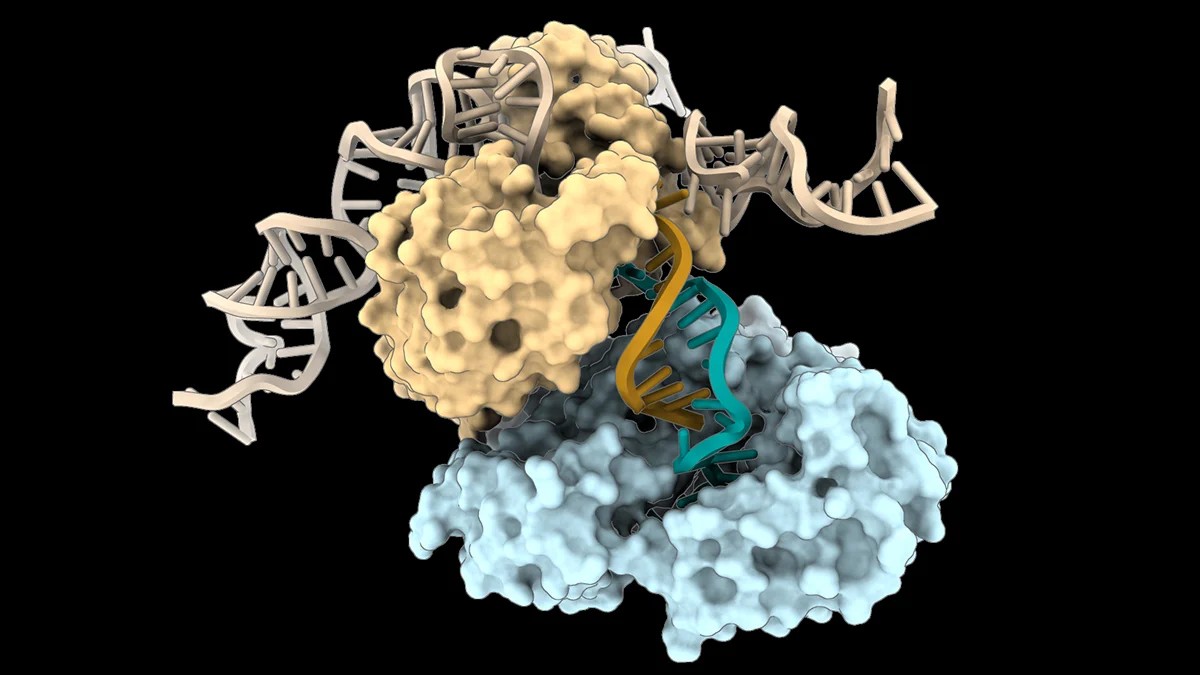
While studying this system, the researchers identified a three-part machine consisting of two enzymes (Drt3a and Drt3b ) and a piece of non-coding RNA. The breakthrough came when they analyzed Drt3b.
Unlike every other known polymerase, Drt3b does not look at a separate strand of genetic material to decide which bases to add next. Instead:
– The physical shape of the Drt3b protein dictates the sequence.
– The protein acts as a structural mold.
– The assembly line effectively is the blueprint.
“The protein itself serves as the blueprint for the DNA sequence,” says Stanford biochemist Alex Gao. “This is a fundamentally new way that life produces DNA.”
Why This Matters: Evolution and Efficiency
This discovery challenges our fundamental understanding of how biological information is transferred. In most life forms, information flows from a template to a builder. In the DRT3 system, the information is embedded directly into the architecture of the builder itself.
This “shortcut” likely emerged through evolutionary pressure. For bacteria, fighting off viruses is a constant arms race. A system that can produce DNA rapidly and autonomously—without the need to find or maintain a separate template—is highly energy-efficient. This allows bacteria to mount a defense against viruses while expending minimal biological resources.
Future Implications: From Bacteria to Biotechnology
While the study primarily explains a niche bacterial defense mechanism, the long-term implications for science are significant. History has shown that when we uncover how bacteria defend themselves, we can harness those tools for human benefit.
A prime example is CRISPR : originally a natural bacterial immune system, it was repurposed by scientists to become the world’s most powerful gene-editing tool. The DRT3 discovery could follow a similar trajectory:
- Synthetic Biology: Understanding how a protein can “code” for DNA could lead to new methods of synthesizing genetic material in labs.
- Data Storage: As scientists look for ways to use DNA for high-density data storage, finding new ways to “print” or build DNA could revolutionize the field.
- Engineering Challenges: Currently, Drt3b is a fixed mold. The next great scientific hurdle will be determining if we can reprogram these proteins to build specific, custom DNA sequences for medical or industrial use.
Conclusion
The discovery of the DRT3 system reveals that nature has found ways to bypass the standard rules of genetic replication. By proving that proteins can act as their own templates, scientists have opened a new chapter in our understanding of how life processes and preserves information.