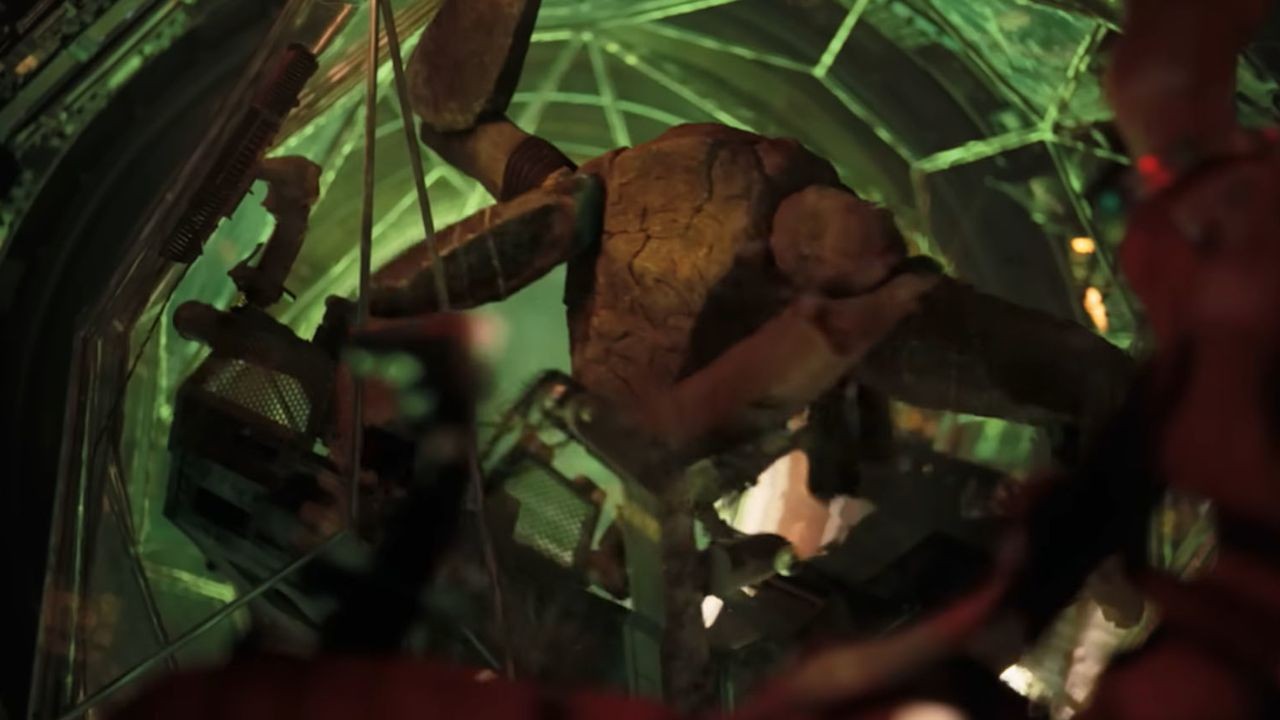
In science fiction, one of the most difficult challenges is answering a fundamental question: What does an alien actually sound like? For the upcoming film adaptation of Andy Weir’s Project Hail Mary, sound designers Ethan Van der Ryn and Erik Aadahl faced this exact dilemma. Their mission was to create a believable, emotionally resonant language for Rocky, the film’s endearing, stone-skinned Eridian.
The result is not a digital, synthesized effect, but a complex “sonic tapestry” built from organic, real-world sounds.
Balancing Scientific Realism with the “Rule of Cool”
A major hurdle for the production was navigating the physics of space. In a vacuum, sound cannot travel, which creates a potential conflict between scientific accuracy and cinematic storytelling.
The team worked closely with author Andy Weir to establish a framework for the film’s audio:
– The Scientific Approach: When characters are in pressurized suits, the soundscape shifts to a claustrophobic, intimate reality—focusing on breathing, suit fans, and the vibrations of physical contact.
– The “Rule of Cool”: While the team aimed for realism, Weir gave them the creative freedom to use “dramatic sound flourishes” to ensure the movie remained engaging. This allowed for the depiction of engines and cosmic events that, while not strictly “realistic” in a vacuum, serve the narrative’s emotional weight.
From Whale Songs to Water Jugs: The Making of a Voice
To avoid the artificial feel of computer-generated voices, the designers opted for a purely organic approach. They wanted Rocky’s voice to feel “living and alive,” leading them to experiment with a wide array of instruments and natural elements.
The Musical Foundation
The team explored various wind instruments to find the right expressive range. After experimenting with the bass clarinet, they found their breakthrough with the ocarina. Because of its flute-like yet organic tone, they recorded the instrument at an extremely high resolution (192 kilohertz), allowing them to slow the sound down by multiple octaves without losing quality.
The Animal Kingdom
To capture the “soul” of an alien, the designers looked to the natural world to define Rocky’s emotional spectrum:
* Deep/Serious Tones: Inspired by humpback whale songs.
* Agitated/Raspy Tones: Created using a contra-alto clarinet.
* High/Excited Tones: Derived from various bird songs. Interestingly, Rocky’s own name is inspired by a type of bird called a solitaire, slowed down to alien frequencies.
* Physicality: Sounds of hippos and frogs were layered in to ground his eating and more primal vocalizations.
The “Granite” Connection
Perhaps most impressively, the team sought to connect Rocky’s voice to his physical form. To simulate a creature made of stone, they took their designed sounds, ran them through a transducer, and resonated them against a block of granite, re-recording the vibrations. This ensured that the audience wasn’t just hearing a voice, but the sound of something actually vibrating through rock.
A Multi-Layered Identity
Because the character of Rocky is biologically designed with five different vocal chord bladders, the sound team had the unique opportunity to layer multiple distinct sounds simultaneously. This allowed for a level of vocal complexity rarely seen in creature design, enabling Rocky to communicate intelligence, emotion, and intent through a single, unified “voice.”
“We were trying to paint a picture of what is Rocky’s sonic soul… how we use sounds to convey his intelligence, what he’s thinking, and how he’s feeling.”
Conclusion
By blending high-fidelity musical instruments with the raw textures of the animal kingdom and physical stone, the sound team transformed a mathematical linguistic challenge into a deeply human emotional connection.