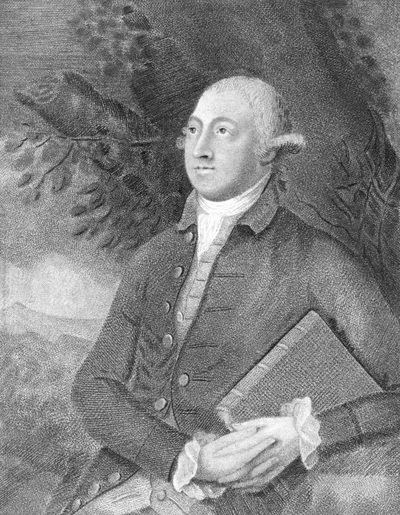
Thomas Pennant was not just another wealthy landowner with too much time on his hands. Born in Downing, Flintshire, Wales, in 1726, he became one of the most influential zoologists of the 18th century. He died there in 1798, leaving a legacy that changed Britain’s perception of its own wildlife.
What set Pennant apart wasn’t just his access to resources. It was his ability to write. His books were praised for their readability, a rare quality in an era when natural science texts were often dry, dense, and inaccessible to anyone without a college degree. He used existing information and made it interesting. This approach did more than entertain; it sparked serious scientific research.
His 1766 British Zoology is widely credited with sparking a boom in zoological research throughout Britain, particularly in ornithology. In the past, bird research was often fragmented. Pennant brought it together. He followed in 1781 with a History of Quadrupeds and a two-volume Arctic Zoology (1784–1785), both of which were widely read outside academic circles.
But Pennant was not limited to the library. He was a traveler. His travelogues provided valuable insights into the local customs, natural history and antiquities of Scotland, Wales, England and even continental Europe. He didn’t just list the species; He documented the world they lived in.
For anyone interested in the history of naturalism or the development of early scientific communication, Pennant offers a clear example of how accessible writing can advance professional research. He bridged the gap between amateur observation and professional taxonomy.
We often think of science as modern collaboration. But figures like Pennant show how individual curiosity, backed by independent means, can still change an entire field. His work reminds us that clarity is as important as data.
The archives are full of similar names lost in time. Pennant stays because he wrote well. It’s a lesson worth remembering.