


You know the drill. When you open that familiar box, you see a messy pile of colorful plastic. Instead, you will find several numbered sealed bags. While it may seem like a pain to unpack, this packaging is not an afterthought. This was a calculated move in a high-stakes logistical battle.
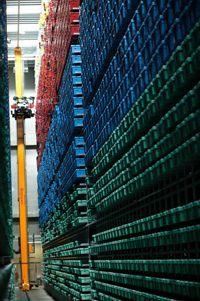
This system started long before the box hit the shelves. Lego doesn’t just dump bricks into bins. Factory floors operate at a level of precision that borders on obsession. Robots sort millions of unique objects by size, color and function. These classified elements are packed in specific bags which are shown as the final product.
Why go through the trouble? efficiency and accuracy.
When Lego ships loose blocks, the chances of them missing a small 1×1 plate or containing three extra 2x4s skyrocket. The bagging system acts as a quality control checkpoint. Each package corresponds to a specific step in the user manual. Open bag 1, build steps 1-5, then move to bag 2. This creates a direct and reliable path through the building process.
The bag system is not just for organization. This is a manufacturing necessity to ensure that each set is perfect, eliminating the need for manual counting at the end of the line.
This method also protects the plastic. Loose bricks can bump into each other during transport, causing scratches and static cling. Airtight bags keep the parts intact until assembly. It’s a small detail, but it shows how much thought goes into unpacking.
Keep this in mind the next time you have trouble with stubborn ziplock seal, It makes sure that when the Millennium Falcon is done, it’s really done.


The conveyor belt continues to move. The container opens and closes precisely mechanically. The bricks fell into waiting polypropylene bags. The bill is accurate. Or so it should be.
Next comes the scale.
Weigh each bag. Check for errors before they go to waste. If your bag is too light or heavy, it will be flagged. The operator intervenes. Only the defective bag was replaced. They don’t throw away the whole set. They don’t throw away good bricks. No need to waste time restarting a stuck production line.
It’s not just about efficiency. This is to stop waste before it starts.
It’s a bad bag. It’s an exchange. There are no disposable products.
Why is this important? Because a single mistake can cause a chain reaction during the manufacturing process. The entire palette can be discarded. One batch has stopped. Here the error is isolated. contain. It will be fixed in seconds.
It doesn’t stop just because the machine breaks down. It recognizes. Then let someone else handle it. Quickly. cheap. clean.
You might think that automation doesn’t mean people. But take a closer look. There are still operators. clock. intervention. fix.
This is not magic. This is the process.
It works because it doesn’t assume perfection. It assumes something is wrong. And prepare for it.
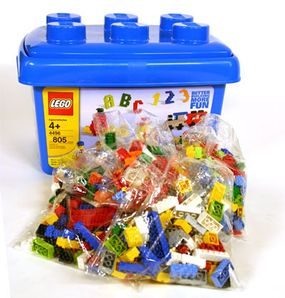

The assembly line does not stop even after molding. The packer is the last gatekeeper. Fold the cardboard, fill any loose parts and double-check that the machinery didn’t mess up. This is the human touch in an automated process. These sealed boxes then go out into the world. Its scale is hard to imagine. The factory burns 400,000 to 500,000 cardboard boxes annually.
Test the limits of your game
Before sending the box, the bricks themselves must be tested. Quality assurance staff throw everything at the plastic. We’re talking about drop testing, torque checking, tension, compression, bite simulation and impact analysis. The goal is simple. The purpose is to ensure that the toy is sturdy. They won’t break on a kid.
However, safety is just as important as durability. Technicians use special measuring beaker to check for choking hazards. If the piece is small enough to fit in the cylinder, it is marked. The accuracy of the statistics here is almost unbelievable. only about eighteen fail these tests. The failure rate is 0.00002%. You can’t get much tighter than that.
Where are these plastics made?
The majority of production takes place in two dedicated centers: Klandorf in the Czech Republic and the original home base in Billund, Denmark. the output is relentless. The factory produces 33,000 bricks per minute.
Let’s do the math. This is equivalent to 16 billion bricks per year.
The variety is just as staggering as the volume. These plants can produce 3,000 different components at a time. There are 300 million tires alone. All these different parts make up 37,000 different Lego sets every hour. It’s a logistical machine running on plastic and precision.
Closing the Loop on Waste
Not all works fit in the box. But almost every bit of scrap doesn’t just disappear. LEGO factories recycle all plastic waste generated during manufacturing every year, but only about 1%. If the plastic batches cannot be used for new bricks, they are processed and sent elsewhere for other uses. It’s a closed loop, mostly.
As all plastic is recycled and billions of bricks are packed into hundreds of thousands of boxes, the question shifts from production to consumption. What do you actually do with all those finished bricks once they arrive?


