


Agricultural technology is often thought of as drones, sensors or autonomous tractors. it is not. The real work begins with the soil. More precisely, it begins with the mechanical treatment of the soil to prepare it for planting. This process is called tilling, and it differs from fertilization, which adds nutrients. Although both are necessary, tillage is the physical foundation of the entire crop. Without it, it is difficult for crops to get the substances they need for growth.
The real purpose of tilling
Agriculture is not just about changing the soil. It’s about creating certain physical conditions. Farmers use tools to break up, cut and move soil. We have three goals. These include changing the structure of the soil, destroying weeds and managing crop residues from previous seasons.
Weeds are your enemy. They compete with plants for water, nutrients and light. Surface residues can block the seeding equipment or create unfavorable conditions for new growth. However, the most critical function of tilling is structural change. Healthy soil must absorb, store and transport water efficiently. You also need to provide a suitable environment for the seeds and roots to germinate.
Building Pores for Water and Air
If the soil aggregates are already the right size, you may only need to weed and treat the residue. In an ideal world. But the reality is messier. Planting, tilling and harvesting often damage the soil structure. For this reason, seedbed preparation offers the best (and often the only) opportunity to recreate the desired structure.
Good structure means large, stable pores that extend from the ground surface to the groundwater table or drains. These pores ensure two things: the rapid penetration of water and the removal of excess water. It also promotes subsoil aeration. When these large pores are interspersed with smaller pores, the soil can retain moisture without flooding. It’s a delicate balance.
Moisture and Texture Dictate the Method
You cannot apply a one-size-fits-all approach to tilling. This method completely depends entirely on soil texture.
On coarse soils, tillage can actually increase the size of the aggregate. However, this only works if the soil moisture is at a certain level. The small pores must be filled with water. Tilling when the soil is too dry or too wet results in smaller, less desirable aggregates.
Fine-textured soils are more stubborn. They tend to form clods. These clumps must be broken up by weather or machinery. However, the power requirements can be unreasonable. It takes a huge amount of energy to crush dry land. Cutting wet objects is just as difficult. Farmers often wait for slow rains until the soil becomes moist and friable (breaks down easily) before attempting to till.
The Hidden Danger of Hardpans
In some cases, the root zone needs to be deepened to improve water uptake and retention. Poor drainage reduces aeration and limits root development. If the roots cannot reach the subsoil, the water in the subsoil cannot be used.
This is where mechanization is a problem. Traditional tillage can create a hardpan, also known as a plow sole. This is the compacted layer just below the area disturbed by the tillage equipment. As mechanization levels increase, these hardpans became more common. They reduce yields by interfering with root growth and water movement.
These layers must be crushed. By crushing them into small pieces, water is stored in and under the crushed pieces for use by later crops. This is a reminder that the tools we use to feed the world can also harm the land we depend on. The challenge is not only growing the crop. It maintains the soil’s ability to support them.
Breaking the Earth: Major Farming Tools Explained
Initial cultivation does not mean fine-tuning the soil for seedlings. It’s about breaking the earth. We talk about it deep here. The goal is to loosen and loosen and fracture centimeters of soil. For those keeping score in imperial units, that’s 6 to 36 inches. If you dig that deep, you’re using primary tillage equipment.
The list of tools is short but heavy. Moldboard plows. Disk plows. Rotary plows. Chisel plows. Subsoil plows. Each has a job. Each fights with soil in different ways.
Moldboard Plow: Turning the World Inside Out
Moldboard plows are a classic. You know the image. Works well on a variety of soil types, but is useful when crop residues need to be buried. It is characterized by covering old stalks. There are hundreds of designs out there. These are not interchangeable. Each is tailored to specific soil conditions.
The business end is called the bottom. Or the bottom. It consists of three parts that work together: the plow blade, the landside and the moldboard itself.
See it in action. The share cuts. The moldboard is pulled up. The land side holds it steady. This causes furrow. trench. The soil appears as strips called furrow slice. It gets thrown aside.
Start plowing in the middle of the strip. You cut across On the way back, place the next slice on top of the first. This forms a ridge. A back furrow. It is located higher than the others.
Finish two strips. The last cut left a trench. It is twice as wide as a single bottom. We call it a dead furrow. If you cut the trench over and over again, you end up with a flat, broken land. A Bedded or listed land and a listed country are different. You can switch between back furrows and dead furrows.
The Soil texture determines the shape of the moldboard. Clay requires a different curve than sand. You can get classes like stubble, general purpose, list, blackland and chilled general-purpose. If the soil does not wash away, choose a blackland bottom. This means dirt sticks to the plow instead of sliding off and being cleaned.
The share is the knife. Its shape depends on the ground. Look at the down suction. It’s the concavity at the bottom. Usually used in light soil. Depth for dry soil. If you are working with clay or gravel, double the depth. The share also has a horizontal suction. The points go away from the land side. The downward suction forces it to the landside. Horizontal suction control width.
Sizes vary. The width of the tractor plow is usually 25-45 centimeters. Special jobs are increasing and growing.
On modern farms, these platforms are attached to tractors. Falling back. Or points. Sometimes I see plows going both ways. Match left and right. Even if I turn around, the ridges always fly the same way. No more guessing directions. There are also middle breakers and list makers. Molded plate included on both sides.
Disc plough: rolling resistance
Disc plows use round concave discs. Hardened steel. sharp edges. Sometimes jagged. The diameters vary from 50 to 95 cm. The trick is rolling. Friction occurs when surfaces slide. The rolling plate enables cutting with less resistance. The traction is similar to that of a die plow, but the contact is different.
This is where the die board fails and the board flourishes. clay? Use the disc. It is less likely to clog. Aren’t you washing the soil off? plate. Do you have a plowed field with a hard bottom? Disc breakage. Is it dry, hard landside? plate. Peatland? plate. Also perfectly suited for deep machining work.
There is a scraper at the bottom. Helps break flakes from trenchs. Clean the disk. Keep moving. Whether you’re riding or towing, it’s a workhorse in tough situations.
Spinning, chiseling and subsoil: professional braking
Rotary plows are different. The knife or tooth rotates around its axis. We drive with a tractor or with our own engine. A knife cuts the landside. They threw it on the hood. Suitable for kindergartens. High price? Yes. High power requirements? Completely. You rarely see them, except on small garden tractors. The economy of large-scale farming cannot be expanded.
A chisel plow uses a narrow, double-headed spade. Attached to a long handle. they shed tears. They are mixed. They don’t turn the earth. It doesn’t crumble like a mold board. So why use them? Loosen hard, dry soil before you begin serious tillage. Break the stubborn bottom of the plow. This is the Earth team’s warm-up before the game.
The underlandside aura is huge. The principle is similar, but the scale is much larger. The penetration depth is 50-90 cm. So 20-36 inches. It takes a lot of horsepower. At least 60-85 horses. Pull the tip 90 cm into solid landside.
Sometimes they have torpedo-shaped appendages. Underlandside drainage. The water goes deep underlandside where it is needed without harming the crops on the surface.
The country is broken. Mix the layers. The foundation has been created. What happens next depends on what you plant.
Secondary tillage does more than just make the soil look cleaner. This is a precision tool. Farmers use rakes, rollers and grinders to break up soil clods, bury crop residues and kill weeds. The goal is to create a good, uniform seed bed. This usually happens after the first tillage. But timing is important. You aren’t always digging deep. Sometimes you’re just stirring the top few inches.
There are five main harrows. Disc harrows move through the ground. Spike-tooth harrows churn it. Spring-tooth harrows are gentler. Rotary cross-harrows spin. Next up is a tool designed for extreme pulverization called the Soil Surgeon. A roller with V-shaped wheels follows, crushing the remaining clods into a solid, continuous surface. These tools often work together. One breaks the soil. the other packs it.
Cultivation of waste and underground cultivation
Even if there is a shortage of water, it does not necessarily mean that everything will be plowed. Crop residues can also be left behind. This is trash farming, also known as stump mulch or underground cultivation. The logic is simple. Mulch protects the soil from wind and water erosion. It keeps moisture in.
The equipment used for this purpose is unique. You aren’t using standard plows. You are using sweeps. A V-shaped knife that cuts horizontally below the ground. A set of sweeps with power lift is often called a field cultivator. They slice through the dirt without flipping it over.
Rod weeders are another key player here. They look like plow beams with bearings at the tips. Rods extend through these bearings and rotates slowly as the machine moves. These rods go just below the surface and remove weeds. The rotation helps clear the pulled vegetation. In some cases it can also be attached to a chisel plow for a double-whammy effect.
Weed control does not necessarily require smooth soil. Leaving the middles between crop rows loose and cloddy between grain rows actually helps. If you prepare a perfect seedbed only in the rows, your crop establishes faster than the weeds. Speed wins. Moldboard plows are also useful for burying weed seeds. This retards sprouting and saves work later. If the infestation is severe, undercutting can help reduce them, but it is a band-aid, not a cure.
Moisture Imperative
Rainfall rarely matches crop needs perfectly. Farmers need to store water for when it isn’t raining. Agricultural practices that do not improve off-season water intake and storage can waste time and fuel. Damaging the soil won’t do you any good if it doesn’t control weeds or help the soil retain moisture. You’ve just spent money.
Minimum Tillage: Breaking Down the Structure
Intensive tillage can damage the structure of the soil. Turns solid aggregate into dust. The cover helps prevent raindrops from hitting bare surfaces and causing scabs. The crust is bad. Prevents water absorption. The amount of outflow increases. The amount of water stored in the plants decreases.
The risk is greater in warmer climates where farmers can grow three crops a year. Excessive tillage can cause the soil to become monogranular. This makes the surface prone to cementation and poor ventilation. The soil turned into brick.
Plowing can improve structures, but only if the timing is perfect. When moisture is optimal, the soil is loose and very granular. Too wet or too dry causes unwanted structures. You are fighting against physics. Also, lifting or turning the groove slices is not always a good idea. In some cases, it may be better for the underground ecosystem to leave the debris on the surface.
The concept of reduced tillage
Minimal tillage is important because it respects the natural state of the soil. One way is to sow small particles on the lawn. The grass is in relatively good condition. Make narrow cuts and spread seeds and fertilizer. This allows planting on soils prone to erosion while maintaining the erosion resistance of the lawn. It is suitable for winter grazing in the southeastern United States.
Another way is rotational planting. The soil is broken up and the seeds are sown directly on the tracks of the tractor. The weight of the tractor breaks up the soil clods. The seeds are eventually surrounded by hard soil. There are no additional routes. There is no additional compression beyond the pressure already produced by the tractor.
You can also mount the seeder behind the plow. This eliminates additional traffic and leaves a loose seedbed. Effective in areas with heavy rainfall after sowing. In some areas, farmers sow wheat after planting peas. After the peas are harvested, the fields are plowed roughly and winter wheat is sown directly. These methods will help you keep costs to a minimum. They disturb the soil, reduce erosion and increase water absorption.
Chemical weed control currently supports these systems. The need for mechanized farming is decreasing. As a result, there are fewer distractions. Better structure. Let’s save more water. The soil is still alive.
Keep surface residues
Mulch tillage isn’t new, but the details are important. Leave the crop residues in it. It goes all the way to the bottom. The cover is mostly intact.
In dry areas, as much mulch as possible should be kept on the surface. In wet areas you will want to bury some. It is important to balance hydration with other needs.
The planter uses a disc opener. They slice through inches of mulch and drop seeds. But there’s a problem. When the mulch breaks down, nitrogen is stolen.
“In humid areas, additional fertilizer is often applied below the mulch.”
Farmers buried nutrients. They keep them away from decomposers who would otherwise trap them.
In areas with high rainfall, intercropping provides an additional layer of protection. You can plant small grains or sods like alfalfa or clover between the main grain rows.
These cover crops mature quickly. They are planted before the main crop is fully mature. They provide long-term mulch cover.
If the catch plant starts taking water and nutrients from the main crop, you kill it.
Undermining the game with a swept seed moment will end the game early.
Water supply in dry areas
There is one rule in dry farming. This means using every drop of water.
You need ridges that impound water. You need them to promote infiltration.
The Lister Plow does just that. double-mold board plow. Also called a middlebreaker.
It pushes soil into ridges. Water pools in the furrows. It soaks in rather than running off.
This technique solves the problem of low rainfall. This is a structural fix to a hydrological problem.
Types of fertilizers and their meanings
Although the definition of soil fertility is simple, its practice is complex.
This is the ability of the soil to provide compounds. It’s just the right amount. With the right balance.
Fertility determines success when light, moisture, temperature and structure are favorable.
If the fertility is low, you can increase the ingredients. natural or artificial.
These are fertilizers. This term usually refers to inorganic materials. Does not contain lime or gypsum.
The bag shows a number. 10-20-10 level.
So nitrogen is 10%. 20% phosphorus oxide. 10 percent potash.
These are not the only three things that plants need.
16 basic elements
Plants require at least 16 elements.
carbon, hydrogen, oxygen. Nitrogen, phosphorus, sulfur. potassium, calcium, magnesium.
These are the heavyweights.
Carbon and hydrogen dioxide come from the air. The rest comes from the soil.
Some elements are not required. Sodium, iodine, cobalt. silicon and aluminum.
Plants may contain them. They don’t need them to grow.
The total amount of nutrients in the soil is usually high.
Higher than crop requirements.
The problem is not availability. It is the release rate.
Nutrients are bound tightly. They are attached to a form that decays too slowly.
Farmers measure the available supply. Not total supply.
Total supply is potential. Available supply is reality.
Organic and inorganic parts
Soil solids can be either organic or inorganic.
Organic matter ranges from fresh plant tissue to humus.
Humus is a black or brown decomposition product. It is very stable.
It is a storehouse of nitrogen, phosphorus and sulphur.
More than 95% of soil nitrogen comes from organic matter.
Contains 5-60 percent of total phosphorus.
Contains 10-80% of total sulfur.
These elements circulate throughout the biosphere.
Soil organic matter is the reservoir of this cycle.
If you grow nonlegumes without fertilizer or manure, the plants eat organic matter for nitrogen.
When it comes to phosphorus and sulfur, we only get a fraction of what we need.
The inorganic part makes up most of the soil.
Derived from rocks. Derived from rock degradation.
Sand and silt hold more nutrient power than clay.
These minerals contain structurally important elements.
But they break down slowly.
The supply is often insufficient for good growth.
When the available nutrients run out, growth stops.
The missing element becomes the limiting factor.
Too much of certain nutrients can also reduce yield.
Balance is everything.
Diagnosing hidden famine in crops
Determining the true needs of crops is the backbone of modern fertilizer technology. Sometimes just looking can reveal a problem. Plants look tired. Yellowing of the leaves indicates a lack of sulfur or nitrogen. Iron deficiency can cause tissues to turn white or yellow.
However, visual diagnosis is a trap.
Drought simulates nutritional stress. Inadequate cultivation techniques can lead to false symptoms. Diseases often looks exactly like a mineral deficiency. If you rely on your vision alone, you may end up diagnosing the wrong enemy. Hard data is needed for problems that are not easily observable. The extent of the fault must be measured. You need to know the exact type and amount of fertilizer you need to achieve your yield goals.
There is no substitute for getting your hands dirty. We start by checking the conditions of the plants and the soil on site. Next, do a simple fertilizer test. Rapid tissue analysis. Integrated soil and plant laboratory work.
Confirmation is required after an on-site diagnosis. Greenhouse experiments work. Strip tests in field work. The strip test allows the addition of suspected defective elements individually or in combination. You watch the growth. The reaction says it all.
The next difficulty is determining the extent of the problem.
The actual nutrient capacity of the soil was demonstrated by field experiments where nutrients were added at different rates. The outgoing response to the incoming reveals shortcomings. Significant crop growth means that the soil is deficient in this nutrient. But these experiments are expensive. They waste time and money.
This is why there are soil testing stations. They perform chemical tests to assess nutrient availability. Be careful with commercially available kits. Depending on the technique and interpretation, the results can be significantly inaccurate.
Which system is the most accurate?
Laboratory analysis of plant parts. Leaf content is king. Correlating this information with the yield response from field testing provides the best estimate of deficiency.
Remote sensing is coming. Infrared photography and similar techniques are being studied. These may become the most valuable tools in these assessments in the near future, but for now, laboratory studies are still gold.
The economics of fertilization
The real goal is simple. It’s all about determining how much nutrients to add.
Farmers are not interested in biology. They care about profits. They want to know the return on investment if they buy additional fertilizers. This test is interpreted as an estimate of crop growth. that’s it.
The cost must be balanced with the value of the crop. Or against alternative investments. What if that money produces bigger profits elsewhere?
Fertilizer technology is governed by the law of diminishing returns.
After a certain point, the same input produces fewer and fewer additional outputs. You are throwing money into a black hole. The goal is to find the biggest profit margin. Not the highest. The most profitable.
Ideal use minimizes overdose. Avoid ill-timed application. Waste hurts farmers’ wallets. It also damages nearby water bodies.
Fertilizer runoff pollutes water. Its impact extends beyond the venue. This is a negative externality. In an unregulated market, this cost is not taken into account.
Properly managed, fertilizers can bring about beneficial changes in agriculture. Operators reduce production unit costs. Increase total cost return by increasing application rates on key cash and forage crops.
This financial buffer enables investment. Soil and water protection. Other improvements. The remaining cultivated area can be converted to other uses.
Farm manure
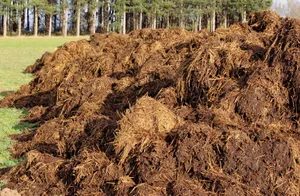

The messy reality of farm manure
Excrement is not just excrement. It is the backbone of organic farming.
The use of synthetic fertilizers is strictly prohibited on certified organic farms. Therefore, livestock refuse, urine, straw and bedding are the most important sources of nutrients. It is not a chemical powder. This is a living, decomposing ecosystem.
But dealing with this is a regulatory minefield. Because raw manure contain human pathogens, the Department of Agriculture has strict regulations. You can’t just spread it the day before harvest. If the crop is in contact with the ground, the raw fertilizer must be applied at least 90 days before harvest. If the part you eat stays above ground? There are 120 days.
There are loopholes for the diligent. If the manure is composted correctly (turned 5 times in 15 days and kept at a temperature of 55°C to 77.2°C), the risk of pathogens is reduced to zero. Then you can apply it at any time.
Many farmers skip the composting step. It takes effort. This takes time. And manure is finicky.
Why Synthetic has a balance sheet advantage
This is the hard truth of economics. Manure is weak fertilizer.
The nutritional ratio is about 0.5-0.25-0.5. They are nitrogen, phosphoric oxide and potassium. Two-thirds of this nitrogen is slow-acting. You aren’t getting an immediate kick.
Comparison with commercially available pellets. One ton (900 kilograms) of average manure is roughly equivalent to a bag of high-quality synthetic fertilizer. However, the cost of purchasing synthetic bags is low compared to transporting, storing and hauling, storing, and spreading tons of wet fertilizers.
It is much cheaper to use 100 pounds (45 kg) of 10-5-10 fertilizer than to use 2,000 pounds of fertilizer. In cultivated land, the return on investment in synthetic inputs usually exceeds the return on investment in organic matter. You cannot control the rate of application of the fertilizer as with a regulated spreader. It’s very messy. It’s inconsistent.
For this reason, manure has been underestimated as a reliable source of fertilizer for decades. It doesn’t provide the nutrients that artificial ones do, and it doesn’t provide “anything” that synthetics don’t.
Except for one place, underdeveloped countries.
Fertilizer is king where labor is cheap and synthetic imports are expensive. It’s available. It’s free. It can also keep soil alive when alternative chemicals are not available.
Real value: soil structure, not nutrients
If fertilizers are so chemically inferior, why do organic farmers rely on them so much?
Because the main advantage is not chemical. This is physical.
Excrement provides humus. This improves the soil structure. Increases water retention. It enhances aeration. It feeds the micro-organisms that keep the soil breathing.
When incorporated into topsoil, it acts like a sponge. It can prevent erosion caused by heavy rain. Slows down evaporation. Its value as a mulch material (protecting the soil structure) is often much greater than its value as a source of nutrients. You’re not just feeding the plants, you’re building a habitat.
Green manure: Grow your own fertilizer
In humid climates, farmers often grow crops specifically to bury them. This is green manure.
You plant grasses or legumes. Let them grow. Maybe graze livestock on them. Then plow them down. Legume roots contain nodule bacteria, which fix atmospheric nitrogen directly into the soil.
The benefits are obvious. Add nitrogen. You improve fertility. Erosion can be reduced. You stop nutrients from leaching away.
But it’s not perfect. Crops may not grow properly. The cost of growing and cultivating plants can exceed the purchase price of commercial nitrogen fertilizers. There is a risk of introducing diseases, insects and nematodes. And it can deplete soil moisture.
These crops are typically planted in the fall and turned under in spring before the main summer crops such as corn and cotton goes in. Potatoes and corn works wonders. It’s questionable for peanuts, which are legumes themselves.
Farmers are moving away from specialized green manure crops. They are only kept as cover in the winter, protecting the ground when nothing else grows.
Amendments versus fertilizers
Then there is compost, peat and sewage sludge.
These are rarely used as primary fertilizers. The plant nutrient content is too low. They are soil conditioners.
You mix them in. You apply them in heavy rates. They don’t feed the plant directly. They fix the medium the plant grows in.
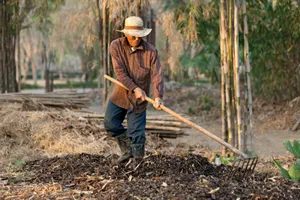

The Slow Burn of Compost and the Cost of Peat
Compost is basically a mass of rotted organic matter made from waste plant residues. Addition of nitrogen during decomposition is usually advisable. The result is a crumbly material that when added to soil does not compete with the crop for nitrogen. When properly prepared, it is free of obnoxious odors. Composts commonly contain about 2 percent nitrogen, 0.5 to 1 percent phosphorus, and about 2 percent potassium; if phosphate and potash are added while composting, those values are higher. The nitrogen of compost becomes available slowly and never approaches that available from inorganic sources. This slow release of nitrogen reduces leaching and extends availability over the whole growing season. Composts are essentially fertilizers with low nutrient content, which explains why large amounts are applied. The maximum benefits of composts on soil structure (better aggregation, pore spacing, and water storage) and on crop yield usually occur after several years of use.
In practical farming, the use of composted plant residues must be compared with the use of fresh residues. More beneficial soil effects usually accrue with less labor by simply turning under fresh residues; also, since one-half the organic matter is lost in composting, fresh residues applied at the same rate will cover twice the area that composted residues would cover. In areas where commercial fertilizers are expensive, labor is cheap, and implements are simple, however, composting meets the need and is a logical practice.
Peat, composed of prehistoric plant remains that have accumulated under airless conditions in bogs, is a widely used organic soil amendment. Peat contains less than 1 percent nitrogen, with phosphorus and potassium below 0.1 percent. It is also highly acid, with pH between 3 and 4.5 (a pH value of 7 is neutral and one above 7 basic). Peat improves the water-storage capability of soils and gives better structure to fine soils. It is used mostly by specialty-crop producers and on lawns and gardens. Given that peat harvesting and land-use changes that damage peatlands are a major source of greenhouse gas emissions, the use of peat increasingly has been discouraged in the 21st century in an attempt to protect these valuable ecosystems.
Sewage sludge is the solid material remaining from the treatment of sewage, is not permitted in certified organic farming, though it is used in other, nonorganic settings. Its value for soil improvement depends on the method used for treating the sewage. Activated sludge, which results from aerobic (oxygen) treatment, contains 5 to 6 percent nitrogen and 1 to 3.5 percent of phosphorus. After suitable processing, it is sold as fertilizer and as a soil amendment for use on lawns, in parks, and on golf courses. It is rarely used in farming as there are concerns that even treated sewage may harbor harmful bacteria, viruses, pharmaceutical residues, and heavy metals.
Liming Materials and Application Methods
Liming to reduce soil acidity is practiced extensively in humid areas where rainfall leaches calcium and magnesium from the soil, thus creating an acid condition. Calcium and magnesium are major plant nutrients supplied by liming materials. Ground limestone is widely used for this purpose; its active agent, calcium carbonate, reacts with the soil to reduce its acidity. The calcium is then available for plant use. The typical limestones, especially dolomitic, contain magnesium carbonate as well, thus also supplying magnesium to the plant.
Another liming material is basic slag, a by-product of steel manufacture; its active ingredient is calcium silicate. Marl and chalk are soft impure forms of limestone and are sometimes used as liming materials, as are oyster shells. Calcium sulfate (gypsum) and calcium chloride, however, are unsuitable for liming, for, although their calcium is readily soluble, they leave behind a residue that is harmful.
Lime is applied by mixing it uniformly with the surface layer of the soil. It may be applied at any time of the year on land plowed for spring crops or winter grain or on permanent pasture. After application, plowing, disking, or harrowing will mix it with the soil. Such tillage is usually necessary, because calcium migrates slowly downward in most soils. Lime is usually applied by trucks specially equipped and owned by custom operators.
How farmers actually put nutrients into the soil
Farmers don’t just spread things and hope for the best. They choose between solid, liquid or gas fertilizers based on a simple but brutal mathematical question: How can I get the best yield without spending money or manpower? Every choice is a compromise.
Fertilizers come in two flavors. Liquid fertilizer is stored in a tank until it is pumped into a sprayer or irrigation system. Saves muscle power. It also reeks. The smell was so bad that the neighbors complained. Solid fertilizers are different. The spreader shreds it and throws it evenly across the field. You can do this in winter when the ground freezes. You can’t do it when the crop is already growing. It’s already too late.
Granular fertilizer just got smarter. Instrument design has kept pace with the development of chemistry. Now you can plant, side-dress, or broadcast with high precision. The attachment slides onto most tractor-mounted seed drills and tillers. Some are hook onto grain drills. The key is placement. You drop the fertilizer with the seed. The seeds cannot be burned. It’s there ready to provide nutrients when your plants need them most.
Position is everything. Some crops may require a nutrient band above the seed. Here’s what else you need: If you make a mistake, you could ruin your harvest. If you get it right, you can get a head start.
Dangerous build-up of anhydrous ammonia
Liquid fertilizers and gas fertilizers are becoming more common. Anhydrous ammonia is the largest of these. It is a liquid under pressure. Once released into the air, it quickly turns into a gas. It’s powerful. This is also dangerous. Very corrosive. Flammable. If you do it badly, people will get hurt.
That’s why the equipment is also special. The chisel-like blade cuts into the ground. Ammonia is sent from a pipe at the back 13-15 centimeters below the surface. This pipe supplies water from a pressure tank mounted on the top. It keeps the gas trapped where it belongs.
Liquid mixed fertilizers containing nitrogen, phosphorus and potassium offer another possibility. It’s good to slap them directly on the soil. Alternatively, you can spray the leaves of dense crops. The aircraft can cover large areas quickly. It doesn’t matter if it’s dry or liquid. The sky is the limit.
What happens after the fertilizer?
Look where we are. The future is high concentration. Blends rich in plant nutrients are becoming mainstream. Nitrogen is the most expensive of the three. Everyone wants to reduce costs. A better delivery method is coming.
Increased use of anhydrous ammonia, ammonium nitrate and urea. Scientists study nonleachable nitrogen. The ureaform reaction produces ureaform. It retains nitrogen so it doesn’t get washed away. Ammonium metaphosphate is an alternative to concentrated liquids. It’s cleaner. It is stronger.
Micronutrients also increase. Trace elements characteristic of a certain geographical area. Zinc can be added if the soil is deficient in zinc. Custom mixes based on reliable soil data are becoming the norm. Sales of these custom blends are on the rise. It’s not one size fits all anymore.
Then there is the “perfect environment” seed. Imagine biodegradable tape. Contains seeds, fertilizer and water. You plant the tape. that’s it. No more fertilizer. No more water until growth is established. This is already happening to home gardeners. Small scale. But the logic applies. If it works for tomatoes, it works for corn.
Bigger and more precise machines will follow. Automation takes the guesswork out of precision farming.
How crop rotation defines the land
Agricultural systems are the backbone of soil health. It’s the kind and sequence of crops grown over time. Some farmers practice crop rotation. Different plants every year. This breaks the cycle of pests. It balances nutrient demands.
Some practice monoculture. crops. Every year. Same area. It’s efficient for machinery. This helps with marketing. However, this dries out the soil. It invites illness. The choice defines the long-term viability of the land.
Rotation isn’t just tradition. This is chemistry. This is economics. This is survival.
Farmers have known for a long time that crop rotation helps develop the land. Early experiments show that a regular rotation of legume grasses can keep the soil fertile. Helps maintain good soil structure. It also reduces erosion.
Alfalfa, sweet clover, Ladino clover are often suspected of accumulating nitrogen. They pull it from the air and dropped it to the ground. However, not all legumes provide this assistance. Soybeans leave no nitrogen behind. Nitrogen is fixed in the proteins of the harvested seeds. However, turn under the top growth of a legume adds nitrogen to the soil.
Crop rotation between cereals and legumes usually increases yields. The problem is finding the cause. Could it be too much nitrogen? Or maybe the soil structure is better? There may also be fewer insects and diseases. It is difficult to distinguish between these factors.
Which crops complement each other?
Determining the best crop rotation comes down to one question: Do these plants compete with each other or do they complement each other?
Complementarity occurs when one crop or soil practice meets the needs of the next crop. This increases overall production. Grasses and legumes often complement grains and row crops. They provide nitrogen. They control erosion and pests. They significantly improve the structure of the soil and thus increase the yield.
The reverse is also true. In some prairie soils, deeply rooted legumes absorb too much water. Sowing corn after repeated plowing actually improves subsequent forage production. In areas with high rainfall or irrigation, forage stands can die due to winter killing, disease or grazing pressure. Letting the land sit as grain when it is left in the ground as grain for a year.
In subhumid regions, such as the Great Plains, fallow land is complementary to wheat and other small grains. This type of crop rotation is very beneficial for wheat yield. But there are limits. Eventually, the law of diminishing returns takes effect and complementarity ends. They give room for competition.
How to prevent soil erosion with crop rotation
Profit motivation guides short- and long-term decisions. Farmers are concerned about the relationship between cropping systems and soil erosion. Runoff of the surface layer into streams and rivers is harmful to public policy. This can also cause financial losses. Rotation promoting erosion is minimized.
Soil losses are lowest in continuous sod loses the least. They are highest in continuous row crops. If you rotate row crops with sod reduces the erosion sensitivity of the row crops over time.
Certain plants are worse than others. Peanuts, potatoes, tobacco, cotton, sugar beets and many other vegetables require frequent cultivation. After harvesting, residues are kept to a minimum. These are the areas most likely to cause severe erosion. Maize, sugar cane and sorghum are less erosive. Less agricultural work is needed. They leave more residue. Small grains such as wheat, oats, barley and rye usually permit less erosion than row crops. Among sod crops, grasses or mixtures of grasses and legumes are less erosive than pure legumes such as alfalfa.
Fortunately, systems that control erosion often lead to better yields. Erosion systems wash away nutrients and water. Non-erosive systems allow plants to take advantage of them.
If it is a monoculture
Monoculture (the practice of growing the same crop on the same land year after year) has not been generally successful in the past. Non-legumes consume nitrogen from the soil. Production decreases. This is especially true in humid regions.
Cheap nitrogen fertilizers have changed perceptions. Farmers are beginning to reconsider the benefits of monoculture. The real test is whether monoculture systems can produce more than crop rotation systems while maintaining soil productivity.
Why monoculture works
First, the soil varies from farm to farm. Monoculture allows crops to be planted in the soil best suited for each crop. Forage crops can be left on steep land to minimize erosion. Row crops are grown on better soils with gentle slopes. Wet areas can be planted with plants that do not require early spring field work. Dry soil can be used to grow drought-tolerant crops such as sorghum and small winter cereals.
Second, soil fertility can be adjusted more precisely for a single crop than for an entire crop cycle.
Third, if you continue planting with perennial forages, you can avoid regular reseeding. All seeds carry the risk of failure. Avoiding it is an advantage.
Fourth, monoculture systems offer more flexibility. Acreage can be shifted from one crop to another to respond to annual changes in demand. You don’t upset the total farm cropping plan of the entire farm.
Doing it repeatedly is very expensive
Monoculture is more than just growing one crop. This is a high stakes game with management skills. You can’t just plant and pray. You have to know exactly what you are doing.
With a grass-based crop rotation, nature does much of the heavy lifting. What about monoculture? You do it all.
If you grow crops other than legumes every year, you need to buy any amount of nitrogen. Or use fertilizer. There is no free lunch in the world. Continuous tilling turns soil into dust. If you keep plowing, the land will turn to dust. Erosion is happening.
Then there are pests. Without rotation to break the cycle, you’re stuck on a chemical treadmill. Insecticide. Fumigants. Disease-resistant hybrids. You become dependent on them.
Choosing a planting system is not easy. You want productivity. You want to preserve the topsoil of your land. You need a working business model. These goals are often in conflict with each other. System analysis can help. It brings order to chaos. But the choice is still difficult.
Enemies close in on the door
Crops cannot grow in a vacuum. They are under constant siege.
Insects. Diseases. Nematodes. rodents. weeds. The air itself can also be an enemy. These forces reduce production. They deny us food. They spoil what’s stored in silos.
Insects are the most aggressive. They can destroy a crop in a matter of days.
Scientists and farmers have been fighting them for decades. We haven’t won yet. The fight continues. And things get more complicated.
When we spray to kill pests, we often kill the good guys too. Honey bees. Parasites. Predators. All the natural enemies of the pests get caught in the crossfire.
At least 10,000 insect species are considered undesirable. Hundreds of them are truly devastating. they eat our food. They eat the forage for livestock. They spread plant and animal diseases.
This is a war of attrition. We don’t have easy solutions.
The double-edged sword of chemicals
Insecticides are effective. They are cheap. They are safe if you handle them right.
But safety comes at a price.
Consider, for example, chlorinated hydrocarbons such as DDT. They leave residues. These residues can poison beneficial insects. They kill fish. They remain in the soil. They are found in meat and milk.
Then there is resistance. Insects evolve. They are not sensitive to chlorinated hydrocarbons, organophosphates and carbamates. Chemicals no longer work.
New chemicals are needed. It’s safer. Non-chemical methods are needed. The search continues.
Organophosphates and carbamates provide different pathways. Malathion and carbaryl are common examples. They don’t persist in the environment like DDT. You can use them closer to harvest. They are safer for meat and milk quality. They provide better protection for wildlife and fish.
They are not harmless. They are dangerous to those who use them. Be careful.
Efficiency is also important. Some chemicals only require small amounts to be effective. This led to ultralow-volume technology. Chemicals are sprayed in undiluted form using special equipment. Usage is decreasing. You pay less. Environmental impacts are reduced.
Malathion at 6 to 16 ounces per acre repels grasshoppers, weevils, potato beetles, mosquitoes, and beethoppers. that’s it.
Pellets are also an option. Spraying is not the only way. The use of pellets reduces the amount of chemicals needed. They also reduce harm to beneficial insects. Less drift. Less runoff.
Systemics change the game entirely. These are chemicals that plants absorb. You put them with the seed at planting. The plant takes up the poison. If the insects try to eat the leaves or stems, they die.
Beneficial insects that don’t eat the plant stay alive. The attack is internal. The defense is biological.
Breaking the thread without chemistry
Dependence on chemicals has its limits. The resistance increases gradually. The residue accumulates. Costs are rising.
Non-chemical management is not the only option. It’s a necessity.
Biological control uses nature’s own weapons. Predator. Parasite. pathogen. We use or encourage these substances to control pest populations. It’s not immediate. This requires patience. But it complements the ecosystem, not the other way around.
Cultural practices are also important. Crop rotation can break the cycle of pests. Planting times can be adjusted to avoid peak times. Hygiene checks leave a place for insects to hibernate.
Physical barriers come into play. net. trap. row cover. Keep insects completely away from your crops.
Genetic resistance is another consideration. The plants we grow are unpleasant for pests. Or they produce their own poisons. Bt corn is a well-known example. Produces proteins that are toxic to certain larvae. No need to spray.
Each approach involves trade-offs. Biological control is slow. Cultural practices require knowledge and planning. Installing physical barriers can be expensive. Genetic resistance can be overcome by evolving pests.
The goal is not to eliminate all insects. The goal is to keep the population below economic losses. It doesn’t have to be pest free. We need pests that are affordable.
Integrated Pest Management (IPM) is a combination of these tools. Use tracking to decide when to act. Prefer non-chemical methods. Use chemicals only when necessary. Choose the least toxic option.
IPM is not a single technique. This is a strategy. mental state.
It recognizes that we cannot fully control nature. We can only influence it. We have to do it wisely.
The future of agriculture depends on this balance. Chemicals still play a role. But their role is diminishing. The burden shifts to biology, control and precision.
We learn to fight smarter. The fight against pests is not over yet. But strategies change. Quickly.
Outside the bottle: How physics and biology are replacing pesticides
For decades, we have relied on chemical spraying. This is the default move. However, resistance to pests is increasing, and environmental damage cannot be ignored. This change is not only moral. This is very practical. New methods fill the gap by using light, sound, heat and even genetics to control pests without turning fields into chemical runoff areas.
Let’s look at the non-chemical tools first. Light traps have been around for years. they are working. Sort of. They have had great success against codling moth and the tobacco hornworm. But they are not a panacea. They are small pieces of a bigger puzzle.
Then there is the simple physics of reflection. Place reflective aluminum strips in your vegetable garden as a mulch. Aphids hate bright light. They leave. This protects cucumbers, pumpkins and watermelons from mosaic Diseases. Here is the kicker. Insecticides often fail here, not because they don’t kill aphids, but because they kill them too slowly. The virus spreads before the bug is dead. The mirror works immediately. The transmission chain breaks.
The battlefield is different for stored items. No need for a sprayer. Climate control is required. Heat or cold will kill most storage insects. By adjusting the gas mixture in the silo and adjusting the oxygen, nitrogen and carbon dioxide levels, you can starve the animals or suffocate them. It’s clean. This works well.
But what about the sound? Sounds like science fiction. it is not. Studies have shown that when adult Indian-meal moths are exposed to certain sound wavelengths during egg-laying, their reproductive ability is reduced by 75 percent. Flour beetles react the same way. The technology is still maturing. But the principles make sense. Physical energy can kill. Light waves. High frequency electric field. radio frequency. gamma rays. Some of them are already ready. Most are promising.
Cultural control is the basis of the old school. Destroys crop residues. plow deep. Rotate crops. Use fertilizer wisely. Strip-crop. Water strategically. Plant according to the plan. These practices can reduce damage. They don’t eliminate severe infestations. Relying on them alone is a gamble.
Biological counterattack
Public interest in biological control is still high. It should. We are talking about using the enemies of nature itself against our enemies. Parasites. Predator. Diseases. Protozoa. Nematodes. These agents attack pests directly.
However, biology has its limits. Nature balances itself. Before a predator population can explode, it needs a large host population to feed it. Sometimes predators outnumber them 10:1. This is a numbers game. Nevertheless, biological control was a big win. Japanese beetle. European corn borer. Alfalfa aphids. Alfalfa weevil. These populations are dominated by predation rather than poison.
Microbial agents are the next frontier. There are about 1,100 species of viruses, bacteria, fungi, protozoa, rickettsia and nematodes that parasitize insects. The beauty is in the specificity. Many pathogens target one insect species. They do not harm people. They do not harm domestic animals. Logistics becomes an obstacle. Currently, the production, packaging and distribution of these pathogens is complex. But if you can scale it in the same way as in agrochemical production, the situation changes completely.
Plant resistance is the ideal solution. A plant species that is not easily attacked. Period. question? They take a long time to breed them. It’s not everywhere. It is a slow burning process.
Next is sterilization. This is where it gets interesting. Gamma rays sterilize male insects. We release them into the wild. They mate with wild females. The eggs do not hatch. Population collapse. This is effective against screwworms. Effective against fruit flies. In some areas it has been replaced by chemicals. For pests, it’s a genetic dead end.
Chemical attractants complement this perfectly. The smell attracts insects. trap them. Touch with a small amount of sterilant. The volume is low. High precision.
The Integrated Future
Is there a single magic bullet? Probably not. The answer seems more like a strategy. “Integrated Control”.
This means coordinating multiple approaches. It’s not either/or. It’s both.
Consider the spotted alfalfa aphid, which lives in California. Farmers do more than just spray pesticides. They use resistant crop varieties along with systemic insecticides. What’s the trick? This chemical was chosen because it does not harm parasites or predators. The bug is dead. Good insects survive. The controls remain the same.
Another example starts with chemical sprays. But this is only a preliminary reduction. Let’s start by thinned out first. Next, use bait. This is where sterile insect technology comes into play. The heavy lifting is done by chemistry. Cleaning and long-term treatment are biological.
Or look at tobacco hornworms. Use sex lures in light traps. Post-harvest residues are handled carefully. Remove hidden locations. Break the cycle of life.
The main value of all these methods is the same. Reduce the use of pesticides.
There are fewer chemical residues in the soil. Less runoff into waterways. A better environment. This change doesn’t just remove bugs. This is to keeping the land livable. The tools are here. The science is sound. The question is how quickly we can adopt the mix.
The invisible war against crop pests
Insects are the center of attention, but they are not the only enemies of your crops. Plant diseases and nematodes (microscopic worms lurking in the soil) can destroy entire fields. This is especially true in places where the weather varies wildly. These pests are very destructive and sometimes even affect crops.
The damage they cause is worrying. It often looks like bad weather. Drought stress? No, it was a fungus. Damage from heat waves? Maybe it’s a nematode infection. Epidemics don’t just reduce yields. They can completely destroy the crop.
Fighting back with chemistry and culture
The control of plant diseases and nematodes isn’t one-size-fits-all. This is a combination of resistant varieties, quarantine regulations, forecasts and chemicals. Many plant viruses are spread by insects, so insect control can also help prevent disease.
Crop rotation works. Deep plowing works. It is also effective to burn the stubble after harvesting. Burning kills aboveground organisms, reducing the cost of chemical control. But there are also compromises. pollute the air. Kills organic matter in the soil.
Sometimes, you burn differently. Propane flames can be applied on live plants and stubble to kill spores. Sugar cane virus? Heat the cuttings in the oven. Peanut stem rot? Plow under debris or plant seeds in raised beds and spray with herbicide before germination.
Forecasting the outbreak
You can’t always stop an epidemic. But you can stop it before it starts. Success depends on applying chemicals “before the outbreak.”
Governments help with this. Plant disease forecasting services analyze temperature, precipitation, humidity and dew. With the help of these factors, we can predict when conditions suitable for the development of the disease will appear. If the forecast says wet and warm, farmers spray pesticides. This is data-driven defense.
The weed problem is bigger than just looks
Weeds aren’t just unsightly. They are financial liabilities. They lower yields. They increase costs. They mess with harvest machinery. They lower product quality.
They also block irrigation water flow. They can interfere with the use of pesticides. They harbor disease organisms.
Early weed control was manual. Mowing. Flooding. Cultivating. Smothering. Burning. Crop rotation. These methods are still important. But they are no longer the norm.
The rise of the chemical
After the Second World War, the use of chemicals increased exponentially. Why? Because cultural and mechanical controls alone are not enough. There is biological control that brings in insects that only feed on weeds, but that is a niche market.
Herbicides changed everything. They changed the way the farm was run. How they plant? How they harvest.
Herbicides are available in the following forms: Wettable powders. Granular material. Emulsions. Solutions. Local treatments can be done. Broadcast. Place in bands. Apply directly to specific parts of the plant. For solutions or emulsions, it is mixed with water or oil.
Spraying vs. Granules
Spraying is the most common method. tiny amounts to be applied uniformly. Dilution may help. The spray can be applied directly under the growing plant. Calibrating a nebulizer is easier than calibrating a granular applicator.
Pellet has its own role. Their advantage is there. However, the use of herbicides must be in accordance with the farm plan. The optimal date depends on the stage of the crop. weed stage. weather.
Efficiency costs
Proper use of herbicides can reduce costs. This means cheaper food for consumers. Consider cotton. The use of herbicides can reduce labor costs for weed control by up to 60%.
In developed countries manual work is disappearing. Too expensive. Chemical coating machines fill this gap.
are they safe? Yes, if used as directed. on behalf of the operator. For wild animals. For cattle.
The biggest risk is not toxicity to humans. This is unintended damage to crops. Drift. Residues in soil. Problems can arise if residues get into the waterways.
The future of chemicals
The future of chemical pesticides and herbicides is controversial. Manufacturer. seller. user. Environmental activist. Everyone has a contribution.
The value of securing food supply at reasonable costs is undeniable. Chemicals have a significant effect on this. However, they have negative effects on the environment. They can be toxic to many organisms.
This needs more attention. Probably forced by law. The use of non-chemical control techniques is increasing.
Harvesting and crop processing
Harvesting isn’t one-size-fits-all. It depends on what you grow. Harvesters cut and process grain. The thresher separates the seeds from the plants. The combine does both. Cutting, threshing and cleans the grain at once. Efficiency is important.
Maize requires a different approach. A mechanical corn picker separates the ears of corn from the stalk. You get grain and cobs. Nothing else. Shelling can happen on the field. Or after you pick it up. It is flexible.
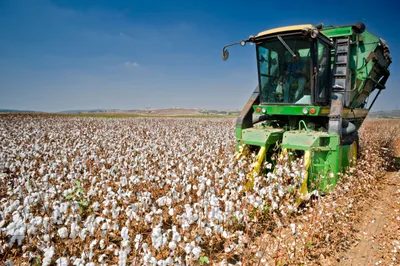
Cotton takes time. The strip harvester removes everything from the plant. Open bolls. Unopened bolls. All this. This is best towards the end of the season. Frost kills green growth. The plant dies back. The machine just collects.
Hay and forage machines cover a wide range. mower. crusher. Windrowers. Baling press. Some people compress hay into wafers or pellets. Storage dictates the method. The silos keep the crop juicy and fermented. Not dry. you cut the crops to make silage. Pack them tight. Create an anaerobic environment. Prevent mold. Forage harvesters do this work. They cut right away. Or pick up a windrow cut earlier.
Mechanics of roots and special plants
Root crops are tricky. Diggers and digger-pickers lift them up. But they brought clods. stone. Vines. Previously, sorting was done by hand. Now it’s mechanized. Modern sugar beet harvesters lift the entire root. Clean the dirt. Deliver it to a bin. Tops might be removed beforehand. Cows eat it. Peanuts are different. Lift it up with the vines. dry. Pods removed later.
Tobacco is complicated. Classification depends on harvesting and processing methods. Flue-cured tobacco grows 3-4 feet tall. Machines transport workers. They cut the leaves. Place it on the conveyor belt. Bind by machine or by hand.
Burley tobacco is a different matter. The workers used machetes. They attached the stems to the sticks. Hang it by hand in your barn. Scientists are trying to mechanize it. Cutting. Impaling. Hanging. it is difficult. Fragrant tobacco that grows in the shade? There is very little mechanization. Still hand picked. Tied. Hung.
Tree harvest? Manual or mechanical shaker. Asparagus, lettuce, cabbage? Mostly hand-harvested. There is a shortage of labor. The costs are high. Tomatoes are an exception. Mechanization is advancing.
Post-harvest handling and local techniques
The machine prepares the crop for transport. Storage. market. Fodder for cattle. Progress is fast. new crops. Higher yields. Multiple harvesting methods. Changing techniques. Everything drives innovation.
Drying is important. Traditional method? Spread the grains on the floor. Stir frequently. exposed to sunlight. It is common in developing countries. slow. Depends on the weather. Forced air drying gives you freedom. Select the harvest time. Choose a variety. Popular in tropical areas. Add heat. Raise the temperature. Speed it up.
Dryeration is specific to corn. Wet corn goes into a batch dryer or a continuous dryer. 10–12% of the water is lost. The hot corn is transferred to cooling containers. Tempered for six to ten hours. Ventilate and cool slowly for 10 hours. Reduces kernel damage. Increases output.
Hay moisture is dangerous. High moisture can cause rot. Spontaneous combustion. The moisture content of freshly cut hay is 70%. Wilts to 40 percent. Dry to 15% for safe storage. Blow air into it. Increase heat if necessary.
Feed mills grind grain. Helps digestion. Material is coarse. Sometimes you just crush it. Modern flour mills make it possible to grind grains. Mix the other ingredients. required amount. Accuracy is important.
Other machines separate the weeds from the seeds. arm. leaf. dirt. The sorter sorts the seeds according to width. length. Thickness. Fruit sorting and grading machines process the product. My cotton separates the seeds from the fibers.
There are still regional differences in technology due to the climate. Securing the workforce. type of crop. Machines adapt. Farmers decide. The soil is decisive.
Where the sky doesn’t release too much water to the ground, farmers have to get creative. Dryland agriculture is the name given to growing plants without the help of irrigation systems. Suitable for areas with less than 20 inches of annual rainfall. In areas with even rainfall (for example, less than 15 inches), winter wheat is usually the preferred crop. If winters are too cold and winter varieties die, it may make sense to use spring wheat. Sorghum also occurs in these dry areas.
With increasing summer rains, dry beans are a good candidate. The harvest here is almost entirely related to the rains in the sky. But soil care is just as important. Proper soil management determines how much rainwater actually remains on the ground for plants to drink.
More rain means more options
If you’re lucky enough to get at least 15 inches of rain a year, your options expand greatly. Favorable soil and moisture conditions are suitable for alfalfa seeds, barley and certain grass seeds (such as crested wheat grass). It’s not just about survival anymore. It’s about diversity.
The fallow system: Resting the land
This method dates back to ancient times. The basic idea is simple. You plowed and plowed the ground, but the sowing did not happen for a while. This is called fallow. By alternating wheat and fallow periods, farmers believe they can save water for the next crop. The weeds have been cut. Nitrogen levels rise. And when it rains, the soil is ready to support it.
There is a catch. Bare soil is susceptible to erosion. Wind and water can take it away. Modern machines help reduce this risk, but the threat is still constant.
Tillage that holds water
New agricultural technologies are proving their worth. Traditional mold plows and disc plows are replaced by chisels and sweeps. These tools loosen the soil without burying the straw from the previous crop. This “trashy fallow” keeps residues on the surface, conserves moisture and reduces erosion.
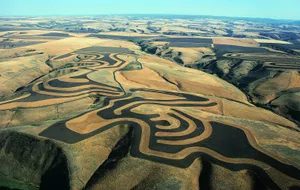
Contour farming is another strategy. Delays runoff on gentle slopes. The large terrace saves even more moisture. If your land is steep, plant permanent cover instead of seasonal crops to hold everything together.
Compaction is the hidden enemy. Tilling can create hardened areas 5 to 8 inches deep. This prevents water from entering. Farmers can sometimes overcome this by planting deep-rooted alfalfa or by using chisels buried deep under the compacted layer. As a result, runoff is reduced and water penetrates deeper.
Timing is everything. break the soil in autumn or early spring. The goal is to prevent weeds and volunteer grains from stealing water before the main crop has time. A pole weeder can remove weeds in fallow. The planting itself is carried out in a narrow windows in autumn or spring.
Fertilizer: Fuel for dry land
Nitrogen is an important part of dryland technology. The amount needed depends on the amount of rain.
- Rainfall less than 13 inches: about 20 pounds of nitrogen per acre (22 kilograms per hectare).
- More rain possible: up to 60 pounds per acre (67 kilograms per hectare).
These figures are based on wheat yields, but also apply to other dryland crops. If the annual rainfall is less than 12 inches, apply nitrogen only when the moisture outlook looks particularly good. It can be used both in autumn and spring. It can be used as a band arrangement or broadcast. Applying nitrate fertilizers in the spring is effective. Autumn use of ammonia has also proven to be successful. Local climate and rainfall patterns determine the final choice.
Crops and planting methods
The selected crop often determines the cultivation method. In such a dry environment, every drop of water counts, so the method is as important as the seed.

Dryland alfalfa seed production is more than just planting the seed and praying for rain. Requires a certain line spacing. They are usually 2 to 3 feet or about 60 to 90 centimeters apart. In the first year, you have to cultivate between the rows. If the conditions are right, farmers can grow it for feed. This practice is more than just getting a crop. It builds nitrogen. Add organic matter. Improve soil structure for whatever follows.
The most important thing here is rotation. Alfalfa can be rotated with wheat if rainfall is 16 to 18 inches. The result? The wheat yield increases.
But alfalfa is not the only dry farming option. Cotton, peanuts and sorghum are also grown in these dry areas. But there’s a problem. If you grow in sandy soil, you have to deal with the wind. Blowing soil is a big risk. Cotton and peanuts do not leave enough residue to stop the wind. They expose the earth. Sorghum leaves a residue. Therefore, farmers often mix it up.
Use alternating strips. 2 rows of sorghum, then 4-8 rows of peanuts. This is a special technique designed to break the wind. Another option is a two-year rotation of cotton and sorghum. Two rows cropped, two rows left fallow. This system protects the soil from erosion. It also helps the soil retain moisture for longer.
Tropical challenge
Look at the map. Between the Tropic of Cancer and the Tropic of Capricorn. That’s a vast belt of land. Latin America. Africa. India. Australia. Southeast Asia. The climate here is less mild than in temperate regions. It is also less than ideal for human habitation.
Weather falls into two general categories. Warm and humid. Or the weather is warm, but the rain component is insufficient. In both cases, there is plenty of rain. Nutrients are leached from the soil. Temperatures are high throughout the year and do not change much. The combination of high heat and heavy rain causes the organic matter to break down quickly. The soil eventually loses its humus. Plants grow like crazy, but so do weeds, insects and pathogens. Things change a bit with altitude, which creates a microclimate, but the basic challenge remains.
So what grows here? coconut. palm oil. Rice. sugar. pineapple. Sisal. cocoa. tea. coffee. Jute. Rubber. Black pepper. banana. The list is long. Crops typical of the temperate zone can be grown in the highland tropical areas. However, the amount of land suitable for really simple farming is limited.
Pest problems
Why is farming in the tropics so difficult? Pests. weeds. disease. They thrive in the heat and humidity. This made the plantation system the most successful model. Why? Because the plantations had capital. They can finance the necessary control measures.
Another option is to shifting agriculture. Farm the land until it is deteriorates. Then move to a new area. This custom has been common for centuries. Tropical soils quickly lose their productive capacity. However, this is not a permanent solution. Population pressure is increasing. We can’t go on forever.
Most commercial tropical products are produced from plantations. management skills. Enough funds. Mechanized equipment. This applies to coffee, cocoa, rubber, coconut, bananas, pineapple and sugarcane.
Rice is different. In tropical Asia and Indonesia, it is mostly produced on small farms. intense physical work. A simple tool. The prime mover isn’t a tractor. It’s likely an ox or a water buffalo. The efficiency is different. The scale is different. However, the ultimate struggle with the environment remains the same.
Water supply
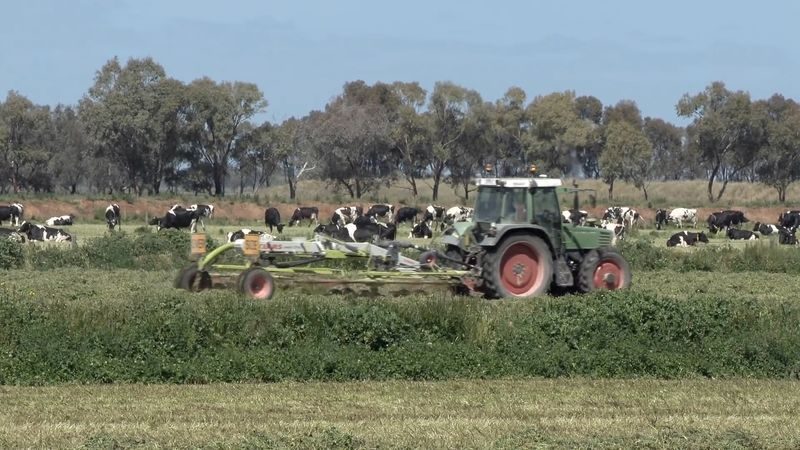

Water management isn’t just a nice-to-have for tropical areas. This is the difference between a crop and a wetland. Take Guyana for example. The coastal areas there are very fertile, but they also have floods. The average annual rainfall is 90 inches. That’s 2,300 millimeters of wetness. You can’t just grow rice or sugarcane and expect good results. You have to engineer the land.
Originally, it was private enterprise. Then the government stepped in and “empoldered” the vast coastline. The levees were built to prevent flooding from the Atlantic Ocean in front and rivers behind. But what about the drainage system? It’s a constant battle. This system cannot pump out every possible flood drop. Therefore, the crops have to be tough. They have to withstand the occasional drowning. Gravity only works when the tide is out. At that point, the gates open. It closes when the tide returns. It is a rhythmic and tiring dance.
Then there’s mud. A large amount of sediment is clogs the outlet. Keeping them clean is a nightmare. Rain is unreliable. The fields are watered, even if it doesn’t rain if necessary. This is a complex water-control web. after the initial plow, the land must be cultivated especially to grow rice. Tractors drive in 4-6 inches of water. Then plant the seeds in that shallow pond. It’s very messy. It’s tough. But it works. After realizing this, Guyana doubled its rice production.
The Mechanization Myth
You might think that putting machines in a tropical area would be easy. More output, less sweat. Wrong. Mechanization has many obstacles.
Let’s consider soil. This differs from where the tractor is manufactured. A new design is needed. You have to adapt. And then you hit the ground. Stones. Stumps. Trash. Termite mound. Machines break. Constantly. The climate depresses operators. It’s hot. It’s humid. Productivity decreases. The ground is irregular. Mountainous. It is not easy to run a large-scale tractor through a jagged hillside easily.
In Brazil, even the best soils require special erosion control. This further limits mechanization. But what is the biggest obstacle? This is not mud. This is fear. Farmers and the government feared that the machines would cause unemployment. they don’t understand. Economic development and an improvement in the standard of living depend on the increase in labor productivity. If you don’t mechanize, you stay stuck. But if we do that, we have to deal with the social implications.
Look at Trinidad. Huge sugar cane plantations faced this problem. By 1960, wages had risen. Hand harvesting had become too expensive. They have flat land. About 30,000 acres of heavy clay soil. The climate is very harsh. Seven months of monsoon rainfall can reach up to 50 inches. During the five-month dry season, 10 inches during a five-month dry season.
they changed everything. The traditional drainage system has been removed. Instead, Ridge planting took its place. This way the machine can really drive in the field. This is a big change. Next is the sugar cane harvester. It tops the plant. Cut it out. Chops it. Load to transport vehicle. it’s complicated. It requires serious power. But it’s better than half-measures.
“Work productivity with combine harvesters is six times higher than with hand harvesting.”
By 1969, the results were mixed. Only 12.8% of the flatland crop are harvested. Mechanization is far from complete. Why? There are three reasons. First, the machines require a lot of maintenance. Spare parts are very expensive. Second, transporting chopped sugarcane to market is a logistical headache. It is economically difficult to implement a transportation system that can keep up with the combine’s output.
Third, and most importantly, social issues. Employees who left their jobs. You can’t just fire everyone and move on. The combines made the work six times faster. 6 times. This means that for every machine operator, five people lose their jobs. We had to slow down the pace of adoption. The employees had to be transferred elsewhere. The limited success of this project shows how complex modernized tropical agriculture is. It’s not just technology. This is economics. This is sociology.
A look into the future
what actually moves the needle when zooming out? Improved crop varieties. Increased use of fertilizers. These are the most promising inputs. Technology certainly helps. However, biology and chemistry are still the heavy lifters.
Hydroponics
Water supply is moving from drainage to transportation.
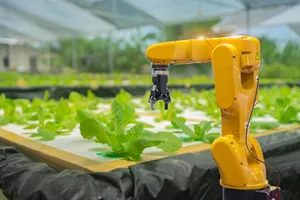
Hydroponics is more than just a buzzword. It is soilless plant cultivation and is the result of laboratory techniques that have been used by scientists for decades. The basic idea is simple. Soak the roots in mineral water or attach the roots to a moist medium such as sand.
Scale is important here. Although laboratory scales are small, peat, wood fiber or wire mesh are often used in commercial hydroponic cultivation. The roots grow downwards. Solution aeration. Another way is to automatically pump nutrient water into a sand or gravel pond. During the cycle, the water returns to the tank. This can be seen outdoors or in a greenhouse.
The chemistry of growth
Plants need certain elements. Carbon, oxygen and hydrogen come from air or water. rest? Mineral salts obtained from the soil. Hydroponics provides these salts directly.
Micronutrients such as iron, manganese, boron, copper, zinc and molybdenum are needed in small amounts. The heavy lifters are nitrogen, phosphorus, sulfur, potassium, calcium and magnesium. Producers have developed countless solutions to achieve these goals.
The yield is comparable to fertile soil. But is it worth it? Not always. Large-scale production makes economic sense only in intensive farming or under special conditions. Greenhouse vegetables and flowers? Yes. Coral islands in the Pacific without soil and bright sunlight? Absolutely.
Inside a glass box
A greenhouse is a structure with a transparent or translucent roof and sides. Solar radiation participates in photosynthesis. target? It grows independently, without the influence of the external climate. The internal temperature and humidity are monitored.
Sizes vary widely. Home hobby structures. Large commercial unit on an acre lot. Then there’s the hot bed, which is a box with a glass lid containing fermenting organic matter. Fermentation produces heat. This allows gardeners to start seeds early in the spring before transplanting.
The structure requires a light and strong frame. It must withstand wind and loads. Traditional foundations support vertical walls. The roof can be a gable roof, a lattice or an arch. Glass panels are traditional. Today, they are often replaced by plastic sheets and fiberglass panels.
Temperature control: the long battle
Maintaining the internal temperature is difficult. Outside conditions fluctuate wildly. When the sun is shining, little heat is needed. Heating systems must prevent crop damage.
Heat is produced with hot water, steam, electric cables or warm-air furnaces. Usually controlled by a thermostat. Adjust the temperature according to the crop.
- Lettuce, violets, carnations, sweet peas: 4°C (40°F)
- Cucumbers, tomatoes, orchids: 70°F (21°C)
Summer days… require cooling in hot summer weather. Ventilation is the simplest solution. It drops inside temps close to the outdoor level. In dry areas, evaporative coolers work well. They lower the temperature and increase the relative humidity. In some cases, refrigeration is needed.
Beyond Just Heat
Environmental control goes deeper. Adding carbon dioxide to the air increases the efficiency of photosynthesis in crops that need it.
Commercial greenhouse companies typically grow vegetables and ornamentals. This places high demands on producers. Nature’s tasks, such as temperature regulation, ventilation, sunlight regulation, soil moisture, fertilization and pollination, must be controlled by hand.
Maintenance in the off-season is difficult. The structure must be cleaned. Soil restructured. Mechanical equipment checked. Fumigated.
Mechanization has lagged far behind than in general agriculture. Disease is a serious hazard. requires constant attention and use chemicals.
Weather factors
Weather information
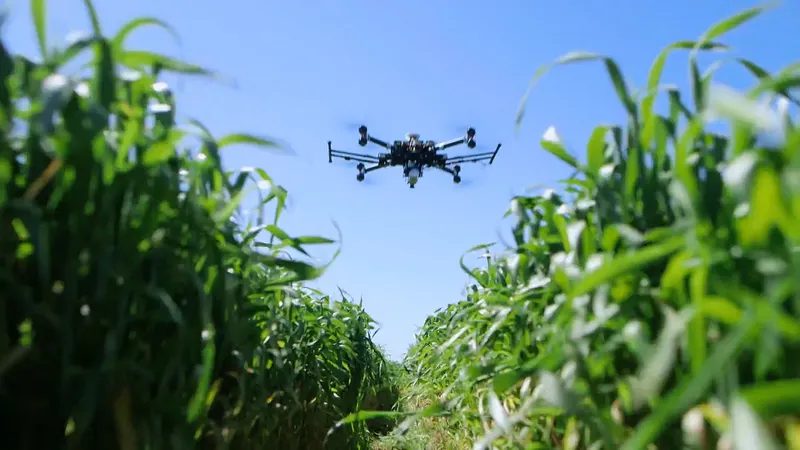
Agriculture is not the only industry affected by the weather. That’s what matters.
We have seen great advances in technology. Better seeds. Automated harvesters. Synthetic fertilizers that appear to be against nature. But the sky is still an uncontrollable variable. You can’t stop the rain. It is not possible to force the removal of frost on a large scale. What we can “do” is adjust. Farmers are no longer passive recipients of the weather. They are players in a complex equation.
However, this equation only works if you have the right data. It’s not enough to just look outside. You need to understand how plants react to certain drops in temperature. Two-way communication is required with meteorologists providing hyperlocal forecasts. Before extreme events occur, we need to know their probabilities.
If you can act on this knowledge, you can survive. If you can’t do it, you lose.
Beyond the daily forecast
Most people think about checking the weather to see if they need an umbrella tomorrow. That’s wrong. The true value of agriculture lies in three hidden layers of insight that most farmers never see directly.
The first is land use planning. Before planting a single seed on a large scale, it is necessary to know the radiation level. How much evapotranspiration occurs? What is the temperature difference between day and night? These are not just academic indicators. They determine financial profitability. These parameters can be mapped to maximize the yield of a given block of dirt.
Second, agricultural experiments require climate data. The technology cannot be improved unless we record the weather conditions during the experiments. Science requires context.
Third, certain operational problems (such as row spacing and fertilizer application timing) can only be solved with detailed climate data. Should I use artificial microclimate control? Don’t guess. Use research. When nature becomes aggressive, people often make bad decisions.
The hierarchy of observation
Not all weather stations are created equal. The knowledge gained depends entirely on the extent of your perception.
Imagine three levels of control.
At the bottom is the Macro Scale. These are large regional networks. They are at least 10 miles apart. Their task is long-term forecasting and basic climate data. In North America, Europe and Australia they are quite established. Tropical? The polar region? Dry land? big gap. Although they are not useful in the day-to-day decision-making of the farm, they are essential in strategic planning.
A second-order macrostation are minimal. Measure these five things:
– Temperature
– rain
– snow
– Humidity
– Surface wind
It is even more serious in the first level stations. It tracks 16 elements. This is in addition to global radiation, sunshine hours, clouds, net radiation, soil temperature, hail, dew, fog, pan evaporation, atmospheric pressure and upper air wind.
Next is mesoscale. These networks serve farmers directly. They measure 10 elements. They form a bridge between big data and reality.
And then there’s the micro. This is where the real science happens. These are small area observations designed to illustrate basic physical processes. A microscale setup tracks 27 elements. Although some are derived from others, the array is elaborate. Micrometeorology requires precision. If you want to see how individual fields react to the passage of the front, look here.
The math of heat
If you want to know when the harvest will come, don’t look at the calendar. Look at the degree days.
The concept is simple, but effective. The growth of a plant is determined by the total amount of heat accumulated during its life cycle. This is calculated by taking the daily average temperature and subtracting the reference value.
For most crops, the reference temperature is 50°F (10°C).
Let’s say the average daily temperature is 60 degrees Fahrenheit. Subtract 50. You get 10 degree days. Keep adding them.
The number of degrees required for maturity varies. It depends on the species. It depends on the variety. But once you know that number, you can plan your planting dates so you can harvest in sequence. You can predict the presence of insects. You can choose varieties according to your geographical location.
But it’s not perfect.
This system assumes a linear relationship between growth and temperature. It’s not linear. Real biology is messy.
It also ignores threshold changes during plant development. Seedlings have different needs than fruit plants.
And it overweights high temperatures. When temperatures exceed 80°F (27°C), heat stress can damage the crop. Standard calculations gives too much credit to those high days.
Furthermore, the diurnal temperature range is ignored. The difference between day and night is often larger than average. Hot days and cold nights have a different effect on plant physiology than consistently warm days.
Despite these shortcomings, the degree-day model remains the primary tool for scheduling spray programs and managing crop cycles. This is a heuristic approach. While not completely accurate, it’s close enough to be useful.
Manipulating the immediate environment
The essence of agriculture is adaptation.
Climate cannot be changed. However, you can modify the microclimate.
Farmers have been doing this for centuries. This is not high-tech. This is very practical.
Sowing and tillage methods change the structure and reflectivity of the soil. Irrigation increases humidity and regulates temperature. Frost protection means covering the crop or using water to release latent heat during freezing. Animal shelters provide a buffer from the wind. Windbreaks reduce evaporation and physical damage.
These are techniques to minimize stress.
The goal is to create a buffer between harshness of the macroscale weather and delicate biology of the plant or animal.
Understanding climate factors will help you choose the right protection technology. It’s not about fighting the weather. It’s about negotiating with it.
Solar radiation is more than just background noise. It is the primary engine that drives all physical and biological processes on Earth. Basically, agriculture is just a strategy to harness the power of the sun. This use relies on water and nutrients to convert light into food. During the day, plants receive radiation from the sun either directly or indirectly through diffuse reflection from the sky.
Energy that is not reflected back into space or radiated back as heat is net radiation. This is the actual amount of energy available to maintain the Earth’s surface temperature. At night, the scales turn. Net radiation is negative. Energy escapes into space as long-wave radiation. You don’t get new energy. Changes in global net radiation levels impose severe restrictions on where farming can take place.
Problems with photosynthetic efficiency
Photosynthesis is the mechanism by which higher plants produce dry matter. Chlorophyll pigments use solar energy to bind water and carbon dioxide to carbohydrates. This process is important. This is also very inefficient.
The overall efficiency is lower. The mechanism is complex. They depend on light intensity, wavelength, temperature, carbon dioxide concentration and the plant’s own respiration rate. The structure of the plant can also affect this. Leaf canopy density, height and light transmission determine how much energy reaches the deeper leaves.
This density is measured by the leaf area index. It represents the total leaf area per unit of land. The optimal leaf area index varies depending on the season and latitude. Finding it is the key to better crop management. But here is the hard truth. Field crops are terrible converters of solar energy. Typical crops convert less than 1% of available solar energy into organic matter.
Control plant behavior with light
Photoperiodism is another plant characteristic that can be manipulated by microclimate. A photoperiod is the length of the day. The plant’s response to this length is photoperiodic.
Different plants react differently. Long-day plants only bloom when the daylight hours exceed 14 hours. Short-day plants need less than 10 hours of sunlight to bloom. Day-neutral plants form buds regardless of daylight. However, there are exceptions. Some researchers believe that the real key factor is the amount of darkness rather than daylight. Temperature also changes these reactions.
This phenomenon determines where plants can grow naturally around the world. It also has many practical applications. Choosing a variety for a specific location requires understanding its interaction with the local light climate.
Practical application in agriculture
Growers use artificial lighting to regulate flowering. This increases greenhouse yields. In plant breeding, flowering stimulation can significantly shorten the time from germination to maturity. The development of new varieties is also accelerating.
Choose planting dates for field crops to avoid early or late flowering. Yields are reduced in both situations. Take Sri Lankan rice for example. The growing time of some varieties is 5-6 months. Planting at the wrong time can extend the lifespan by more than a year. The result was little harvest.
Cowpea in Nigeria shows similar susceptibility. It blooms early and produces large amounts of seed only when grown in less than 12 hours of sunlight. If you time it wrong, your winnings will be forfeited.
Weather conditions and controls
The interactions between radiation, photosynthesis and photoperiod form a complex environmental control network. Weather conditions are a direct variable in these broader constraints.
The Hidden Mathematics of Plant Survival
Plants need more than sunlight and water. You need the right amount of heat.
If the air is too cold, growth stops. If it gets too hot, it stops. There is a sweet spot somewhere in between. This is the optimum temperature. This is where the plants grow the fastest. Scientists refer to these three key points (minimum temperature, optimum temperature, and maximum temperature) as “cardinal temperatures.”
We know these numbers for most crops. But they are not static. They vary according to the age of the plant.
Cold tolerance and vernalization treatment
Cold season crops such as oats, rye, wheat and barley have lower thresholds. Minimum temperature 32° to 41°F (0° to 5°C). The optimum temperature is 77-88°F (25-31°C). It will crash if it exceeds 37 °C (99 °F).
The same cannot be said for hot season crops. Melons and sorghum thrive in much higher ranges.
However, there is a trick. Cold processing at around 0 °C can turn winter-type rye into spring-type. This is vernalization. This allows farmers to manipulate cropping cycles even in cold regions. This is a form of biohacking.
Day and night dance
The heat of the day and the cold of the night create a rhythm. This daytime temperature range is important. Large variations between day and night promote net photosynthesis. High days. Low nights. This is the secret to increasing efficiency.
Farmers need to pay attention not only to the air but also to the leaves. The leaves are warmer than the surrounding air. In the summer, your plants can suffer heat damage, even if the thermometer says it’s “safe”. The temperature can reach 90 degrees Fahrenheit. Leaves can reach 105°F.
This is why Taiwanese pineapple farmers shade their fruit. They protect it from direct sun exposure. In middle and high latitudes, frost occurs before the air freezes. The plants were exposed for longer than the weather forecast indicated.
Soil temperature: underground factors
Temperatures are making headlines. Soil temperature is more important.
Germination depends on it. Root function depends on it. The growth rate depends on it. Soil temperature also affects plant diseases.
Without suitable soil during the growing season, the crop will fail. Farmers have developed a way to solve this problem. They change the energy exchange. They change the thermal properties of the earth.
Insulation and radiation control
Insulation is your first line of defense. paper. straw. plastic. trees. These layers are at or near the surface. They trap heat. They block incoming energy loss. Smoke or fog in the air can also reduce external radiation.
Tillage and irrigation change soil properties. Tilling increases the radiation absorption capacity of the soil. Water changes the way heat moves through the earth. The thermal balance changes according to the rate of evaporation.
Mulching is the most common technique. Adjust the heat.
The power of colors
The amount of stored heat varies depending on the color of the soil. Carbon black absorbs radiation. The white material reflects this.
Soviet scientists tried this. They spread coal dust on the fields. 100 pounds per acre is enough. result? Cotton ripens a month earlier.
This is a big change. A one-month head start can change the entire harvest period. Accommodates a variety of planting schedules. Reduces the risk of early frost.
Why are we still so dependent on these physical hacks? Because biology is rigid. You can’t ask plants to photosynthesize at 100 degrees Fahrenheit. The only thing you can change is your surrounding environment.
The soil stays warm long after sunset. Waste heat accelerates metabolic processes during the night. This is a subtle engine. Invisible. Essential.
Taiwanese farmers shade pineapples. Soviet agronomists dusted their cotton. The methods are different. The goal is the same. Adjust the temperature. Save the crop.
The margin of error is small. A difference of a few degrees can mean the difference between bumper crop and total loss. We measure it in fractions of a degree. We manipulate it with dirt and plastic. This is agriculture as physics.
Breaking the Freeze: How Freeze Protection Really Works
Temperature control isn’t just about keeping things warm. It’s all about risk management.
The probability that a plant will die from freezing is determined by a complex combination of variables. You have that variety. season. How fast does the temperature drop? the physiological state of the plant itself. There are other factors as well.
Starting an orchard can help minimize these risks. Location is important. But when the cold weather comes, you need to be active.
The two faces of the cold
There are two main types of frost. Understanding the difference is the first step to preventing damage.
- **Radiation frost. ** This happens on a clear night with little wind. Earth radiates heat into space. Temperatures may not be above freezing yet, but the plants are.
- **Wind (or advection) frost. ** This can happen at any time. day and night. The cloud doesn’t matter. The wind carries air from cold areas.
Both can attack at the same time. Most technologies only increase the temperature by a few degrees. Some only protect against radiation frost.
The Heat of the Matter
Heating is the oldest and most well-known method. It is also the most expensive.
It works best when the temperature inversion. When you get 40 or 50 feet above the ground, the air gets warmer. The layer of cold air is very low. The stronger the temperature inversion, the wider the area the heater can heat.
Without an inversion, the heater would simply radiate heat to the plants and ground. humid smoke is also produced. smoke traps heat that would otherwise escape.
Small heaters are better than big ones. A large heater produces convection. It break up the warm air ceiling and draws in cold air. For radiation frost, place the heater in “sight” of the plants. For wind frost, they cluster on the windward border.
Fuel options: oil, coal, briquettes, wood. Oil wins with speed. It ignites fast. It extinguishes easier.
It’s expensive. Growers in England tried it. They quit. It’s a rarity in California these days. This occurs mainly in high-value crops such as citrus.
Wind Machines and Water
Wind turbines are popular because of their low operating costs. The results are less reliable.
They act like fans. They broke the nocturnal inversion. Mechanical mixing causes warm air to descend from above. The stronger the inversion, the greater the effect.
They fail against during the day or cold soil. Ground temps barely rise. That’s why some operators use both. Wind machines for strong inversions. Heaters for wind-driven frost.
Water is another lever. Flooding and sprinklers can stop ground cooling. When the soil is moist, it conducts heat better. It has more heat capacity. When water freezes, it releases latent heat of fusion. This heat keeps the plant from dropping below freezing. As long as the water freezes, the plants are safe.
Flooding also has disadvantages. It delays soil warming of the soil during the day. Can only be used for 1-2 nights.
Sprinkling creates airborne particles. These reduce outgoing radiation. However, when the sprinklers are turned off, the temperatures plummet. Ice formation can also damage crops. It requires skill. Judgment. A lot of it.
Shields, Sand, and Foam
Use a protective cover when Brushing uses shields. paper or aluminum foil. They block radiation loss to the sky. It works with fair success with tomatoes in California.
Cranberry farmers in Massachusetts added sand. A thin layer. The sand surface heats up quickly. It cools down slowly. Reduce evaporation. Sand raises the temperature of clay, loam and organic soil. Reduces the risk of frostbite.
A windshield also helps. Prevents cold air from entering and protects plants from the night sky.
Foam and gel are being studied. A harmless spray. Trapped air insulation. Bubbles can be programmed to dissolve after a certain time. Why don’t you study strawberries? and other weakly growing plants.
Water stains
Irrigation is the most common form of microclimate control in agriculture.
Fix the lack of rain. That’s why farmers do it. But it also affects the temperature. It changes the microclimate.
The line between irrigation and air conditioning is thin.
Cloud seeding has been a dream for almost 30 years, but it is still out of reach for the average farmer. The principle is simple. Airplanes or ground-based generators are used to pump salt or silver iodide into the clouds, which pulls more rain from the sky. Turns out it “could” work, but statistically it turned out to be a nightmare. In any case, success usually occurs only when the atmosphere starts to rain.
Winter clouds in the mountains seem like the most likely target. Why? This is because snow showers are easier to control than scattered showers. But here’s the problem. Most of the seeding is done in the marginal zones of agriculture, where the rainfall is low. About 20 inches of steady rain is needed to stabilize the farm. question? The driest years, when rain is needed the most, are the years with little cloud to seed the clouds. This is cruel irony.
Some believe it will eventually become financially viable. The legal and ethical minefield of stealing rainwater from one area and dumping it in another is another matter entirely.
Moisture factor
We know that high humidity is very beneficial for greenhouses. What are the field conditions? There aren’t that many of them. Science has not yet caught up. Basically, higher humidity means transpire less for plants. They use water more slowly. This means that watering is more effective when the air is humid. When humidity is low, plants guzzle water to stay alive. This is a direct trade-off.
Wind and shelter belt strategy
Wind affects plants in three ways. It dries them out. It forces carbon dioxide into the leaves. And it breaks stems.
As the wind speed increases, transpiration also increases. Hot, dry climates can lead to rapid wilting. In winter, the ground freezes and the plants cannot replace the lost water. They die. But the wind brings even more carbon dioxide, which accelerates photosynthesis to some extent. Mechanical damage varies by species. Some plants have reduced dry matter production. Are the plants short? Often unaffected.
Enter the shelterbelt.
“Protective belts are designed… to protect crops and increase yields.”
These are rows of large trees planted perpendicular to the prevailing winds. A medium thickness belt can reduce wind speed by more than 10%. A shelter area is created that is 20 times the height of the tree on the windward side and 3 times the height of the tree on the windward side. The length of the belt must correspond to the length of the field.
The benefits are tangible. Less soil erosion. Less mechanical damage. During the day, the temperature rises slightly. At night, the temperature drops. Radiant frost may be more likely to occur on the sheltered side. Evaporation is reduced. Snow accumulates near the strips and stores water for dry farming.
What is the net effect? Probably good. But it depends on the crop.
- Low response: Drought tolerant small grains and maize in dry agricultural areas.
– Moderate response: Rice, alfalfa, lupine, clover. - High response: Garden plants such as potatoes, tomatoes, cucumbers, beets, strawberries and watermelons. There are also soft crops such as tobacco and tea.
In areas with strong winds, the yield can increase by an average of 20%. After deducting the land used by trees, the net gain is 15%. Trees can be planted almost anywhere, even in the desert. Tall plants such as corn, sorghum and elephant grass can also be used if they are included in the irrigation schedule. Windbreaks are probably the most practical form of weather modification.
Pollution paradox
All technologies cause costs for the environment. Agriculture is no exception. Ironically, agriculture often suffers from the byproducts of “other” technologies.
Air is an important element of life. Temperature, water vapor, motion, oxygen, carbon dioxide – all of these directly affect food production. When impurities enter the air, the quality deteriorates. Plants suffer. The damage is closely related to weather conditions. Especially the temperature inversion. When a layer of warmer air traps cooler air near the ground, pollutants can linger longer. This leads to direct damage to food and fiber production.
Invisible crop loss
Air pollution is not the new enemy of agriculture. We have been fighting it for over a century. The culprit is familiar. Burning coal and oil sends sulfur oxides into the sky. Fluoride is released from smelting and the manufacture of glass and ceramics. Today, the amounts of ammonia, chlorine, ethylene, mercaptans, carbon monoxide and nitrogen oxides have increased.
Yes, cars are also part of the problem. However, the population is also growing. This creates a photochemical smog that extends beyond city limits. It has also invaded the nearby countryside. The result is a mixture of toxic pollutants. aldehyde. Hydrocarbons. organic acid. ozone. Peroxyacetyl nitrate. Pesticides. Even radionuclides.
Damage to food, fiber, fodder and forest plants varies. It depends on the concentration. Geography. weather. But the financial losses are real. always.
Researchers measure this damage with specific biomarkers. Disturbance of enzyme systems. Changes in the chemical composition and physical structure of cells. Slow growth and reduced yield due to changes in metabolism. Acute and immediate tissue degeneration.
To understand how air pollution affects crops, we need to look at its causes. Non-agricultural pollutants fall into four categories: acid gases, combustion products, airborne reaction products, and miscellaneous effluents.
Sensitivity of plants to acid gases
Acid gases include fluoride, sulfur dioxide and chlorine. Hydrogen fluoride is highly toxic to plants. Some species are harmed at concentrations below 1 ppb. The damage starts with chlorophyll. The first thing you notice is mottled chlorosis. Then the cells die.
Plant tolerances vary. In general, those that accumulate fluoride are the most resistant. Maize is more susceptible than tomatoes. All plants are most vulnerable during periods of rapid growth.
Sulfur dioxide is different. It is caused by the burning of oil or coal. It causes necrosis, the death of leaf tissue. However, in order for it to get there, the stomata must be open. Stomata are small holes in the epidermis of leaves. It opens when the light intensity is high, the temperature is right, the humidity is high and there is plenty of water.
Plants that close their stomata at night are more tolerant of sulfur dioxide during this time. Conifers suffer the worst in spring and early summer. Their new needles grow. Sulfur dioxide absorbed by leaf cells combines with water to form toxic sulfites. It slowly oxidizes to a harmless sulfate. Toxicity depends on the rate of absorption. Faster absorption deals more damage.
There is almost no damage caused by chlorine. Its symptoms include bleaching and necrosis. But when it happens, it’s obvious.
Combustion products and reaction byproducts
The main combustion products are ethylene, acetylene, propylene and carbon monoxide. Ethylene is the main substance that destroys plants. Others require higher concentrations than normally found in polluted air.
We’ve known for decades that gas lighting is a problem. The leaking pipe contained 3% ethylene. Nearby plants withered. Natural gas is now widespread. Ethylene comes from the chemical industry and car exhaust.
Flowers in greenhouses in metropolitan areas often suffer from ethylene damage. It unreasonably speeds up the course of life. The plant burns out. We first investigated the large-scale effects of ethylene on field crops such as cotton near polyethylene plants.
Ozone and peroxyacetyl nitrate are reaction products. They seem clearly related to plant damage. Bisulfite and nitrogen dioxide are suspected. There may be others.
Ozone is a significant air pollutant that affects agriculture. Spinach, tobacco, fruits, vegetables, forest trees and ornamental plants were badly damaged. Symptoms of ozone poisoning include flecks, stipple, streaks, spots, burning tips and premature yellowing. Usually these are only visible on the upper surface of the leaf.
Peroxyacetyl nitrate and its analogs can cause “silver” or leaf banding. This has been observed for many years in the Los Angeles area and elsewhere.
Currently, atmospheric radioactive pollution has little negative impact on the agricultural economy. Negligible, even.
The footprints of agriculture itself
Agriculture also pollutes the air. Contributions include pesticides. smell. smoke. Dust. allergic pollen. garbage.
Public concern about pesticides is growing. Strict control of pesticide technology is essential. We must actively seek ways to do better.
Pesticides
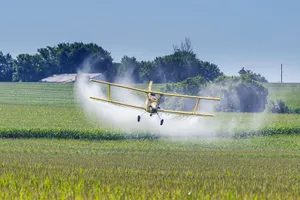
The idea that you only need to choose “safe” chemicals is a misconception. Pesticide residues are not a binary switch. It’s a spectrum. Some compounds, such as atrazine and 2,4-D, are moderately persistent compounds and can stick around for up to 18 months. Then you have the heavy hitters like DDT, Aldrin and Dieldrin that lasted 20 years. And then there are the permanent ones. lead. mercury. arsenic. These things never go away.
Maybe a short-term option is better. Right? Not necessarily. Organophosphates break down quickly. However, they are also highly toxic and non-selective. They don’t just kill pests. They kill the natural enemies of pests. This disruption has led to the rapid emergence of resistant insects. It created a chemical arms race with no winners. Reality is harsh. It is clearly impossible to use chemicals without drawback or disadvantage.
Where Do the Chemicals Go?
Whether these toxins are sprayed or dispersed, air is a usual medium. Chemicals pass through it to their intended targets. And unintentional ones.
There are glaring hole in our knowledge. There is no reliable information on how pesticides behave in the air, especially how far they travel. Why? This is because there is adequate monitoring is unavailable. Their ultimate fate is determined by a complex combination of chemical properties, use and atmospheric conditions. But one thing is certain. Pesticides can travel long distances via dust particles.
It is difficult to predict the rate of removal from the air. In the long term, however, these chemicals will inevitably return to the earth’s surface. Gravity wins. Eventually.
Odors, Pollen, and Dust
Odors caused by concentrated animal operations are very undesirable. Public reaction is poor when these facilities are located next to urban areas. There is no benefit to placing animal waste on land. It can worsen the odor. Strong winds blow the dry material into the air, spreading the smell even further.
Smoke adds to the mix. This is the result of operations aimed at handling crop residues and controlled burning of weeds and bushes. But it’s not just the smell. Air quality is affected by allergenic pollen. Ragweed pollen can be blown far. It can cause allergies far from the source.
Improper land use can significantly reduce air quality. Long-term activities that remove soil from plant growth or crop residues can cause wind erosion. This is particularly acute in dry-farming areas. Fortunately, techniques to prevent wind erosion are well known and widely used. We know how to stop dust. We just don’t always use it.
Agricultural waste moves freely with the wind. distributed in unwanted fashion. Rice husk. Wheat chaff. plastic sheet. Cotton-gin trash. These are airborne nuisances that choke the landscape.
Soil and water pollution
Pollutants Damaging to Agriculture
Soil and water contaminants that can adversely affect agricultural production include sediments, plant nutrients, inorganic salts and minerals, organic wastes, infectious agents, industrial and agricultural chemicals, and heat. Each category tells a story of resource mismanagement.
Sediment
Intensive farming and poor land use lead to erosion of valuable topsoil. Wind and water strip it away. This top soil often gets into water bodies as sediment. Sediment is a resource out of place. The double effects are devastating. It depletes the land from which it originates. It impairs the quality of the incoming water.
In addition to filling water bodies, irrigation canals, farm ponds and reservoirs, sediment increases cost of water clarification. Suspended sediment can impairs the dissolved-oxygen balance of dissolved oxygen in the water. The recreational value of farm ponds is reduced by sedimentation. Agricultural land whose soil has deteriorated decreases in value. This is a cycle of loss.
Plant nutrients
When plant nutrients occur in groundwater and surface water, they become resources out of place. They become serious pollutants. Unwanted aquatic plants and algae are fed by plant nutrients in agricultural runoff. Feedlots. Barnyards. Urban and rural wastewater. industrial waste.
Aquatic plants block irrigation and drainage structures. This increases maintenance costs and reduces capacity. Nitrates and nitrites in groundwater can poison people and livestock. They are the result of agricultural and industrial activities. The nitrogen cycle, once balanced, it in turn acts as a vector of toxicity.
Inorganic salts and minerals
Inorganic salts and minerals that damage soil and water quality come from natural deposits, acid mine drainage, industrial processes, and irrigation drainage. The greatest damages and losses occur when salts accumulate in irrigated soil.
Excessive sodium content in irrigation water can have a negative effect on plant life. It is a chronic poison for soil structure. More than just a trace of boron that are highly toxic. Water containing borax used in municipal and industrial processes must not be used in agriculture. The line between industrial waste and agricultural inputs is blurring.
Organic waste
Municipal wastewater, garbage, organic waste from the food industry, pulp mills and livestock farming are exposed to aerobic bacterial attacks. When this happens in the water, the oxygen concentration in the water decreases. Or it is reduced to zero. At this stage, anaerobic bacteria complete the process of reducing the waste to inert material.
This creates a purulent space. The water becomes unsuitable for recreational use. farm supply. Irrigation of crops. The water is not just dirty. I stop breathing.
Infectious pathogens
Unless they are spread by wind, infectious agents are spread mainly through water and soil. Bacterial and viral plant diseases are spread by machines that move contaminated soil and crop residues. Insects are the main transmitters of these diseases. Weed seeds are spread through irrigation water. The same goes for nematodes.
Animal diseases spread through water and soil include leptospirosis. salmonellosis. Swine fever. Mastitis. Hand, foot and mouth disease. tuberculosis. Creation disease. Histoplasmosis. Newcastle disease. Anthrax. Coccidiosis. There are many others. Mosquitoes breeding in stagnant water can spread encephalitis.
Most of the world’s crops and livestock are susceptible to one or more highly contagious diseases that can be transmitted through soil and water. The toll of these diseases is staggering. We think of soil as dirt. But this is a living system. We pollute these connections.
Invisible chemical traces
Even if you turn off the sprayer, the damage won’t stop. Organic chemicals are left behind. Detergents, pesticides, herbicides, fungicides, they all leave traces. These are not just abstract pollutants. They are tangible residues that move around in soil and water, waiting to cause trouble.
Consider a potato field. Farmers can use persistent insecticides for a year. The following season, they cultivated sugar beets on the same land. Beets absorb what is left of the soil. Problem? There are no legally permitted limits in sugar beets. Crop contamination is not caused by direct mistakes in current cultivation.
The situation is getting even worse. The fish in the farm ponds died. It is not due to illness. From drainage. Pesticide contaminants wash into this stagnant water, killing everything that swims. Dairy cows are next. In one recorded case, heptachlor, a chemical now banned in many places, was used to kill alfalfa weevils. The soil remains contaminated. The hay took it up. The cows ate hay. The chemicals pass into the milk.
The supply chain is porous. What happens on the field is reflected in your plate or pond.
This is not just a single crop issue. It’s about collateral damage. Herbicides used on utility rights-of-way and roadside ditches do not respect property lines. They drift or flow into non-agricultural areas and then into adjacent fields. Nontarget crops suffer. Herbicide waste flows into irrigation canals. It travels.
The stakes are high. If there are residues in the product, it can be confiscated. The entire cargo can be destroyed. Public confidence evaporates. That’s why governments now regulate almost all chemical uses. The restrictions are strict. However, the history of pollution is already etched into the soil.
Heat is a hidden pollution
Not all pollutants are chemical pollutants. Some are physical.
Heat enters water bodies through industrial processes. Power plants, manufacturing plants, all this adds heat. This heat pollution has real consequences. Fish need a lot of oxygen, but as the water temperature rises, there is less oxygen. Other creatures are also struggling. Stressed ecosystems reduce the recreational value of lakes and rivers.
But reality check of agriculture here. In this particular case, heat is only a minor factor. Although it can harm aquatic life and recreational activities, it does not cause direct toxic damage to crops or soil like chemicals. This is a water quality issue, not an agricultural production crisis.
When agriculture pollutes agriculture
Agriculture itself is a significant source of pollution. This has nothing to do with foreign impurities. It’s about excess.
Plants get too many nutrients. Too much salt. These come from irrigation. When the water evaporates, the minerals are left behind. Over the years, the soil has become salty. Plants cannot grow in salty soil. Nutrients, nitrates and phosphates that help plant growth flow into the water body. They just don’t stay there. they move.
These agricultural pollutants affect the entire environment. They can cause algal blooms. They create dead zones in rivers and coastal areas. The same practices that feed us can also choke the ecosystems we depend on. The cycle is closed. What goes into the soil doesn’t always stay there. It travels. It continues to accumulate. It changes the landscape in a way that is difficult to reverse.

The Phosphorus Paradox and Nitrate Confusion
Eutrophication isn’t just a buzzword. It’s a suffocating reality for aquatic ecosystems. When mineral and organic nutrients surge into a body of water, dissolved oxygen plummets. The result? An environment that favors plant life over animal life. Algae and other water plants choke out competitors in the oxygen war. This happens especially where carbon and phosphorus are plentiful.
Doubtless, much phosphorus in surface water comes from agriculture. But here’s the catch: it’s delivered primarily through soil erosion, not just runoff. In many areas, municipal sewage-treatment plants are the principal source. Direct runoff from feedlots also dumps large amounts into the system. The solution to this phosphorus in surface water crisis isn’t complex. It lies in good soil-conservation practices. You must minimize runoff from animal concentrations and manure.
Identifying nitrate sources is a different beast. The evidence conflicts wildly. Where nitrate is found, some blame chemical fertilizers. Others point to natural soil nitrification. Some suggest sewage effluent or animal wastes are to blame. The stakes are high. Nitrate causes serious illness in humans. One difficulty in identifying nitrate sources in water lies in the fact that nitrogen exists in soils for reasons other than fertilization. Legumes, for example, grow there naturally.
Salinity: The Irrigation Trap
Salinity is a major problem in irrigation agriculture. Through evapotranspiration, salts in the irrigation water become more concentrated in the drainage effluent. It is therefore claimed that water quality is seriously impaired by irrigation agriculture. Irrigation water always contains some salt. Most of it is excluded by plant roots. Since the evaporated water is pure, the soil accumulates the residual salt. This adds to what arid soils already have in abundance.
This accumulation of salt must be removed if plants are to be grown at all. It is removed by leaching with excess water. Survival of an irrigated area will depend, therefore, on a favorable salt balance. Salt leaving the area must equal or exceed that received in the water supply. The irrigation farmer is not actually “producing” a contaminant but is transferring one in a more concentrated form.
Future intensified use of limited irrigation water may add to the severity of this problem. Where the return flow is readily recoverable, as from tile drains or pumped wells, it could be purified by a desalination process. Return the purified fraction to watercourses. Dispose of the concentrated-salt fraction in a way that usable groundwater is not affected.
The Waste Stream
Agricultural processing wastes represent another pollution hazard. These include runoff or effluent from sawmilling. Pulp manufacture. Fruit and vegetable canning. Cleaning of dairies. Slaughtering of meat animals. Tanning. Manufacturing of cornstarch and soy protein. Sugar refining. Distilling. Wool processing. And many others.
The runoff from agricultural enterprises can contain disease organisms and other infectious agents. Insects associated with agriculture can transmit diseases. Plant diseases move from agriculture to lawns, gardens, parks, and golf courses.
Monitoring Pesticides
The monitoring of pesticides in water has been carried on in various areas since World War II. Some of the monitor networks, backed by analysis laboratories, are quite extensive. The accumulated data show how and when certain pesticides move from target areas into other parts of the environment. Ponds and catch basins sometimes show measurable amounts of pesticide residues from water leaving fields.
Although most organic insecticides are hydrophobic and almost insoluble in water, they can become attached to materials suspended in water. But after these materials settle, the remaining amounts of insecticide residues usually become negligible. This confirms the earlier supposition that the movement of chemicals from target areas is greatest when silt and organic loads are high in runoff water.
Levels of pesticides in soils are constantly changing. So many variables and processes are involved that rates of accumulation of even the most persistent insecticides are quite variable and difficult to determine. Soil monitoring programs are underway, however. They are providing much-needed information. The problem of accumulation in soils arises because the tiny organisms in soil are not capable of degrading many pesticides at rates sufficiently high to prevent soil and also water pollution. Thus, the persistent types, such as DDT and other chlorinated hydrocarbons, remain available for absorption by higher animals (including human beings) and for causing harm to nontarget organisms.


