It is easy to dismiss shell collecting as a simple beachcombing pastime. People see the bright colors and intricate shapes and assume it is just a hobby for tourists. But look closer. This practice is an ancient, global obsession that has evolved from primitive tool-making to a high-stakes niche market for the wealthy.
Humans have been drawn to mollusk shells for millennia. The ancient Greeks and Romans wrote extensively about them. You can find evidence of early collecting in the ruins of Pompeii and even in a Mayan crypt in the Yucatán. These weren’t just random piles of debris. They were curated collections. For centuries, shells served as ornaments, tools, and even currency.
Today, however, shell collecting mirrors the world of stamp or coin collecting. It is a serious avocation with rules, history, and significant financial stakes.
The Golden Age of British Conchology
The modern era of shell collecting didn’t start in the tide pools. It began in the drawing rooms of England during the late 18th and early 19th centuries. This was the peak of the Pacific and China trade. New islands were being mapped. New species were being discovered.
The newly rich merchant princes of England wanted status symbols. They imported shells as curiosities. Then, they started buying them as specimens. By the 1850s and 1860s, shell auctions were common. Prices for rare, perfect specimens soared.
Why did it decline? Simple supply and demand. As collectors mapped out the haunts of these mollusks, rare shells became common. The market crashed. But the hobby never died. Shells are too beautiful, too varied, and too compelling. The interest revived, shifting from blind accumulation to scientific specialization.
What Actually Is a Shell?
To collect properly, you need to understand the object. A shell is the exoskeleton of a soft-bodied mollusk. It is mostly calcium carbonate, secreted by the animal itself. It provides protection and support. The animal is bound to this structure. It generally cannot survive if separated from it.
When danger strikes, many marine mollusks retreat. They seal themselves off from the water using a horny or calcareous door called an operculum. A careful collector always preserves this door. It is part of the specimen. If you lose the operculum, you lose integrity.
After death, shells don’t just vanish. Other marine animals often move in. They become temporary inhabitants. This is why preservation and cleaning matter so much.
Where to Find the Most Valuable Shells
Not all shells are created equal. The rarest, most valuable, and most beautiful specimens come from the sea. Specifically, the tropical or subtropical waters of the Indo-Pacific, the Caribbean, and the Mediterranean.
If you are looking for the “holy grails,” you are looking at specific families:
- Cypraeidae: Cowrie shells
- Conidae: Cone shells
- Volutidae: Volute shells
- Muricidae: Rock shells
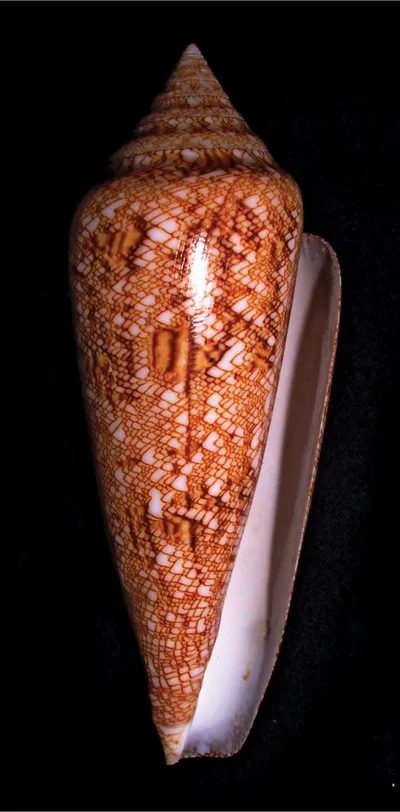
The single most desirable species is Conus gloriamaris. It is known as the “glory of the sea.” It is stunning. It commands very high prices. It is also the only shell known to have been stolen from a large museum. That tells you something about its value.
Intertidal vs. Deep Water: The Rarity Factor
Why are some shells worth pennies and others thousands? It comes down to habitat and effort.
Many species live in the intertidal zone. These are the areas exposed at low tide and submerged at high tide. Sandy or rocky shores are their home. These are easy to find. You just wait for the tide to go out.
In these zones, you will find:
- Olividae: Olive shells (glistening and colorful)
- Naticidae: Moon shells
- Strombidae: Strombs
- Terebridae: Augur shells
- Various bivalves: Clams that burrow in sand
- Littorinidae: Periwinkles
- Turbinidae: Turban shells
- Limpets
- Chitonidae: Pill bug or coat of mail shells
These are attractive. They are abundant. They are easy to collect.
The expensive ones? They live in deep water. You cannot find them at low tide. You have to dredge the ocean floor. Or strain the water. Or pay fishermen who haul them in with their catch. The labor is higher. The risk is higher. The supply is lower. The price is higher.
Freshwater and land shells exist, too. There are many species. Collectors rarely want them. They are often small. They are often drab. They lack the visual impact of their marine cousins.
Preserving and Specializing
Shells are low-maintenance. Once cleaned and labeled, they can sit in a drawer for decades without changing. They don’t rot. They don’t fade quickly if kept out of direct sun.
But most collectors do not just pile them up. With about 100,000 known species, specialization is necessary.
Some collectors focus on locality. They map exactly where a specimen was found. This contributes valuable scientific data on mollusk habits.
Others focus on taxonomy. They collect only the type species of a genus. This builds a collection that teaches evolution. It provides insight into the entire field of conchology, the study of shells.
The Collector’s Toolkit
You cannot just walk onto a beach and start gathering. You need equipment.
- Scraping tool: To remove sand or leaves.
- Knife: To detach mollusks clinging to rocks.
- Hammer and chisel: To extract rock borers from their nests.
- Sieve: To strain specimens from shallow water.
- Notebook: To record locality and ecological data. This is critical. A shell without a location is just a rock.
- Library: Books on shells for identification.
Without these tools, you are just picking up debris. With them, you are practicing a science.
Why It Still Matters
The hobby has changed. It is no longer just about owning pretty things. It is about understanding the biological structures that protect soft bodies in harsh environments. It is about the history of trade and exploration. It is about the thrill of finding something rare in a world where everything seems mapped and known.
The Conus gloriamaris is still stolen. The auctions still happen. The tide still goes out.
There is a reason people keep doing this. It is not just about the shell. It is about the hunt. And the hunt is far from over.