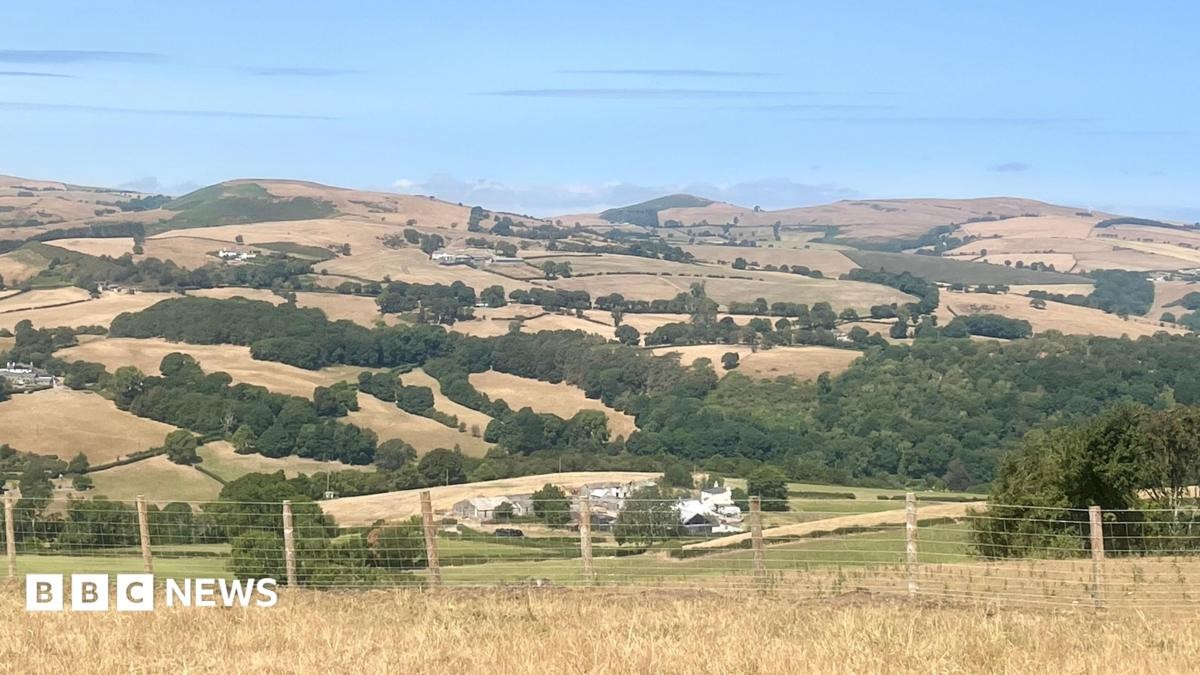
It’s hot. It’s dry. And for parts of Wales, it’s officially a drought.
Natural Resources Wales (NRW) dropped the announcement this week. The move confirms that specific regions are now under drought status. It’s the first time the UK has seen such a declaration this summer. And while it might not mean your tap will run dry tomorrow, the environmental reality on the ground is stark.
We are looking at a landscape parched by back-to-back heatwaves. July rainfall has hovered around a meager 5% of the average. Combine that with a dry spring, and you have a recipe for ecological stress.
Which areas of Wales are under drought status?
The declaration isn’t blanket coverage across the entire country. NRW has pinpointed the hardest hit zones. You need to look at North and South Gwynedd. Also Anglesey (Ynys Môn). Then there are the catchments for the Dee, Clwyd, and the Upper Severn rivers.
In these areas, the threshold has been crossed. River levels are exceptionally low. Groundwater is declining. Soils are bone dry.
The rest of mid-Wales? They’ve moved into “prolonged dry weather” status. It’s the step before full drought. South Wales remains in that prolonged phase.
Why does the distinction matter? Because it dictates how regulators respond. It triggers enhanced monitoring of wildlife sites. It changes the advice given to farmers. And it signals how much pressure is already being pulled on the natural environment.
How low are the rivers really?
Some waterways are nearing their lowest levels in living memory.
Take the Clwyd, Alyn, Alwen, and Conwy. They are classed as exceptionally low. So is the Wye. This river cuts through mid-Wales and down toward England. The Dyfi and Clywedog in the north are struggling too.
To keep them flowing, NRW is releasing extra water from reservoirs. They’re supporting the Clwyd and the Wye. They’re also helping the Severn in the southeast and the Dee in the north-east. But reservoirs aren’t infinite.
Rivers classed as dangerously low include these named waterways. The impact is visible. Rhian Thomas, a manager at NRW, called out the serious environmental impacts. She mentioned fisheries dying. Sensitive habitats crumbling. Wildlife suffering.
And then there are the wildfires.
They’ve sparked across north and south-east Wales. Thomas noted that these fires are “one of the clearest and most visible sign[s]” of how arid the land has become. When grass catches fire like tinder, you know the soil isn’t holding moisture anymore.
Who is affected beyond the wildlife?
If you think this is just about trout and mayflies, think again.
The farming unions are sounding the alarm. Abi Reader, president of NFU Wales, spoke to the BBC. She described the pressure on livestock. Heat-stocked animals need water. They need shade. Springs are drying up. Streams are vanishing.
Arable farmers are seeing different headaches. The heat forced crops to ripen way ahead of schedule. We’re looking at unprecedented early harvests. Early harvest often means lower yields. Farmers are losing ground before the season is even out.
Gail Davies-Walsh from Afonydd Cymru—the voice for Wales’ river trusts—isn’t mincing words. She pointed to the exacerbation of water quality issues. Lack of rainfall means less dilution. Pollutants concentrate. Fish are dying from lack of oxygen and heat.
Temperatures hit 28°C in the Wye and the Usk. That is lethal for aquatic life. It’s not just dry. It’s boiling in places.
How drought status impacts public water supply
Here is where it gets confusing. The term “drought status” doesn’t automatically mean a hospipe ban for everyone.
NRW’s declaration is about environmental health. It’s about river flows, rainfall, and groundwater. Public water supplies are a separate operational concern.
Welsh Water moved quickly. They imposed a hospipe ban on 33,000properties in west Wales. Why? Because demand was outpacing their ability to refill service reservoirs. It’s about local treatment works keeping up with sustained use.
This means you can be in an “environmental drought” zone while your local water company hasn’t issued a ban. Or vice versa. The pressures don’t always align perfectly.
Llyr Gruffydd, the Cabinet Minister for Rural Resilience, tried to clear up the chatter. He emphasized that public supplies are sufficient. But he urged diligence. Use water wisely. Don’t take it for granted.
The frustration gap
Social media is a firestorm right now. People are angry. They’re angry at sewage spills. They’re angry at leakages. They wonder why they should save water when corporations are polluting the rivers they rely on.
Gail Davies-Walsh gets it. She reads the comments. She understands the frustration.
But here is the hard truth: your water usage directly impacts river flow. Every liter you waste on a hose when the river is barely trickling makes survival harder for fish and other wildlife.
The system is strained. Pollution is already there. Low flows concentrate that pollution. Add the heat, and you get a toxic cocktail for aquatic life.
July is on track to be the driest month in Wales for nearly 190 years. If rain doesn’t come before the month ends, we’ll have history on our hands. Not just for farmers. For everyone who relies on the health of this land.
We are asking you to play your part. Is it inconvenient? Yes. But the landscape is screaming. And right now, silence isn’t an option.