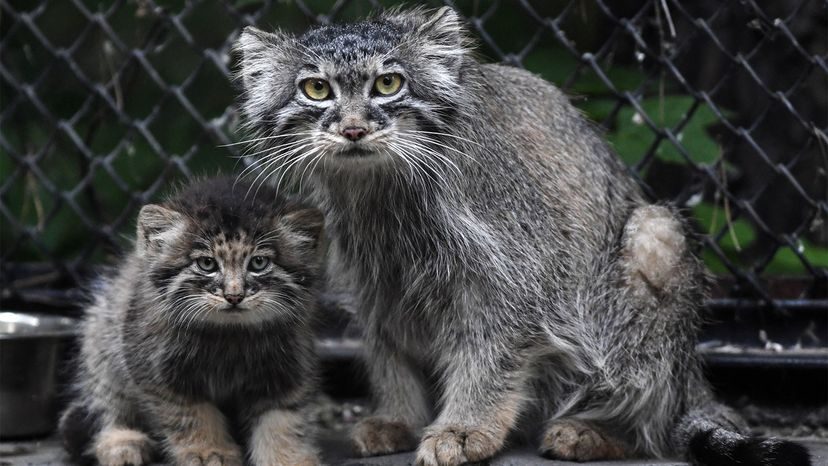
Look at them. They look perpetually annoyed. This isn’t a mood swing. It’s biology. The Pallas’s cat, scientifically known as Otocolobus manul, wears a face that seems permanently set in a scowl. But beneath that grumpy exterior lies one of the most fascinating adaptations in the animal kingdom.
These aren’t your average house cats. They are wild, solitary, and built for survival in some of the harshest environments on Earth. Often called the manul, they have become internet sensations for their quirky expressions, but their real story is about extreme resilience. They live in Central Asia, primarily in Mongolia and Russia, where they have been iconic figures for decades—even serving as the mascot for the Moscow Zoo for over thirty years.
The Science Behind the Fluff and the Frown
The name honors Peter Simon Pallas, an 18th-century German zoologist who first described the species during the first Russian Siberian expedition. While Pallas documented them, the cat’s appearance tells its own evolutionary story.
Those large, round pupils and flat face give the impression of an owl-like stare. It looks grumpy. It looks angry. But it’s actually about optics and heat retention. The flat face reduces surface area exposed to the biting winds.
And then there is the fur. It is the longest and densest of any feline species. To the naked eye, a Pallas’s cat looks bulky. It doesn’t. Under that grayish-brown coat, the body is roughly the size of an average domestic house cat. The massive look is an illusion created by insulation.
Why so much hair? It’s a built-in winter parka. In the high-altitude steppes where they live, temperatures plummet. The thick fur traps body heat while providing camouflage against the rocky, snowy terrain. It hides them from predators and helps them hide from prey.
Small Ears, Big Survival
If the fur is for warmth, the ears are for precision. Pallas’s cats have tiny, rounded ears set low on their heads. This isn’t an accident.
In the freezing winds of the Asian steppe, large ears are a liability. Large ears dissipate body heat rapidly. A jackrabbit in the hot Sonoran Desert benefits from that cooling effect. A Pallas’s cat in Mongolia would freeze if it had ears like a jackrabbit.
Evolution has produced a perfect compromise.
They need ears to hear rodents moving under the snow. They need them to survive. But they cannot afford the heat loss of large ears. So, nature gave them small, efficient ears. It’s a biological tightrope walk that they have mastered.
Habitat and Hunting Strategy
You won’t find these cats in tropical forests or dense jungles. Their range covers Central Asia: Iran, Pakistan, Afghanistan, northern India, central China, Mongolia, and southern Russia. They prefer dry, arid regions with less rainfall. Snow is common in winter, but they avoid wet, damp environments.
Their daily routine is dictated by the cold and the hunt.
During the day, when the sun is high but the air remains cold, they rest. They don’t use traditional cat trees. They use natural shelter. Small caves, cracks in rocks, or spaces under boulders provide protection from the wind and potential threats.
At dusk, the hunt begins.
They are ambush predators. They rely on stealth over speed. You’ll often see them squatting low to the ground, blending into the rocks. This posture serves two purposes: it hides them from predators like wolves and golden eagles, and it makes them invisible to their prey.
Their diet consists mainly of rodents. Pikas are a staple. Voles, birds, and hares round out the menu. When the moment is right, they explode from their hiding spot. Despite their cautious, loafing demeanor, they are aggressive hunters when the time comes.
The Pallas’s cat is a creature of extremes. Cold. High altitude. Scarce resources. And yet, it thrives. It is a testament to how life finds a way to adapt, even if that adaptation looks a little strange.
The reality of keeping a Pallas’s cat
The idea of adopting a Pallas cat as a pet sounds wonderful in theory. A small, grumpy ball of fur that fits in your pocket? Who wouldn’t want that? But the reality is much less pleasant. These cats are not suitable for domestic life. They are solitary hunters adapted to a specific, harsh environment. Removing a specimen from the wild not only leads to changes in its diet; it basically puts his health at risk.
Their immune systems is specialized for cold temperatures. They thrive in thin air, but are unable to fight the common bacteria and viruses found in lower, more densely populated areas. In captivity, this weakness leads to high mortality. They don’t just get sick. They die.
Why are they hunted?
The biggest threat to Pallas’s cats comes from human activity. They are hunted for their fur and meat. Coats, hats and gloves are made from fur. Meat is eaten and fat is used in cooking. This hunting reaches its peak in winter. This is when cats have the thickest fur and the most fat reserves due to the extreme cold. The temperature can drop to -40 degrees Fahrenheit. However, cats still hunt rodents in open grasslands. Their habitat does not provide them with protection. They are easily recognized by the locals.
Protection challenges
The cat’s unique biology makes conservation efforts difficult. Unlike many other near-threatened species, Pallas cats do not adapt well to low altitudes. This makes traditional captive breeding programs in zoos less effective. They do not thrive in captivity. This limits our ability to expand their population using conventional rehabilitation methods.
Researchers and wildcat conservation societies continue research to protect them. We are still trying to figure out the best way to maintain their numbers. For most people, visiting them in the wild is not an option. The area is too remote. The altitude is too extreme.
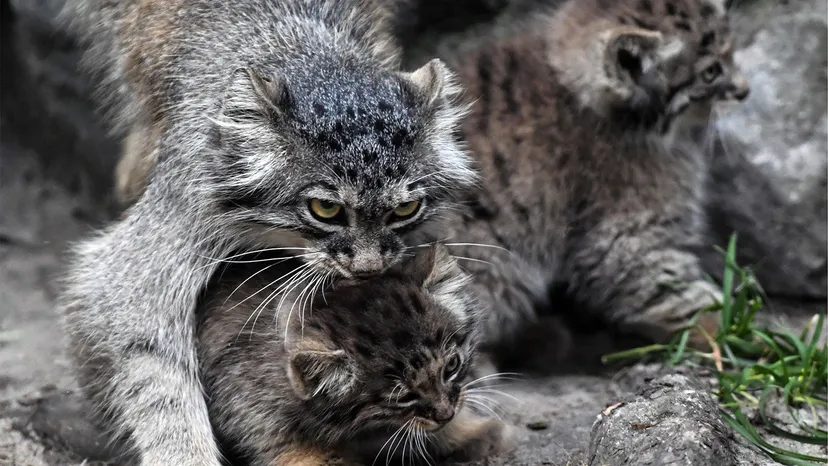
“Pallas cats are solitary creatures. Young cats live in family groups for up to a year after birth.”
A flash of color
There is one visual change that might surprise you. These cats do not stay gray all year round. In winter, their fur is solid and thick gray. This acts as camouflage from snow and rocks. When summer comes, the coat changes. They develop dull streaks and ocher highlights. The change is subtle. It helps them blend into the drying meadow.
You can’t keep them. You can’t easily see them. But you can look at their photos. The internet is full of pictures of their beautifully grumpy faces. That’s small consolation. But it’s something.