May 26, 2040. The sky still holds the shape of the rocket.
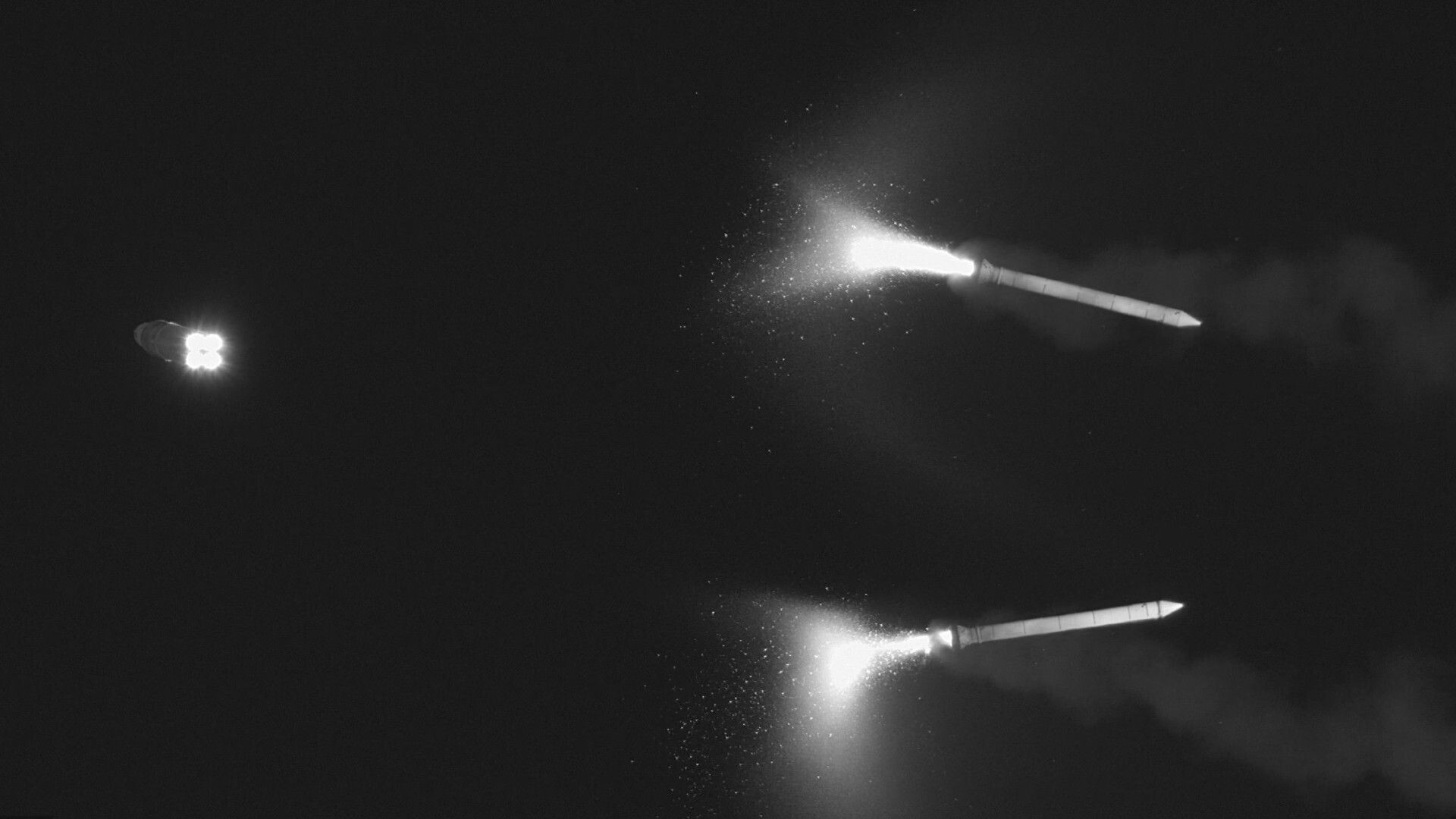
They look like siblings. Twin pillars of aluminum and fire hanging in the dark blue. Striking unison.
Separation isn’t just mechanics. It’s a release.
On the left, the core stage pulls away. Cold. Detached. Heading off to carry Integrity and four humans around the moon. On the right? The spent boosters. Just falling now.
What actually happened?
April 1. The earth shook.
Artemis 2 blasted off. Four astronauts aboard: Reid Wiseman, Victor Glover, Christina Koch, and Jeremy Hansen. NASA crew and Canadian crew, mixed in the tight metal belly of Orion.
They needed lift. Big lift.
That’s why SLS—the Space Launch System —exists. It’s not just a rocket. It’s a hammer. Designed to smash gravity out of the way.
The two solid rocket boosters provided the punch. Seventy-five percent of the thrust needed to escape our grip. Just two minutes and eight seconds. That’s it. Two minutes before they burned out.
Then? Boom. Sixteen separation motors fired.
Not gently. They pushed hard. Splitting the twins from the core and from each other.
Did they worry about collision?
Always. But here they look synchronized. Dancing in the upper atmosphere. Soon they will hit the Atlantic. Sink. Forgotten.
Why this picture hits hard
People say SLS was a mess. Budget overruns. Years of delay. Politics.
Look at the photo though.
There is elegance in the split. The boosters mirror each other, perfectly spaced, against the curve of the Earth. The core moves on, relentless.
It works.
A machine this complex failing is the expectation. Succeeding is the shock.
We keep staring because we expect the break to be ugly. Chaotic. Messy.
But the metal parted cleanly.
The rocket goes up. The trash comes down. And for one split second, both are beautiful.
Who are we really watching? The people going up?
Or the things left behind?