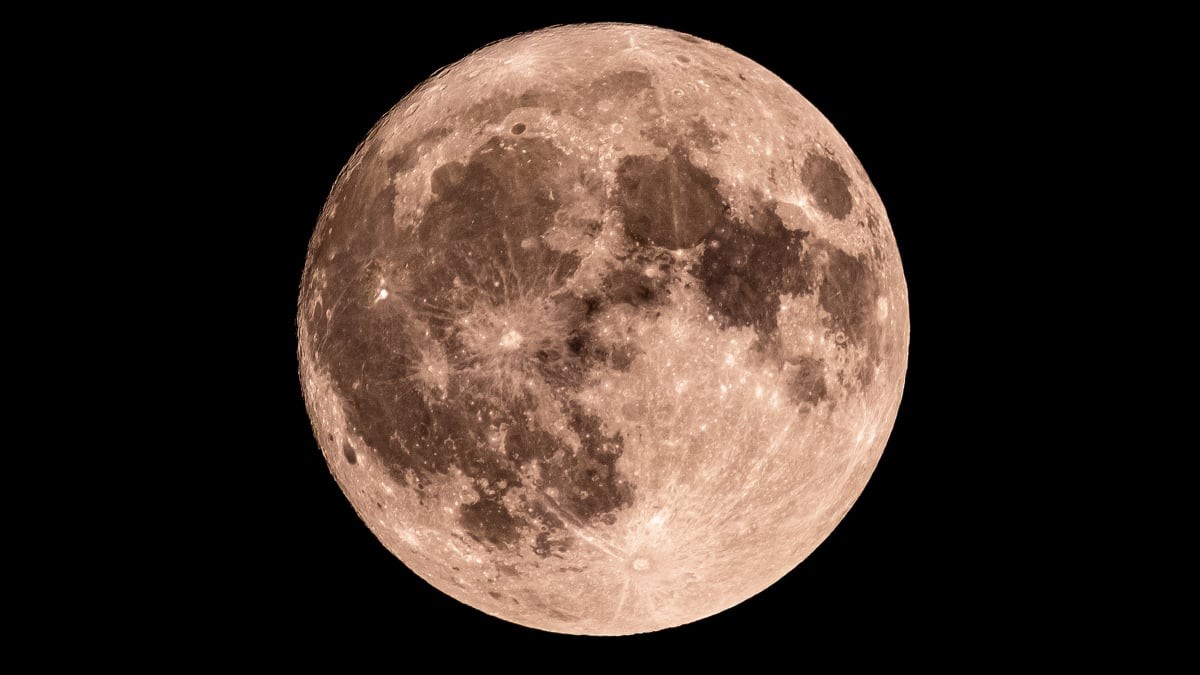
The lunar calendar is moving steadily toward the Third Quarter phase, but for now, the night sky offers a bright and detailed spectacle. On Thursday, May 7, 2026, the Moon enters its Waning Gibbous phase. While the full glow is receding, nearly three-quarters of the lunar surface remains illuminated, providing an excellent window for both casual observers and serious astronomers to explore the Moon’s rugged terrain.
Tonight’s Lunar Landscape
According to NASA’s Daily Moon Guide, 74% of the Moon will be lit on May 7. This level of illumination is significant because it balances brightness with shadow. The shadows cast by craters and mountains are distinct enough to reveal surface details, yet the light is not so overwhelming that features blend together.
What you can see with the naked eye:
Even without equipment, the human eye can discern the Moon’s major dark patches, known as maria (Latin for “seas”). Look for:
* Mare Serenitatis (Sea of Serenity)
* Mare Vaporum (Sea of Vapors)
* Oceanus Procellarum (Ocean of Storms)
Enhancing the view:
For those with binoculars or a telescope, the view deepens considerably. Binoculars allow you to identify larger features such as the massive Clavius Crater, the darker Mare Humorum, and the jagged peaks of the Alps Mountains.
A telescope unlocks even more history and detail, revealing:
* The landing sites of Apollo 14 and Apollo 15.
* The Rima Hyginus, a striking rille (groove) that cuts through the lunar surface.
Understanding the Lunar Cycle
To appreciate what is happening in the sky, it helps to understand the mechanics behind it. The Moon takes approximately 29.5 days to complete one orbit around Earth. Although we always see the same side of the Moon due to tidal locking, the angle at which sunlight strikes it changes constantly. This shifting geometry creates the familiar cycle of phases.
The lunar cycle consists of eight distinct phases, transitioning from darkness to full illumination and back again:
- New Moon : The Moon is positioned between Earth and the Sun. The side facing us is in shadow, making it invisible to the naked eye.
- Waxing Crescent : A thin sliver of light appears on the right side (in the Northern Hemisphere).
- First Quarter : Half of the Moon’s face is illuminated on the right side.
- Waxing Gibbous : More than half is lit, but the Moon has not yet reached fullness.
- Full Moon : The entire face of the Moon is illuminated and visible from Earth.
- Waning Gibbous : The light begins to retreat from the right side (Northern Hemisphere). This is the current phase on May 7.
- Third Quarter (Last Quarter) : Half of the Moon is lit, but now on the left side.
- Waning Crescent : A final thin sliver of light remains on the left side before returning to darkness.
Looking Ahead: The Next Full Moon
As the Moon wanes, it moves toward the end of its cycle. Interestingly, May 2026 features two Full Moons. While the current phase is fading, the next major lunar highlight is on the horizon: the Full Moon on May 31, 2026.
The Waning Gibbous phase offers a unique observational advantage: enough light to see clearly, but enough shadow to create depth. For skywatchers, tonight is less about the Moon’s brightness and more about its topography.