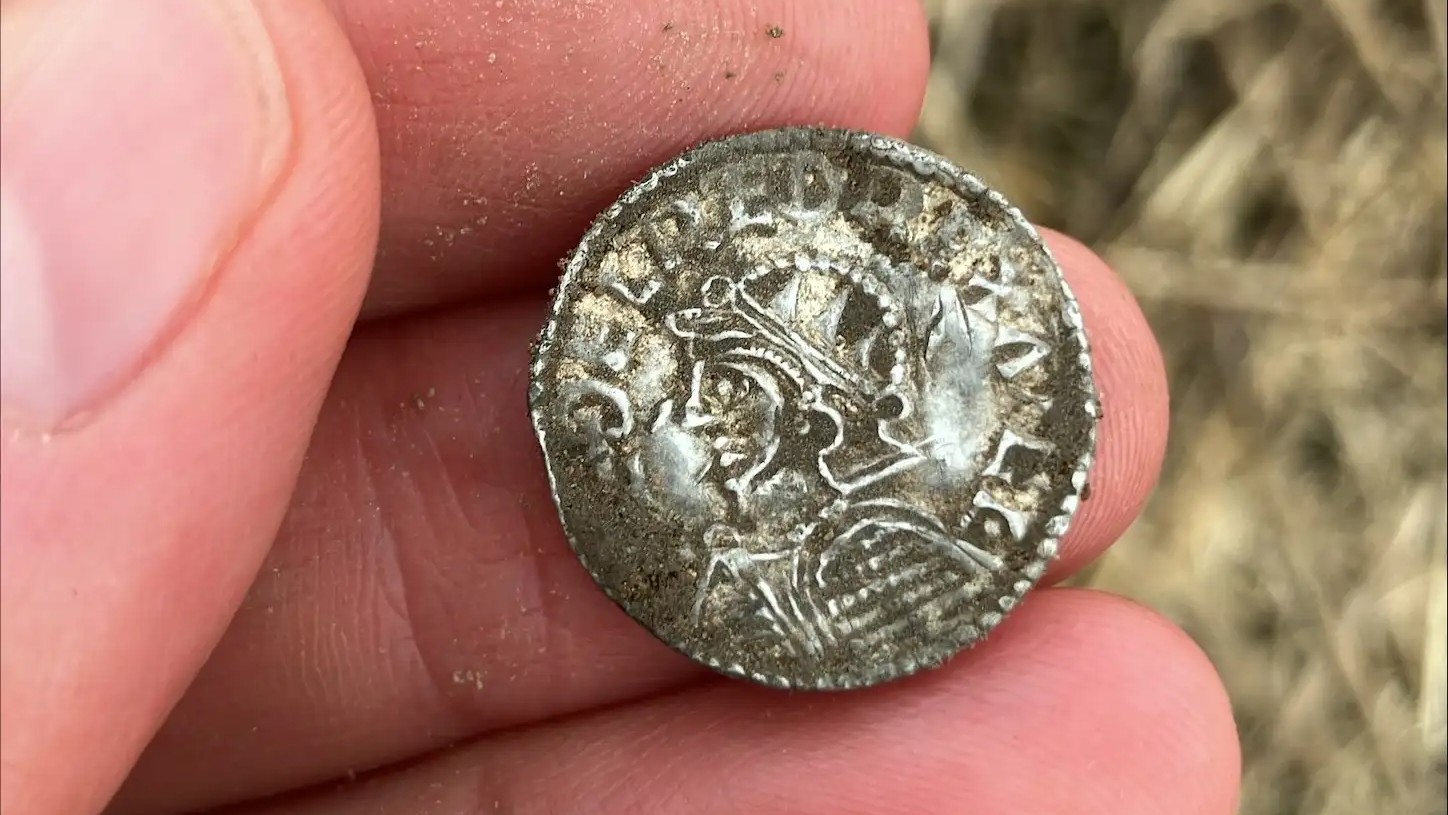
Archaeologists in eastern Norway have made a historic discovery, uncovering a massive cache of nearly 3,000 silver coins. This find, now known as the Mørstad Hoard, represents the largest collection of Viking Age coins ever recorded in Norway, shattering previous archaeological records.
From a Small Find to a Massive Hoard
The discovery began unexpectedly on April 10 near the village of Rena. Two metal detectorists initially located just 19 coins on a local farm. However, after alerting local archaeologists, the search quickly escalated into a massive operation.
“I jokingly said it would be nice if we found a few more coins to make the discovery even bigger,” said May-Tove Smiseth, an archaeologist at the Innlandet County Municipality. “But the detectors never stopped beeping!”
The final count stands at 2,970 silver coins, supplemented by fragments of hacksilver —pieces of silver jewelry that were cut up and used as a form of portable, divisible currency during the Middle Ages.
A Snapshot of Viking-Era Economy
The coins within the Mørstad Hoard offer a diverse look at the international connections of the Viking Age. Experts from the Museum of Cultural History in Oslo have identified coins minted in several different regions, including:
– England: Under the reigns of Æthelred II and Cnut the Great.
– Germany: Including coins from Holy Roman Emperor Otto III.
– Denmark and Norway.
The composition of the hoard provides a vital chronological marker for historians. Because the collection includes coins minted under the Norwegian King Harald Hardrada (who ruled from 1046–1066), researchers believe the hoard was deposited around 1050.
This period is significant because it marks a transition in the Scandinavian economy. Before Hardrada established a national coinage, much of the money circulating in Norway consisted of foreign currency. The Mørstad Hoard captures this exact moment of economic shift.
Wealth Beyond Raiding: The Iron Connection
While popular history often associates Viking wealth with raiding and plunder, this discovery suggests a more structured, industrial source of prosperity.
Archaeologists point to the region’s history of large-scale iron production. From the 900s through the late 1200s, Scandinavia utilized local bogs to extract ore, processing it into iron for export to much of Europe. This suggests that the Mørstad Hoard may not be “loot,” but rather the accumulated wealth of a successful industrial trade network.
What Lies Beneath?
The excavation is far from over. Archaeologists remain on-site, investigating whether the hoard is part of a larger settlement or if more treasures remain buried in the soil. The local conditions, which helped preserve the silver, continue to make the site a high priority for researchers.
The Mørstad Hoard serves as a rare, tangible link to the economic complexity of the Viking Age, proving that the era was defined as much by sophisticated trade and industry as it was by conquest.