This week’s scientific developments offer a striking contrast between the fragility of our natural world and the rapid, transformative leaps in human technology. While environmental data suggests our planet’s systems are reaching critical tipping points, breakthroughs in biotechnology and archaeology remind us of the enduring mysteries of life and history.
🌊 Environmental Alarms: A Planet in Flux
The most pressing news concerns the Atlantic Meridional Overturning Circulation (AMOC). This vital ocean current acts as a global conveyor belt, transporting heat to the U.S. East Coast and Western Europe while recycling massive amounts of carbon.
New research, utilizing fresh data and advanced modeling, suggests that the collapse of this current—a catastrophic event for global climate stability—may be much closer than previously estimated. The implications are so severe that some scientists have proposed radical interventions, such as constructing a massive dam across the Bering Strait, to mitigate the disruption.
Other critical environmental trends include:
– Ecological Damage: Satellite imagery has revealed significant oil spills in the Persian Gulf, causing widespread ecological harm.
– Climate Shifts: The arrival of El Niño is anticipated as early as May, while Florida grapples with its most severe drought in 15 years.
– Water Scarcity: Major urban centers, including New York City, Phoenix, and Las Vegas, face escalating risks from flooding and extreme water shortages.
– Rising Biological Risks: As climate change warms freshwater sources, the range of deadly “brain-eating” amoebas may expand, prompting a race for new medical treatments.
🧠 Technological Breakthroughs: Bridging Biology and Silicon
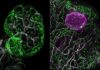
In a landmark development for neurotechnology, scientists have successfully created artificial neurons capable of “communicating” with living brain cells.
By printing semiconductor-laced inks onto flexible polymer substrates, researchers created synthetic neurons that mimic the electrical spiking patterns of the human brain. In laboratory tests, these artificial structures were able to synchronize their activity with real mouse neurons.
This breakthrough represents a fundamental step toward creating advanced brain-computer interfaces and computers that utilize human-like neural architectures.
🏺 Archaeological Wonders: History Found in Unexpected Places
Archaeology continues to provide breathtaking glimpses into the past. In Egypt, researchers discovered a Roman-era mummy (dating between 30 B.C. and A.D. 641) that contained a fragment of Homer’s epic poem, the Iliad , tucked inside its abdomen.
Found in the ancient city of Oxyrhynchus, the mummy was discovered alongside other individuals featuring “golden tongues”—a ritualistic element intended to allow the deceased to communicate with gods in the afterlife. This discovery highlights the profound intersection of literature, ritual, and funerary practices in the ancient world.
🚀 Space and Nature: Quick Hits
The week also saw significant updates across the cosmos and the natural world:
– Voyager 1: NASA is managing power constraints on humanity’s most distant spacecraft by shutting down specific instruments.
– Artemis Program: While the Artemis II heat shield successfully passed reentry tests, the mission may face delays as NASA awaits next-generation spacesuits.
– Deep Time: New studies have identified a 62-foot-long “Kraken” octopus that reigned as an apex predator during the era of the dinosaurs.
– Celestial Coincidence: Photographers captured a rare “cosmic X” over a Czech castle, where a superbright comet and a fireball meteor appeared to intersect in the night sky.
Conclusion
From the potential collapse of Atlantic currents to the seamless integration of artificial and biological neurons, this week underscores a period of intense transition. We are simultaneously witnessing the urgent need to protect our existing ecosystems and the incredible potential to redefine the boundaries of human intelligence and technology.