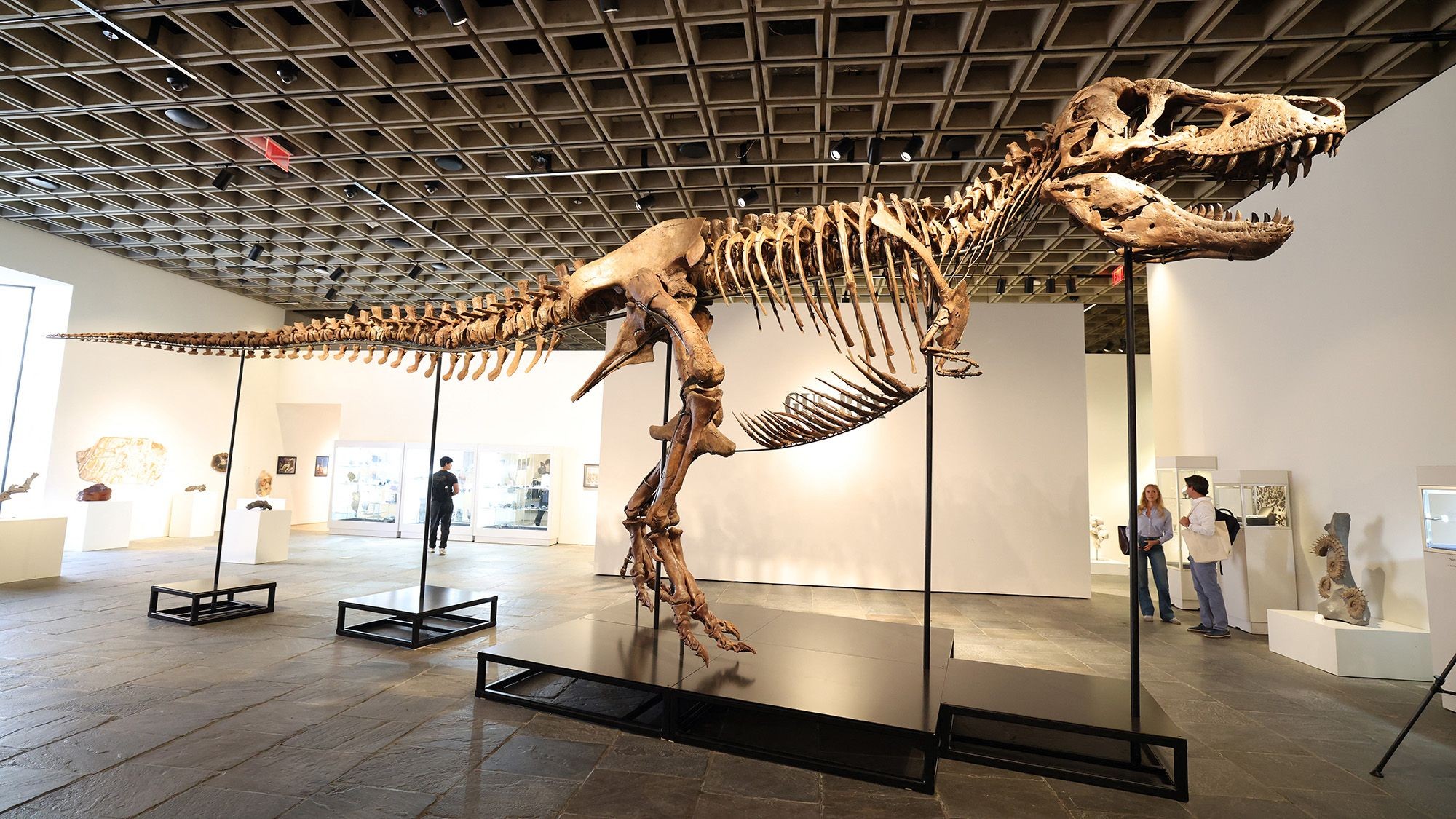
July 14, 2029. A name was spoken in Sotheby’s. “Gus.” Not a pet. Not a child. A Tyrannosaurus rex. The most complete specimen we have ever dug up from the earth just went to the highest bidder. The price tag? Fifty-point-one million US dollars.
Another dinosaur enters the luxury market. Earth’s deep history is now just another collectible asset.
To someone like me, this isn’t a trophy. It’s a library burning down.
Gus came from South Dakota. Specifically, the Hell Creek Formation. Thomas Heitcamp and his commercial crew spent three years, from 2021 to 2024, pulling this beast out of the ground. They didn’t dig for science. They dug for sale.
Fossils aren’t static. They are archives. Finite, irreplaceable records of disease, growth, extinction, and life itself.
The Access Problem
Science runs on verification. Researchers need to check claims. To test old conclusions. To ask new questions that previous generations never thought to ask.
When a fossil ends up in a private basement? Access ends.
Collectors usually hide these things in their homes. Even if they lend them to museums today, they can pull the plug tomorrow. No notice. Just gone.
It’s a big problem for T-rex studies. A 2025 paper noted a troubling split: 61 T-rex fossils sit in public trust. But 71? They’re locked in private collections. More than half our evidence is invisible.
Fossils are finite. They don’t come back once buried again in a garage.
The Society of Vertebrate Paleontology says it clearly: scientifically significant fossils belong to the public. Universities and museums preserve them. They keep them safe. They open them to researchers and curious kids alike.
Discovery vs. Data
Supporters of the private market make one fair point.
Without collectors digging, some fossils stay buried. They erode. They disappear.
True. Discovery matters. Ranchers, hikers, amateurs. They spot things academics miss. You don’t need a PhD to find a bone. You just need eyes.
But finding it is just the first step.
Science needs context. Where exactly was it? What rocks surrounded it? What plants lay nearby? Without that data, you lose the ecosystem. You lose the story of how the animal lived. If that info is missing, the bone is just a pretty rock.
And that’s only if we stick to current methods.
The real value of a fossil often shows up decades later. When technology jumps ahead.
Think about T-rex and Triceratops. Dug up over a century ago. Back then, scientists described shapes. They poked them. That was it. They couldn’t see inside.
Today? We do CT scans.
Larry Witmer at Ohio University started this about 20 years ago. Non-invasive imaging reveals brain cavities, inner ears, blood vessels. Suddenly we know how they heard. How they balanced. How they perceived their world.
Then came chemistry.
Henry Fricke and others read isotopic signatures in teeth and eggshells. They found migration patterns. Body temperatures. What dinosaurs actually ate.
More recently? Jasmina Wiemann found molecular traces in bone and skin. Details on metabolic rates. Skin colors. Reproductive habits. Things we didn’t know we could know ten years ago.
I use microscopes myself. I cut thin slices of fossil bone. Inside, I see dinosaurs grew like mammals, not big lizards. I see traces of scavenging. I see the moment a baby hatched, locked inside microscopic rings.
None of this would exist if those bones vanished into private hands.
Heritage for Sale
Fossils are not one-and-done objects. Their value grows as we learn more.
Sometimes, collectors buy fossils and immediately donate them. Good faith moves. They belong in museums then. But that’s the exception, not the rule.
Purchasing to lock away is fundamentally different. One shares knowledge. The other hoards it.
Prices are skyrocketing. Museums can’t compete.
Significant fossils are becoming luxury assets. Market value is winning over scientific value.
Dinosaurs connect us to a past deeper than language. Deeper than humanity. They deserve wonder. Not price tags.
The auction for Gus isn’t about who can afford the relic. That’s the wrong question.
The right one is whether future scientists will ever get the chance to look inside it.