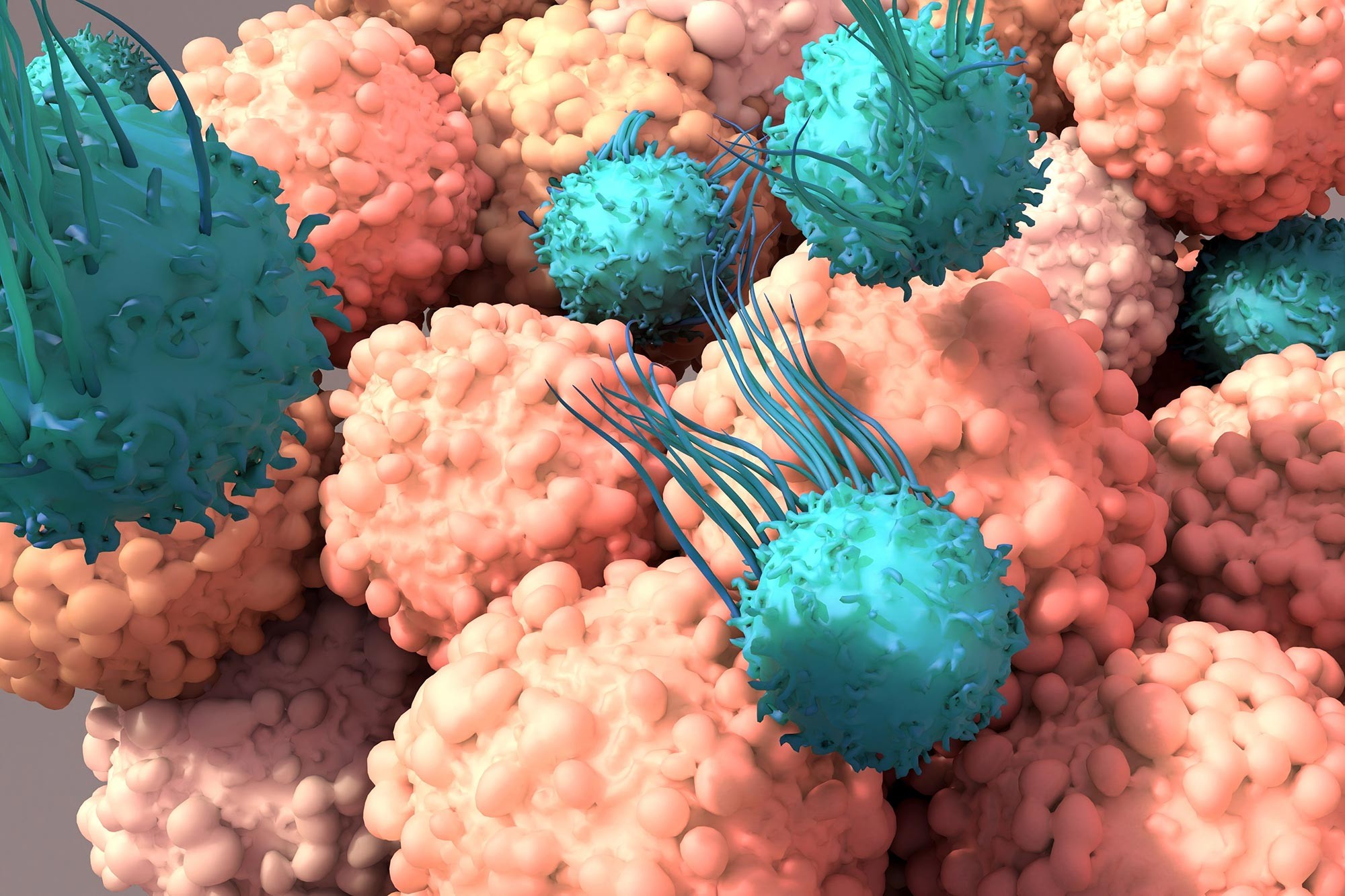
Cancer immunotherapy is supposed to unleash the immune system’s most elite assassins: T cells. But there is a cruel twist. These specialized killers often hit a wall. They enter a state called “T cell exhaustion,” losing their punch right when the fight matters most. For years, doctors watched patients experience a brief window of hope with checkpoint inhibitors, only to see the treatment fade as the T cells burned out.
It was tragic, according to Dr. Santosha Vardhana at Memorial Sloan Kettering Cancer Center. Patients get a “wisp of promise,” then lose it.
Now, researchers have a new answer for why this happens. It isn’t that the cells run out of fuel. They are burning it too fast. A new study in Immunity identifies MEK—a signaling molecule—as the accelerator pedal that drives T cells to exhaustion. Blocking MEK might keep these immune fighters alive longer, potentially boosting the durability of immunotherapy across the board.
The Myth of Empty Tanks
We used to think T cell exhaustion was simple bankruptcy. The cell runs out of energy. Game over.
But the data suggests something more complex. When T cells repeatedly encounter tumor antigens—the foreign proteins the immune system spots—they face a massive metabolic demand. They have to churn out cytotoxic proteins to kill cancer cells. This work is done by mitochondria, the cell’s power plants.
The decision to produce these high levels of killing proteins is regulated by MEK.
If MEK stays too active, the T cell pushes itself into “terminal exhaustion.” It becomes so depleted that no drug can reactivate it. It’s not just a lack of function. It’s an imbalance.
“The decision to make high levels of these cytotoxic proteins is regulated by MEK,” Dr. Vardhana explains.
Tanmana Mitra, the study’s first author, puts it bluntly: exhaustion is not just weakness. It is a mismatch between what the cell is asked to do and the energy it actually has available.
Spending Energy on the Wrong Things
Here is the paradox. Exhausted T cells still look metabolically active. They are burning resources. Why?
When the team inhibited MEK, the cells multiplied faster while consuming less energy. That shift raised a critical question. Where was all that extra energy going?
The answer: protein production.
Exhausted cells were investing enormous resources into building cytotoxic proteins. It changed the entire narrative. The problem wasn’t too little energy. It was excessive, inefficient demand.
Reducing MEK signaling slowed this protein factory. The T cells didn’t stop fighting. They just stopped fighting themselves to death. They remained active longer. They persisted.
Think of it like a road trip. You can floor the gas pedal and sprint to the destination, but you risk running out of fuel in the middle of nowhere. Or, you can pace yourself. You keep enough reserve to reach the finish line. In the lab, suppressing MEK allowed T cells to persist even inside the hostile, nutrient-scarce environment of a tumor.
The Tradeoff: Survival vs. Striking Power
This is not a free lunch. Blocking MEK creates a tradeoff.
Dr. Andrea Schietinger, an immunologist at MSK, notes that exhaustion isn’t just a bug. It’s a feature. It protects T cells from overstimulation and early death. By dialing down the attack, the cell preserves itself.
“It’s almost like a ‘safe mode’,” Dr. Vardhana says.
T cells use ATP (adenosine triphosphate) as their energy currency. Every action costs ATP. If you spend it on one thing, you can’t spend it on another. The exhaustion program signals that the cell’s energy bank is hitting zero. MEK tells the cell: conserve fuel or go for broke?
Inhibiting MEK makes the cell conservative. It lives longer. It kills cancer slower.
Does speed matter more than longevity? It depends on the cancer.
MEK helps T cells attack with full force. But that intensity leads to burnout. Inhibiting it saves the cells but weakens the immediate strike. A brief, powerful burst might be enough for some tumors. A slower, sustained siege might be better for others.
Who Needs MEK Inhibition?
Not every patient benefits from slowing down the immune response. Dr. Vardhana argues for selective use. MEK inhibitors might not help everyone. They are likely most useful for patients with:
- Large tumors
- Fewer immune cells currently attacking the cancer
For these patients, the immune system lacks the numbers or the momentum to crush the cancer quickly. Here, the slower, MEK-inhibited response allows T cells to survive long enough to make a dent.
Conversely, some patients are different. If the tumor is small and the patient has a high number of tumor-infiltrating immune cells (often due to many mutations), the body is already winning the war.
“Conservation of T cells is not that important in these cases,” Dr. Vardhana notes. “It’s like being at the finish line with a quarter tank. Let the car burn the gas.”
In these scenarios, traditional immunotherapy is fine. MEK inhibition adds nothing and might even hinder the final push.
Expanding the Toolkit
FDA-approved MEK inhibitors already exist. That means researchers don’t have to start from scratch. They can move directly to testing in humans. The implications stretch across several major immunotherapy types:
Checkpoint Inhibitors
MEK inhibition has already shown promise in melanoma, especially when paired with checkpoint drugs and BRAF inhibitors. The goal is to prevent the T cells from exhausting during the prolonged fight.
CAR T Cell Therapy
Chimeric Antigen Receptor therapy involves engineering T cells to hunt cancer. But persistence is a huge problem. These cells often vanish before eliminating the tumor. “We think this approach could dramatically boost persistence,” Dr. Vardhana says.
Tumor-Infiltrating Lymphocyte (TIL) Therapy
This method collects a patient’s own immune cells, grows them in a lab, and injects them back. Using a MEK inhibitor around the time of treatment could help the strongest killers survive the return to the body.
Bispecific Antibodies
These synthetic proteins bind two targets at once, activating T cells strongly. But strong activation drives exhaustion. MEK inhibition might keep these cells in the fight longer without sacrificing the initial activation boost.
The Balancing Act
The study highlights a core principle of T cell biology. It’s a balancing act.
How much energy does the cell spend on conservation versus killing? Once we understand that balance, the therapeutic possibilities fan out. We aren’t just looking at one drug anymore. We’re looking at timing, dosage, and patient selection.
The exhaustion program isn’t inherently bad. It’s an equilibrium. It keeps the cells alive to fight another day. The key is knowing when to let them burn bright and fast, and when to pull the leash.
Reference: “MEK-dependent bioenergetic demand terminal CD8+ T cell exhaustion,” Immunity, 13 July 202.