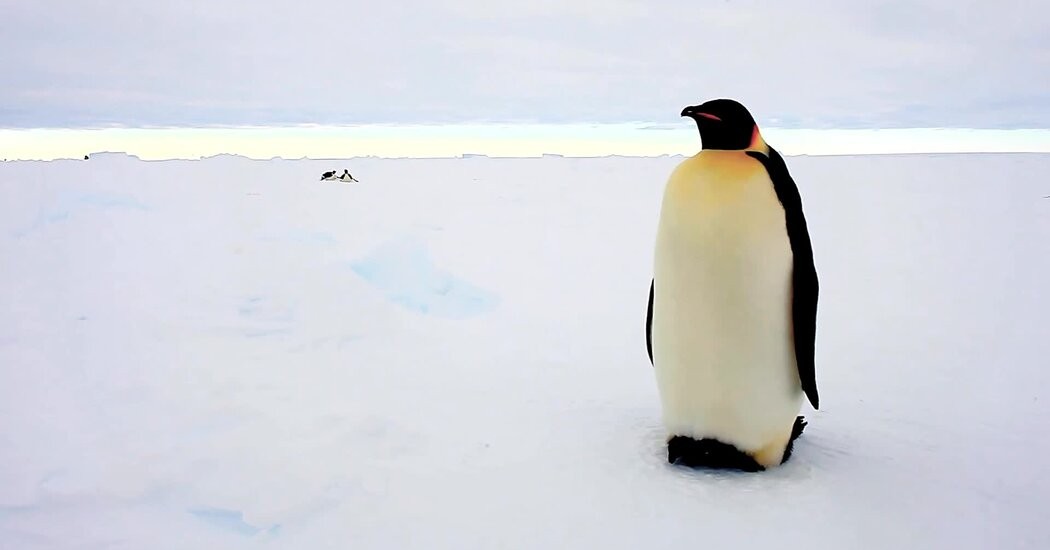
The International Union for Conservation of Nature (I.U.C.N.) has officially updated its Red List, marking a significant and sobering shift in the conservation status of several Antarctic species. Most notably, the Emperor penguin —the largest and most iconic of all penguin species—has been moved to the “Endangered” category.
A Shifting Ecological Landscape
The reclassification is not an isolated event but part of a broader trend affecting Antarctic marine life. According to the I.U.C.N. update:
– Emperor penguins are now classified as Endangered.
– Antarctic fur seals have also moved into the Endangered category.
– Southern elephant seals have been upgraded to Vulnerable.
These shifts represent more than just a change in labels; they serve as a biological warning sign. Researchers indicate that the primary drivers behind these declines are fluctuating sea ice levels and diminishing food availability, both of which are direct consequences of global warming.
The Impact of Melting Ice
For species inhabiting the Antarctic, the connection between rising temperatures and population decline is becoming undeniable. Kit Kovacs, a marine mammal researcher at the Norwegian Polar Institute, noted that this update provides “the first clear evidence of climate change’s influence” manifesting on a large scale within the region.
The survival of the Emperor penguin is uniquely tied to sea ice. These birds rely on stable ice platforms for breeding and raising their chicks. As warming temperatures cause ice to melt earlier or break up prematurely, entire breeding cycles are disrupted.
Evidence of Decline
Recent data highlights the severity of the situation through satellite monitoring and population studies:
– Satellite Imagery: High-resolution imagery has identified 66 distinct Emperor penguin breeding colonies across Antarctica.
– Population Trends: Data collected between 2009 and 2018 revealed an overall population decline of approximately 10%.
– Localized Crises: More recent studies suggest even more drastic losses in specific areas. In the Ross Sea, seven colonies saw their populations plummet by 32% between 2020 and 2024.
Why This Matters
The decline of these “sentinel species” is a critical indicator of the health of the Southern Ocean. Because Emperor penguins and various seal species sit at specific points in the marine food web, their struggle reflects a fundamental destabilization of the Antarctic ecosystem. As sea ice—the foundation of this environment—continues to shrink, the ripple effects will likely impact biodiversity far beyond these flagship species.
The transition of these species to endangered status serves as a biological indicator that the Antarctic ecosystem is reaching a critical tipping point due to rapid climatic shifts.
Conclusion
The reclassification of Emperor penguins and Antarctic seals as endangered marks a definitive milestone in documenting the impact of global warming. It highlights an urgent need to address the loss of sea ice, which serves as the essential foundation for life in the Antarctic region.