As humanity prepares for more ambitious journeys to the Red Planet, a new scientific discovery suggests that our spacecraft might be carrying more than just instruments and sensors. A recent study has identified a specific type of fungus capable of surviving conditions that would be lethal to most life forms, raising important questions about planetary protection and the biological integrity of Mars.
The Discovery: A Survivor in the Cleanroom
Researchers from NASA’s Jet Propulsion Laboratory (JPL) recently conducted a study to assess the microbial risks associated with deep-space travel. By swabbing NASA cleanrooms used for the Mars 2020 program, microbiologist Kasthuri Venkateswaran and his team sought to identify which organisms could persist even after rigorous decontamination protocols.
Despite strict cleaning measures, the team identified 27 different fungal strains. To test their resilience, the researchers subjected these fungi to a “gauntlet” of simulated space environments, including:
– Intense UV irradiation (exceeding natural Earth levels).
– Extremely low pressure (mimicking the Martian atmosphere).
– Extreme cold (reaching -60°C / -76°F).
– Cosmic radiation levels consistent with a trip to Mars.
– Mars-like dust exposure.
The Standout: Aspergillus calidoustus
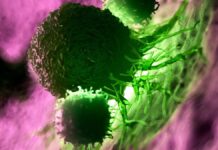
While many organisms showed some level of resilience, one species emerged as a formidable survivor: Aspergillus calidoustus .
The fungus’s spores, known as conidia, demonstrated an extraordinary ability to withstand UV radiation, months of ionizing radiation, and the thin, freezing atmosphere characteristic of Mars. According to the study, the only way to reliably neutralize this fungus was through a specific, prolonged combination of both extreme cold and high radiation.
“The capacity for fungal conidia to survive multiple space-relevant conditions suggests their potential as forward contaminants, capable of being transported to and persisting on Mars,” the researchers noted.
Why This Matters: Beyond Planetary Contamination
This finding is significant for two distinct reasons: the scientific integrity of Mars and the safety of human explorers.
1. Protecting the Search for Life
Under the 1967 UN Outer Space Treaty, space agencies are legally obligated to prevent the “harmful contamination” of other worlds. If Earth-based microbes—especially hardy ones like A. calidoustus —reach Mars, they could potentially “set up shop.” This creates a massive scientific hurdle: if we eventually find signs of life on Mars, how can we be certain it isn’t just a hitchhiking fungus from Earth?
2. Protecting Astronaut Health
The risk is not limited to the Martian surface. Aspergillus species are known on Earth to cause serious respiratory issues, such as aspergillosis. As programs like Artemis move us closer to long-duration spaceflight, ensuring that these fungi do not thrive within the confined, recycled air environments of spacecraft is critical for astronaut safety.
Closing the Knowledge Gap
Historically, planetary protection research has focused heavily on bacteria and their ability to form protective spores. This study highlights a critical oversight: fungi may possess a level of environmental resilience that has been underestimated in current decontamination strategies.
While this discovery does not suggest an imminent biological crisis, it serves as a vital call to refine how we clean our spacecraft. As we stand on the threshold of becoming a multi-planetary species, understanding the smallest, most resilient passengers is essential to ensuring we don’t accidentally rewrite the biology of another world.
Conclusion: The resilience of Aspergillus calidoustus underscores the need for more robust microbial risk assessments to protect both the scientific purity of Mars and the health of future astronauts.