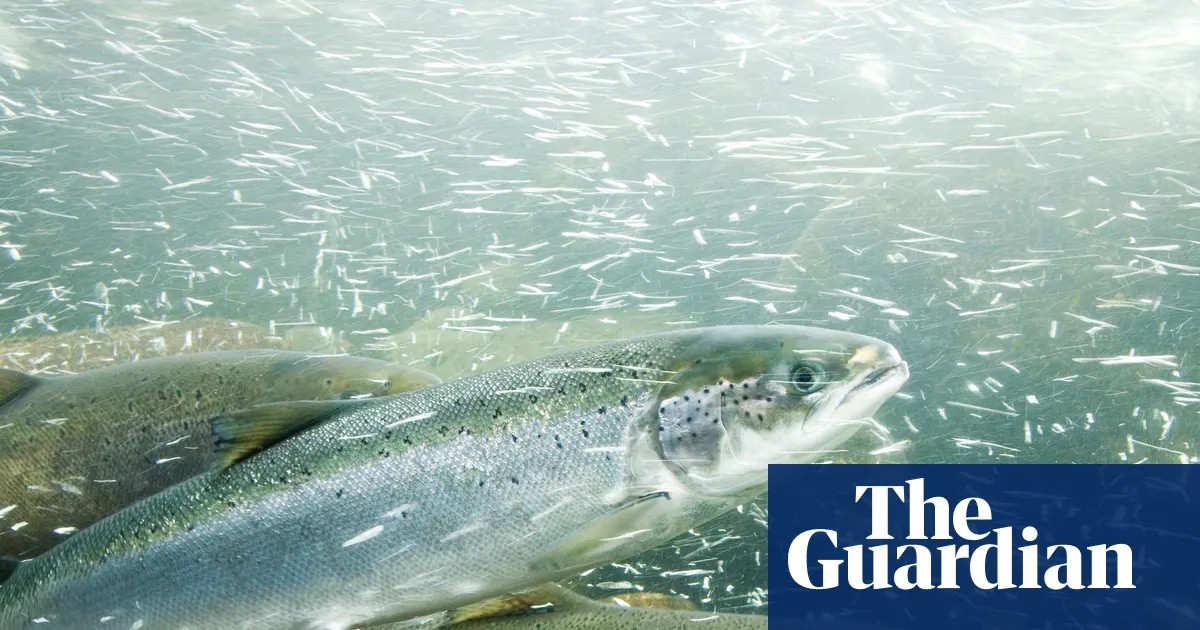
New research suggests that traces of cocaine and its breakdown products in rivers and lakes are not just environmental pollutants—they are active disruptors of wildlife behavior. A study focusing on Atlantic salmon reveals that exposure to these substances can lead to erratic movement patterns, potentially leaving fish more vulnerable to starvation and predation.
The Study: Tracking Changes in Movement
To understand how drug contaminants affect fish in a natural setting, researchers from the Swedish University of Agricultural Sciences conducted a controlled experiment in Lake Vättern, Sweden’s second-largest lake.
The team used hatchery-reared, two-year-old Atlantic salmon equipped with specialized implants designed to release “environmentally realistic” levels of two substances:
1. Cocaine
2. Benzoylecgonine (the drug’s primary metabolite/breakdown product)
A third group of salmon received no drugs to serve as a control. Using acoustic transmitters, researchers tracked the fish for two months to monitor their movement and activity levels.
Key Findings: The Impact of Metabolites
The results, published in the journal Current Biology, indicate that the breakdown products of cocaine may actually be more dangerous to aquatic life than the drug itself.
- Increased Activity: While all salmon eventually became more settled, those exposed to the substances showed a spike in activity toward the end of the study.
- Greater Dispersion: In the final two weeks, salmon exposed to cocaine swam 5km further than the control group.
- The Metabolite Effect: The impact of the metabolite (benzoylecgonine) was even more pronounced. These fish swam nearly 14km further and ventured significantly further north than the unexposed salmon.
“It was really the metabolite… that had a much more profound effect on fishes’ behaviour and movement,” noted Dr. Jack Brand. He warned that if environmental risk assessments ignore these metabolites, scientists may be missing a massive portion of the actual threat to wildlife.
Why This Matters for Ecosystems
The disruption of natural behavior creates a dangerous “trade-off” for fish populations. When salmon swim further and more erratically, they face two primary risks:
- Energy Depletion: Increased movement requires more fuel. If fish are burning energy at an unnatural rate, they may struggle to maintain their physical condition.
- Increased Predation: By venturing further into new territories or moving more actively, fish may inadvertently expose themselves to predators, such as the large pike found in Lake Vättern.
This study adds to a growing body of evidence regarding “chemical pollution” in waterways. Previous research has already documented trout “addicted” to methamphetamine and perch losing their natural fear of predators due to antidepressant runoff.
The Source of the Problem: Sewage and Infrastructure
While modern wastewater treatment plants are relatively efficient at removing illicit drugs, they are not perfect. The primary drivers of this pollution are:
– Storm overflows: Systems that release untreated sewage during heavy rain.
– Misconnections: Errors in household plumbing that lead raw sewage directly into watercourses.
Experts, including Professor Leon Barron of Imperial College London, suggest that improving wastewater management and reducing raw sewage discharges are critical steps to protecting aquatic biodiversity.
Conclusion
The presence of cocaine and its metabolites in freshwater systems is fundamentally altering the movement and energy expenditure of salmon. This behavioral shift poses a significant, yet often overlooked, risk to the stability of aquatic food webs and overall biodiversity.