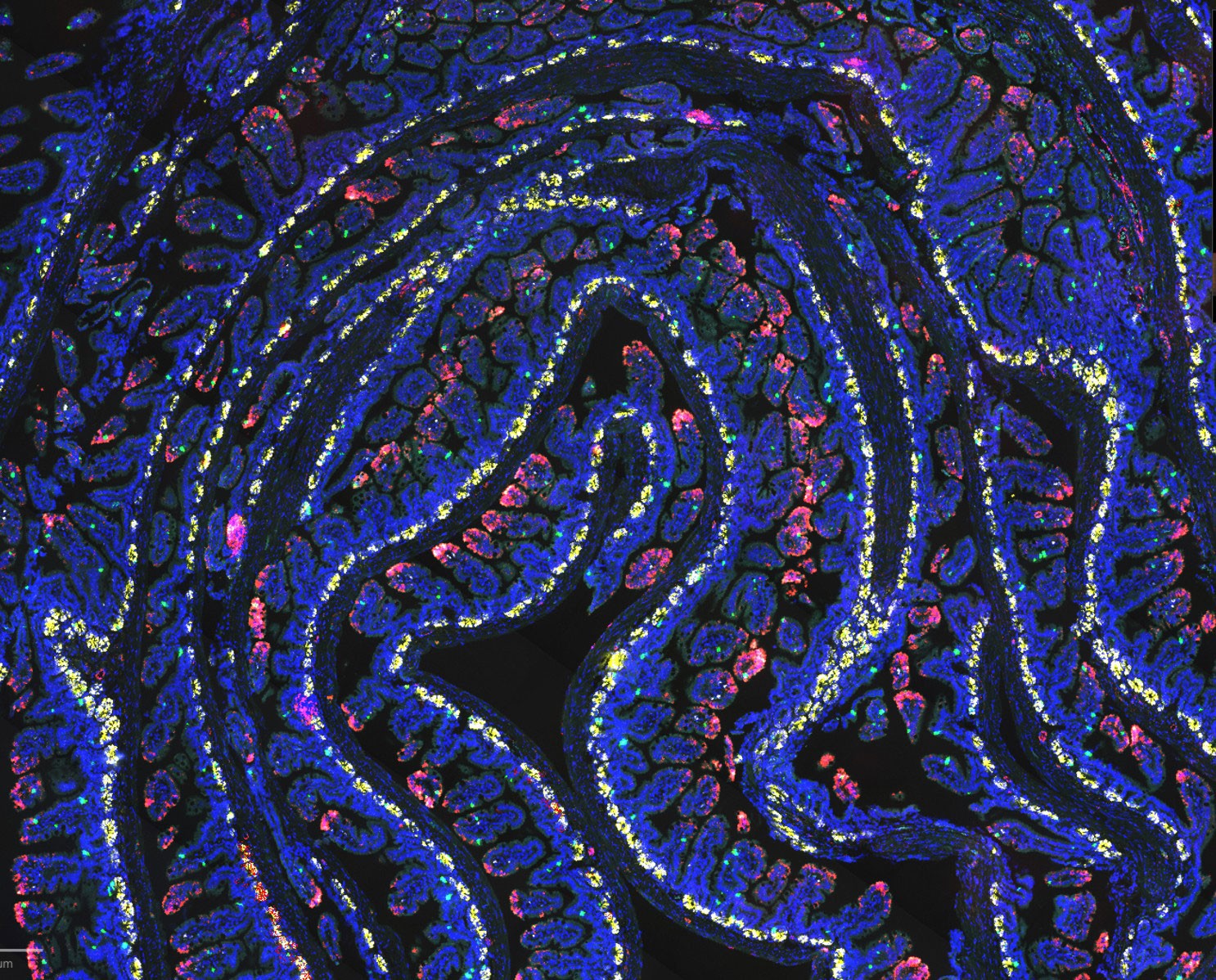
Radiation is blunt. It burns tumors but it also torches the small intestine. The lining is delicate. Cells regenerate fast which means they get fried fast.
For patients with abdominal cancer—pancreatic, colorectal, gynecologic—the dilemma is real. Push the dose too hard and you destroy the gut. Pull back and you risk missing the tumor. Severe damage means nausea, diarrhea, infection. Sometimes it’s life-threatening.
Enter Akkermansia mucinaphila.
Call it AKK. It’s a gut bacterium. Recent work by Helen Piwnica-Worms and Kunal Rai at Washington University shows that AKK doesn’t just hang around during a 24-hour fast before radiation therapy. It actively prepares the intestine to rebuild itself after the blast.
“Fasting helps prepare intestinal cells… almost like training the cells with an emergency planned,” said Piwnica-Worms.
The Fast and the Furious Microbe
Earlier studies from Piwnica-Worm’s lab hinted at this. Fasting before radiation improved recovery. But why? What mechanism inside the gut actually primed the cells?
The team dug deeper.
They found that skipping food for a day boosted AKK populations in the small intestine. AKK doesn’t just multiply; it excretes propionate. Propionate is a tiny molecule created when microbes break down nutrients.
Here is the twist. Propionate works with other fasting-induced metabolic shifts to tweak the cells’ DNA packaging. Think of DNA as long threads spooled on proteins called histones. Usually tight. Closed. Inaccessible.
Fasting and AKK loosen those spools. Specifically around genes responsible for tissue repair.
The intestinal cells don’t just sit there waiting to heal. They wake up ready to divide. Pre-programmed. The “repair” genes are exposed before the injury even happens. Once the radiation hits, those specific cells multiply and patch the lining faster than usual.
Remove the Bug. Lose the Shield.
Correlation is cute. Causation is key.
The researchers removed AKK from the equation. Without the bacteria, the fasting protection vanished. No repair boost.
Putting AKK back without fasting? Nothing. No go.
The system requires both. The metabolic shift of fasting AND the microbial partner. It’s a combined lock. You need two keys to open it. This suggests the process isn’t about aiding recovery after the fact. It’s about changing the terrain before the damage arrives.
Is this practical yet?
Not entirely. Fasting while undergoing cancer therapy is tough. Sometimes impossible. Your body needs fuel to fight the disease itself.
The Next Step
Rai and his team aren’t asking patients to starve. They are looking for shortcuts. Can we bottle the propionate? Can we inject AKK? Can we tweak diet to trigger the same pathway without a full fast?
“Whether through dietary interventions targeted microbes or their metabolite” said Rai, the goal is repair without the ordeal.
Future trials will need to check if this holds true in humans receiving abdominal radiation. They also wonder if bone marrow—the other rapid-dividing tissue often collateral in cancer care—can use this same trick.
For now the link is clear. Diet. Microbes. Chromatin. All dancing together.
Will it save more guts later this year? Probably. But for now the data says wait eat then heal.