It’s just a drink.
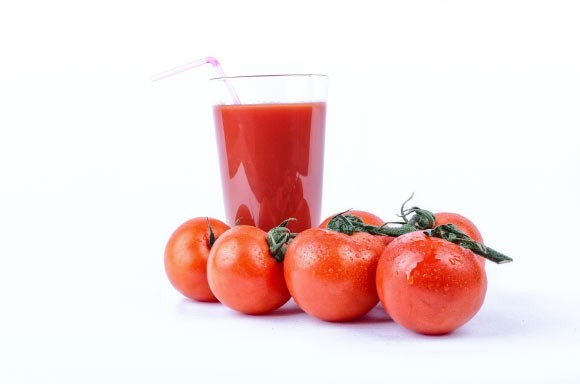
Or so you’d think. But researchers at Ohio State University think a specific mix of tomato juice and soy extracts is doing more than quenching thirst. They believe it’s actively fighting the chronic inflammation that hangs like a heavy curtain over many adults with obesity.
Dr. Jessica Cooperstone led the charge. Her goal wasn’t to sell supplements or write another vague nutrition column.
“Can we use food-based interventions to modolate inflammation? And can we test this in a way that proves it’s actually happening?”
She wanted hard proof. Not the kind of association you find in an observational study where people eat kale and live forever, but the kind that shows cause and effect.
Lycopene. Isoflavones. These aren’t magic spells.
Lycopene is the red pigment in tomatoes, a carotenoid. Isoflavones come from soy and act like weak imitators of estrogen. Together, in nature, they help plants survive. In humans? They might help us heal.
The idea didn’t come from nowhere.
Years ago, studies linked high intakes of tomato products and soy to lower prostate cancer risks. Cooperstone’s team combined these powerhouses into a juice. Earlier, this same drink lowered PSA levels in some men. It suggested something deeper was happening with the body’s inflammatory pathways.
So they ran a trial.
Twelve adults with obesity drank two 6-ounce cans of this tomato-soy elixir daily. They did this for four weeks.
Then came the washout period. A reset.
For the next four weeks, they drank control juice. Regular tomato juice. Low on carotenoids. Just plain red water.
“We didn’t want water as a control,” Cooperstone noted.
Because you want to know if it’s the special compounds causing the change, not just the act of drinking tomatoes.
They tracked cytokines. These are the pro-inflammatory proteins the immune system cranks out when the body is under siege. They drew blood before and after.
The results?
Only the fortified tomato-soy juice lowered the noise. Specifically, three cytokines dropped significantly: Interleukin-5, IL-12p40p70, and GM-CSF.
Tumor necrosis factor-alpha showed a downward trend. It wasn’t statistically significant, but the arrow was pointing down.
Did it work on urine metabolites too? Yes. But not entirely how they expected.
Both the special juice and the control juice changed the metabolic profile in the participants’ urine. Some of that change came just from the tomato part. It means there’s something in regular tomatoes that matters.
But the soy isoflavones? Those stood out. The metabolic shifts tied to them were unique to the enriched drink.
Does this prove it fixes everything? No.
We only looked at twelve people. The study was small. Tight.
But it shows that what we eat does something real. It changes biology.
Cooperstone thinks the answer is in the complexity. It’s probably not just those two compounds acting in isolation. Food is messy.
“Ultimately, we want to understand how foods relate to health.”
And sometimes, understanding means running the boring clinical trial. Not just trusting the trends.
Here is the twist.
This isn’t just about obesity or waistlines.
The team looked at animal models too. In mice with chronic pancreatitis, the same juice reduced inflammation and disease severity.
That changes the context entirely.
Pancreatitis care right now? It’s largely palliative. Doctors focus on managing pain. They treat the gut symptoms. It’s reactive.
“We hope the juice could be an intervention that decreases inflammation,” Cooperstone said. “Maybe we can increase quality of life, not just manage pain.”
It’s a small step.
Published in Molecular Nutrition & Food Research, the findings sit between hope and hypothesis.
We know the juice works on proteins. We know it shifts metabolism. We suspect it could help pancreas patients.
But can a drink fix a broken system?
Maybe. Or maybe we’re just starting to see how food talks to our cells.
The conversation has begun.
Sholola et al. published the data in 2026, giving us a concrete marker for future debates about whether a meal can be a medicine.