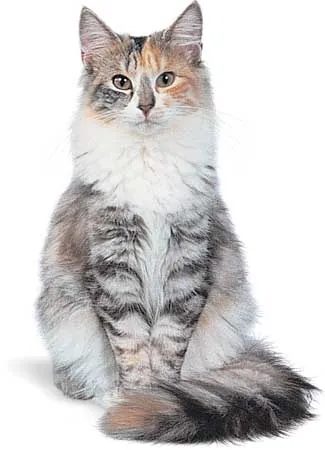
It is not just a fluffy pet. The Norwegian Forest Cat, or skogkatt as it is called in its native Norway, is a biological machine designed for harsh winters. These cats are large. They are muscular. And they are built to withstand the freezing temperatures of Scandinavia.
Built for the Cold
The defining feature of this breed is its double coat. It is not merely decorative. The outer layer is water-resistant, shedding rain and snow, while the dense, woolly undercoat traps heat close to the skin. This insulation is so effective that adult cats develop an abundant ruff of fur around their necks, acting like a built-in scarf.
This physical adaptation is not accidental. It is the result of centuries of natural selection in a climate where survival meant more than just staying warm. The thick fur allows these cats to thrive in conditions that would shiver most other breeds into submission.
Climbers and Runners
You might assume a cat of this size is slow. You would be wrong. The Norwegian Forest Cat has a unique skeletal structure. Its hind legs are longer than its front legs. This asymmetry provides powerful leverage.
It makes them exceptional climbers. They can scale trees with ease, often retreating to high perches to survey their territory or escape predators. It also allows them to run quickly through dense vegetation. Their large, pointed ears sit high on their heads, giving them acute hearing to detect prey or danger in the undergrowth.
Shedding Season
The thick coat is a double-edged sword for owners. In the summer, these cats shed the heavy undercoat entirely. For a brief period, they may appear sleek and short-haired. The only evidence of their winter gear may be the tufts of fur on their tails, ears, and toes. This seasonal change is a clear sign of how deeply the climate is woven into their biology.
Appearance and Color
While their structure is uniform, their colors are not. The breed standard accepts a wide array of hues. You will see white, cream, red, black, blue, silver, and golden coats. The patterns vary just as widely. Tabby, solid, bicolor, tortoiseshell, and calico are all common.
The most frequent combination is brown tabby with white markings. But the eyes are where the personality shines through. Large and almond-shaped, they often display a striking green, gold, or copper hue. This gives the cat an intense, attentive expression that matches its alertness.
The Norwegian Forest Cat is more than a companion. It is a testament to adaptation. It reminds us that beauty often comes from function. We look at these animals and see pets. They see themselves as survivors. The line between wild instinct and domestic comfort is thinner than we think.
What happens when a creature so closely tied to the wild is kept indoors? The instinct remains. The climbing. The watching. The waiting. The fur may be trimmed, but the skogkatt still carries the forest within it.

Spotting the differences between a Norwegian Forest Cat and its distant cousin, the Maine Coon, isn’t always easy. They share that rugged, large-frame look that screams “winter survivor.” But if you look closely, the details betray which breed is which. The Maine Coon comes from New England and wears a coat that varies wildly in length, often looking shaggier and less uniform. The Norwegian Forest Cat’s fur is different. It has a consistent, even length across the body.
Then there are the legs. A Maine Coon stands with front and back legs that are roughly the same length. The Norwegian Forest Cat is built differently. Its hind legs are longer than its front, giving it a distinct, sloped silhouette when viewed from the side.
The Norwegian Forest Cat has longer hind legs than front legs, creating a slope from hips to shoulders.
Head shape is the dead giveaway. Maine Coons have boxy, square-ish heads with a muzzle that pokes out straight from between the eyes. Look at a Norwegian Forest Cat instead. It’s all about the triangle. The head is triangular, and the profile is straight. The snout is flat, sloping gently downward from the brow bone to the nose tip. No boxy protrusion here. Just a clean, straight line.
Size and health
An adult male Norwegian Forest Cat usually sits somewhere between 12 and 16 pounds (5.4 to 7.3 kg). Males can get bigger, but that’s the sweet spot. Females are smaller, hovering around 9 to 12 pounds (4.1 to 5.4 kg). They aren’t rushed, either. Females typically have litters of four to six kittens, but those kittens take their time growing up. It takes four to five years for a Norwegian Forest Cat to reach full adult size. That’s a long time to be a giant kitten. Once they do settle into their frame, they can live for 14 to 16 years. Sometimes longer.
But that sturdy build doesn’t make them immune to trouble. Hip dysplasia is a known hereditary issue, affecting the hip socket. Kidney disorders also show up more frequently in this breed.
There are rarer, more serious conditions too. Glycogen storage disease type IV is extremely rare but life-threatening. It’s a metabolic disorder. Pyruvate kinase deficiency is another hereditary blood issue. It reduces red blood cell count, leading to anemia. And like most cats, they are vulnerable to hypertrophic cardiomyopathy. It’s a form of heart disease that affects the muscle wall. Regular vet checks matter here.
Personality
They aren’t shy. They aren’t aloof in the way some Siamese or Persian cats might be. Norwegian Forest Cats are observant. They watch from high perches, often the top of a bookshelf or a cat tree. They like height. They like to survey their territory.
They are also affectionate, but on their own terms. They won’t necessarily beg for attention, but they will join you if you invite them. They are social enough to get along with other pets, though that initial assessment period can take time. They are not yappy cats. They are quiet observers.
This quiet dignity is part of their
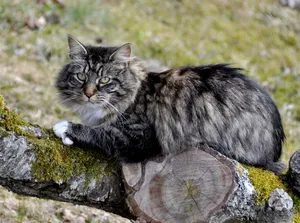

Norwegian Forest Cats aren’t just pretty faces with fluffy coats. They are functional survivors.
Originally bred for the harsh Scandinavian winters, these cats developed thick, water-resistant fur to withstand freezing temperatures. Their muscular bodies allow them to climb trees with ease.
This background shapes their personality.
They are intelligent and curious. Playful by nature, they enjoy interactive toys. They also adapt well to indoor living.
Despite being working cats, they are affectionate. Many owners call them “Wegie.”
The “Wegie” Nickname and Social Traits
The nickname “Wegie” is short for the breed’s full name. It’s catchy. Pet owners love it.
But don’t expect them to be lap cats.
While they are sociable and adaptable, they prefer companionship on their own terms. They’ll sit nearby. They might lean against you. But they rarely demand to be held for hours.
“Norwegian Forest Cats are quiet by breed association standards, but individual cats can be quite vocal.”
Some Wegies talk back. If you open a can, expect a response.
Hunting Instincts and Intelligence
These cats are skilled mousers.
Their hunting instincts are creative. They don’t just chase; they strategize. This intelligence makes them engaging pets. They solve puzzles easily.
This makes training easier compared to other breeds.
Their outdoor history means they are confident explorers. Even indoors, this confidence shows. They investigate new objects. They claim high vantage points.
Adaptable to Indoor Life
Despite their working farm roots, Norwegian Forest Cats adjust well to indoor environments.
They are good indoor pets because they are adaptable. They thrive in various settings.
Key factors for indoor success:
– Vertical space : They love to climb. Provide cat trees.
– Interactive play : Their hunting instincts need an outlet.
– Social interaction : They are sociable and need engagement.
They don’t just sit. They observe.
Vocal Nature and Communication
Breed associations classify them as quiet.
This is a generalization.
Many are soft-spoken. Others have strong opinions.
If a Wegie wants attention, they will make their presence known. It’s not constant yowling. It’s deliberate communication.
Why They Matter Today
In a world of increasingly sedentary pets, the Norwegian Forest Cat offers a balance.
They bring the wild instinct of a hunter into the home.
They are resilient. They are smart. They are affectionate without being clingy.
For pet owners seeking a companion that respects boundaries but remains engaged, the Wegie stands out.
They adapt. They survive. They thrive.
And they look good doing it.
The question remains whether your home can keep up with their energy.

Viking Roots and Near Extinction
The Norwegian Forest Cat isn’t a product of human design. It’s a natural breed. This means it survived through natural selection, not cross-breeding experiments. Some registries say this cat has been around for centuries. Maybe even since the Viking age. Sailors likely kept them on ships to kill rats.
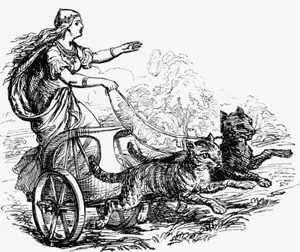
Norse mythology adds fuel to the fire. Legends speak of large, long-haired magical cats. They could climb rock faces. The goddess Frigg, or Freya, rode in a chariot pulled by these cats. This was after her son, Balder, died.
Some people think the Maine Coon came from these ancestors. The theory? Vikings brought them to North America.
By the early 20th century, that history nearly vanished. The breed faced extinction. Norway stepped in. They started a special breeding program in the 1970s. The goal was simple: save the cat.
Success came quickly. The Fédération Internationale Féline gave provisional recognition in 1976. This allowed them to be shown in Europe. Full pedigree status followed in 1977. Now they could compete for champion titles.
The 1980s brought expansion. The breed arrived in the United States and the United Kingdom. By the early 1990s, exhibition status was secured in the West. The Norwegian Forest Cat survived its near-death experience. It thrived. But how much of that survival was luck versus deliberate conservation? The answer lies in the meticulous work of the 1970s. The rest is legend.