Antarctica remembers things we forgot.
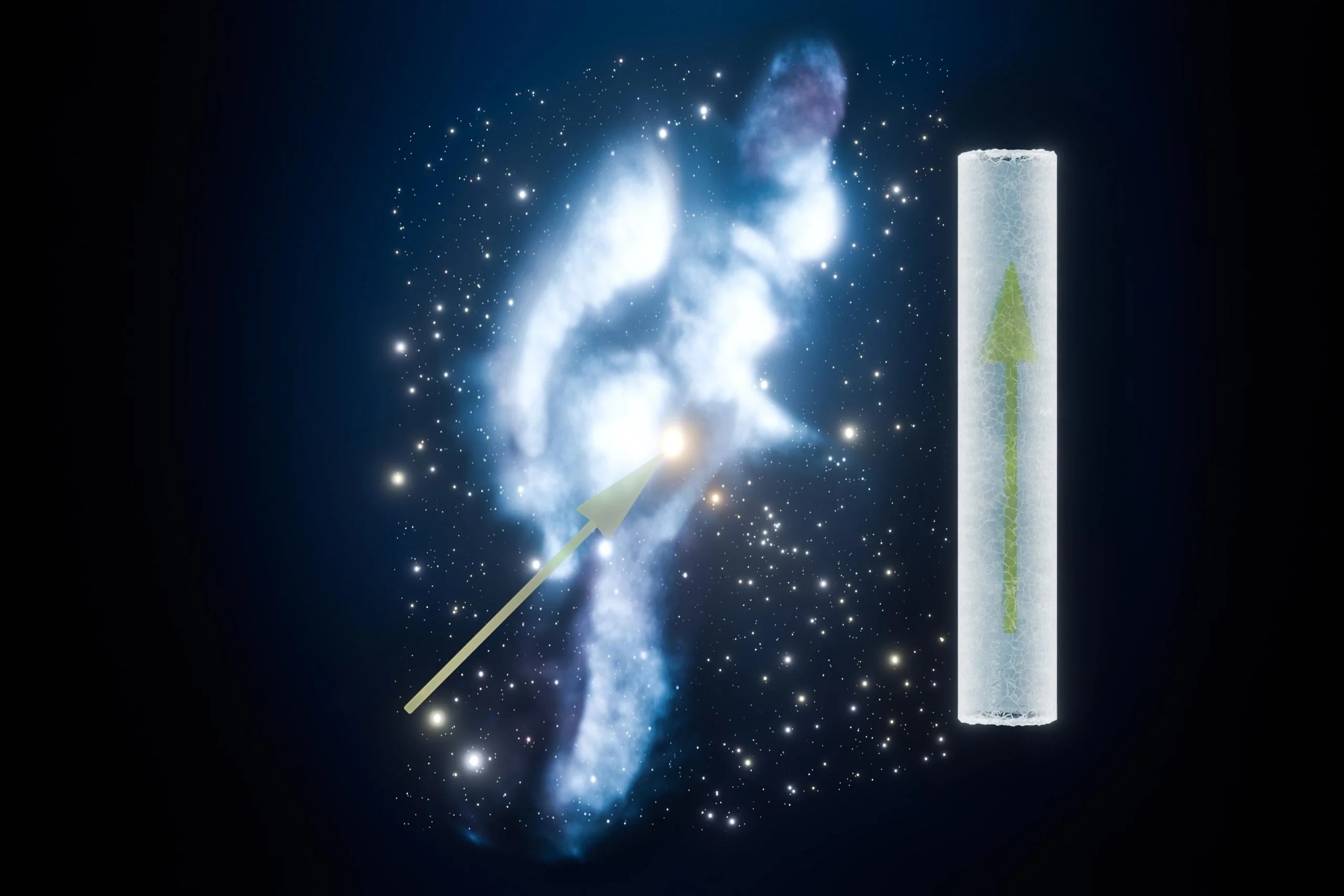
Deep under the ice lies proof that our planet is flying through radioactive dust. Leftovers from a star that blew up a long time ago.
A team from the HelmholtZ-Zentrum Dresden-Rossendorf just dropped the hammer in Physical Review Letters. They say we aren’t just floating in space, we’re moving through a specific cloud of debris. The Local Interstellar Cloud. It’s thick with ancient supernova ash. And we have the receipt.
The smoking gun is iron-60
Iron-60. It’s a radioactive isotope. Heavy stuff. You don’t make this in a kitchen. Massive stars cook it up, then explode. When they go boom, the iron-60 gets blasted outward.
We know Earth got hit with nearby blasts millions of years ago. Fossils and sediments show the scars. But nothing recent? Not in modern cosmic history.
Then someone checked young snow.
Found iron-60 there. That made no sense. No nearby explosion to supply it.
“Our idea was that the Local Interstitial Cloud contains iron-60,” says Dr. Dominik Koll. “We thought the Sun is moving through it and Earth is just sweeping up the trail. But we couldn’t prove it then.”
They kept digging. Looked at deep sea sediment from 30,000-year-old layers. More iron-60 appeared. But it wasn’t conclusive. The noise was too loud. The signal was messy.
They needed something older. Cleaner.
Antarctic ice between 40,000,80000 years old was the answer. This stuff doesn’t lie.
Moving through the fog
The Solar System wandered into the Local Interstellar Cloud a few tens of thousands of years in. We are currently skimming the edge. We’ll drift out in another few millennia. It’s like passing through a bad neighborhood. You don’t stop, you just keep your head down.
To check the timeline, they grabbed an ice core from the Alfred Wegener Institute. Part of the European EPICA drilling project. It covered the window when we first entered the cloud.
The comparison was stark.
Between 40,00380,004 years ago? Less iron-60 landing on Earth than we see now.
Which means one of two things:
- We used to be in a emptier pocket of space
- The cloud itself is lumpy. Density changes. It isn’t uniform.
Koll points out that the signal shifts. Quickly. Over cosmic terms, “quickly” means tens of thousands years.
This kills other theories. It wasn’t just fading radiation from the million-year-old blasts. That dust would be gone. This is fresh inventory. Ours is new to the system, if you will.
From tons to atoms
The logistics were a nightmare.
They hauled 300 kilos of ice from Bremerhaven to Dresden.
Processing ate almost all of it.
What? A few hundred milligrams of dirt remained. That was the prize.
Inside, the Helmholtz-Zentrum Dresden-Rossendor lab team isolated the iron. Carefully. They couldn’t lose a speck. To make sure they hadn’t spilled their sample, they used berylium-10 and aluminium-26 as benchmarks. Known quantities in Antarctic ice. If the processing failed, those would vanish too.
They didn’t. The math checked out.
Then came the real work.
Detecting iron-60 requires magic. Or at least the Australian National University’s Heavy Ion Accelerator Facility. It is the only machine on Earth capable of this.
Electric fields. Magnetic filters. Stripping away everything that isn’t iron-60 by mass.
From a sample of 10 trillion atoms, only a handful survived the cut.
Annabel Rolofs puts it well:
“It’s like searching for a needle in 50,000 football stadiums filled to the roof. The machine finds that needle in an hour.”
That’s the scale we’re talking about. Not a speck of dust. A signature. A cosmic fingerprint.
Anton Wallner sums it up. Years of international cooperation built this sensitive eye. Now we can see the echoes of explosions from millions of years back in rocks and ice beneath our feet.
They aren’t stopping now. The next step is older ice. Pre-cloud. The “Before” picture. AWI has the Beyond EPICA – Oldest Ice project lined up.
We might be able to map the void before the dust settled.