Seventy-five percent of ocean creatures make their own light.
Not many know what happens next. The light hits these weird, needle-shaped crystals made of guanine. And instead of bouncing straight back. It scatters. Redirects. Recycles.
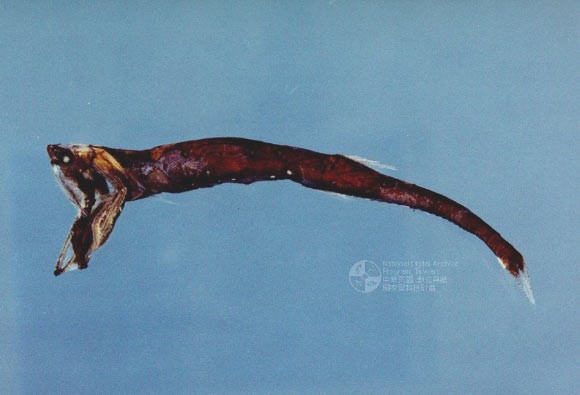
Hiroshima University researcher Masakazu Ivasaka noticed something odd while staring at deep-sea specimens. Specifically, the bristlemouth Sigmops gracilis. These fish carry photophores. Light organs. Most people assume the guanine platelets around them act like mirrors. Just reflecting light. Bouncing it back out.
It is not that simple.
The platelets are shaped like needles. They cluster locally near the light sources. When light hits them. The structure does something unexpected. It acts like a prism.
“The higher-aspect-ratio crystals behave more like prisms, redirect light rather than simply reflecting it”
Ivasaka confirmed this. He watched for what he called strong anisotropic reflection. Fancy words for one thing: the angle of incoming light changes everything. The reflected beam shifts based on where it started. Previous studies looked at goldfish. Those crystals are flat. Tilted. Mirror-like. These deep-sea ones are different. They have layers. Like photonic crystals.
This matters. Because light leaks. Usually. Waste. But the fish don’t waste it. They trap the leaked light. Redirect it. Use it again. Efficient recycling on a microscopic scale.
To prove it, Ivasaka used electromagnets. He flipped the crystals around. Hit them with light from different angles. Recorded the scatter. The pattern held up. The structure dictates the flow.
Why care?
Imagine biomedical implants. Devices sitting in the body. Water everywhere. Light getting lost. If we copy the bristlemouth. We could design implants that reuse every photon. Maximize brightness. Minimize energy.
It is hard work. Catching these fish is difficult. Getting good samples is rarer still. But the payoff looks huge. Ivasaka sees a “treasure trove” of knowledge in the deep. Unknown phenomena. Real field work. Not just lab guesses.
The findings just dropped in the journal Biointerphases.
So we have prisms in the dark. Recyling their own glow. What else are we missing because we stopped looking closely at the ocean floor?