


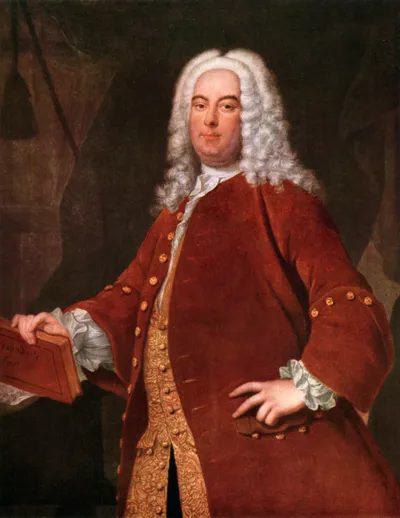
April 1742 saw a flurry of activity in Dublin. George Frideric Handel’s latest project “Messiah” is on stage for the first time. People are waiting for the events of the festival. They got something completely different.
This large-scale semi-theatrical production, with a full chorus, soloists and orchestra, premiered on Easter instead of Christmas. But if you walk into a department store today in December, you’ll hear the Hallelujah Chorus coming from the speakers. The culture change is amazing. Despite it being spring, Handel’s masterpiece has become the default soundtrack for winter holidays.
A textbook prepared by a friend
This libretto was not written by Handel. It was Charles Jennens. idea. He was a wealthy patron and close friend of the composer. Jennens dug deep into the Bible and pulls verses from three different sections to create a story arc.
First, he studied the Old Testament prophecies about the birth of the Messiah. Then he turns to the New Testament. This text follows the birth, death and resurrection of Christ. Finally, Jennens reached on the apocalyptic images of Judgment Day. The final chorus text is taken directly from the Book of Revelation.
Handel set it to music. The result? Messiah became the most performed oratorio in history. It rules the stage. It rules our playlists.
Dublin wins, London hesitates
The Irish premiere was a great success. Why? Handel spent most of his winter in Dublin. He gave a series of concerts that were enthusiastically received. The audience is ready. They were enthusiastic about his work.
London is a different story. Church conservatives were unimpressed with the effort. The tide turned only in 1748. A new bishop was installed in London who was less strict than his predecessor. Suddenly, the music gained a foothold.
Anecdotes from the time suggest that King George II became a particular fan. Before ascending to the throne of Great Britain, George II served as Handel’s patron in Hanover. Royal approval helps. It opens the door.
Music behind Hallelujah
The Hallelujah Chorus ends Part 2. The instruments of the Baroque era were bold. It breaks boundaries. However, its construction is based on tried-and-true techniques.
Handel combined homophonic harmony with the complexity of polyphony. Sometimes the choir sings chords that support one melody. Several independent melodies can also be intertwined at the same time. The last page builds a fugue to the words “And he shall reign”. It is tight. This is mathematical. It’s powerful.
This mix of textures is evident throughout the oratorio.
You can also hear it in other famous choruses:
“For Unto Us a Child Is Born” (Part One)
“All We Like Sheep” (Part Two)
*”Worthy Is the Lamb” (Part Three)
The soloist steal the show
The choir shares the stage with prominent soloists. They range from festive to deeply introspective.
Soprano
“Rejoice Greatly, O Daughter of Zion” (Part One)
“I Know that My Redeemer Liveth” (Part Three)
Alto
“O Thou That Tellest Good Tidings to Zion” (Part 1)
“If God Be for Us” (part 3)
tenor
* “Ev’ry Valley Shall Be Exalted” (Part 1)
bass
“Why Do the Nations so Furiously Rage” (Part 2)
“The Trumpet Sounds” (part 3)
Small band, big show
Handel’s original score calls for a typical baroque orchestra. Dozens of players. Mainly string instruments and woodwinds. minimal brass. Minimal percussion. A small but talented choir.
He didn’t imagine thousands of voices. He imagined precision.
After his death, the scale changed. In 1784, Westminster Abbey organized a music festival to commemorate the composer’s centenary. Even though it’s a year early, the numbers are already amazing. The whole includes:
* 60 soprano singers
* 48 countertenors
83 tenor
84 basses
*157 strings
* Full brass and percussion
Performances at the end of the 19th century drew thousands of people to the stage. This intimate baroque work became a monumental event. Even Handel would be surprised. The public loves spectacles.
Messiah The premiere is a spring event. Now this is a winter institution. The music remains the same. The context has completely changed. We sing resurrection in the dark of winter. We celebrate a birth in the freezing cold. This tradition still exists today. Ironically, it’s just background noise.